Damascene Furniture Guide for Lasting Luxury
A Damascene furniture guide should begin with what the eye notices first: a field of warm natural wood illuminated by mother-of-pearl, a precise geometric pattern, or copper inlay that catches the light as you enter the room. These are not ordinary furnishings made to disappear into the background. Authentic Damascene furniture is designed to become a focal point – a visible expression of Damascus heritage, patient handwork, and luxurious personal taste.
For a home, office, boutique hotel, or meaningful gift, the right piece offers more than ornament. It brings useful storage, a generous serving surface, a conversation-starting game table, or an elegant setting for treasured objects. Choosing well means looking beyond the pattern alone and understanding the materials, scale, craftsmanship, and role each piece will play.
What Makes Damascene Furniture Distinctive?
Damascene furniture draws its visual language from centuries of Syrian decorative arts. Artisans compose detailed mosaics and marquetry from natural walnut and lemon wood, then enrich the surface with mother-of-pearl, bone-colored accents, or copper inlay. The result is a breathtaking interplay of warm grain, luminous shell, and finely measured geometry.
The defining quality is not simply decoration. It is the relationship between the decoration and the structure beneath it. A beautifully inlaid coffee table, side table, chest, chair, or cabinet should feel substantial and functional before its ornament ever enters the conversation. The best pieces hold their own as furniture, then reward a closer look with intricate handmade detail.
Because each artisan works by hand, subtle variation is part of the appeal. Mother-of-pearl may reflect slightly differently from one panel to another, and the wood grain will never repeat exactly. These natural distinctions give a piece its unique character and separate handcrafted work from printed or machine-produced imitation.
Damascene Furniture Guide: Choose the Right Piece
Start with the room, not the catalog. A statement piece can transform a quiet corner, but a highly ornate furnishing needs enough visual space to be appreciated. In a neutral living room, a mother-of-pearl side table or inlaid coffee table can provide the jewel-like detail the space is missing. In a richly layered interior, a walnut cabinet with more restrained geometric inlay may offer balance without competing with rugs, artwork, and textiles.
Scale matters just as much as pattern. Measure the intended location, including the clearance needed to open drawers, move chairs, or walk around a table. A low table may look modest in a product image yet command significant presence once its inlaid surface is installed in a sitting room. For hospitality projects and large residences, dimensions should be planned around seating layouts and circulation rather than guessed from floor space alone.
Choose by Function First
A piece earns its place when its function suits your life. Consider how you will use it most often:
- Coffee and side tables bring an ornate center point to living rooms, reception areas, and suites.
- Cabinets, chests, and organizer furniture offer useful storage while displaying artisanal detail at eye level.
- Serving trays and tray tables elevate entertaining, from coffee service to celebratory gatherings.
- Chess and backgammon tables combine recreation with collectible decorative value.
- Consoles and entry pieces create a memorable welcome without requiring a complete room redesign.
For a formal space, a grand inlaid table can be the main event. For a busy family room, a smaller accent table may be the wiser choice, allowing the craftsmanship to be enjoyed without placing a delicate statement surface in the path of daily activity.
Select Materials That Suit Your Interior
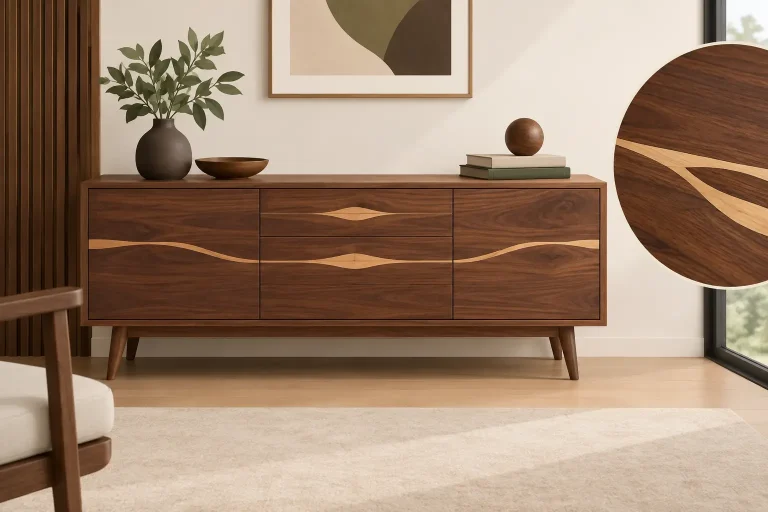
Natural walnut gives Damascene furniture its deep, welcoming foundation. Its grain brings gravity and warmth, making it especially beautiful beside leather, brass, stone, cream upholstery, and darker painted walls. Lemon wood creates contrast in mosaic work, brightening the geometry and making the composition more legible from a distance.
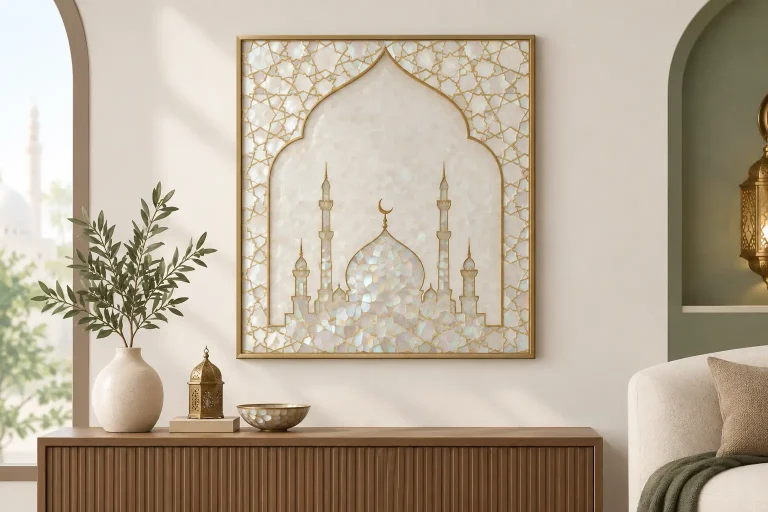
Mother-of-pearl is chosen for radiance. It shifts gently under daylight, lamps, and candlelight, giving a room a luxurious, almost architectural shimmer. It is especially compelling in bedrooms, formal salons, dining spaces, and entryways where a piece can be admired rather than constantly handled.
Copper inlay has a different character. It adds a warm metallic line that feels grounded, historic, and handsome rather than overtly sparkling. It can work particularly well in studies, offices, libraries, and spaces with bronze hardware or amber lighting. Some collectors prefer pearl for its luminous elegance; others choose copper for its quietly opulent contrast. It depends on whether you want a room to glow or to feel more anchored.
How to Recognize Thoughtful Craftsmanship
Fine inlay should appear deliberate rather than hurried. Look for patterns with clean alignment, balanced repetition, and neatly finished transitions between wood, shell, and metal. The surface should feel carefully completed, with no loose elements, obvious gaps, or rough edges around detailed motifs.
Examine the furniture as a whole, not only the top panel. Quality is revealed in the stability of the base, the fit of doors and drawers, the consistency of the finish, and the way decorative panels meet at corners. On a handcrafted piece, tiny evidence of human work is expected. What matters is that the overall construction feels secure, polished, and made to endure.
Ask how the piece was made and where the design tradition comes from. Damascus-origin craftsmanship carries a cultural lineage that deserves to be represented honestly. Authenticity is not a decorative label. It is found in skilled methods, natural materials, heritage patterns, and a maker’s respect for the art form.
Custom Furniture Is Often the Better Choice
Standard dimensions are not always right for an alcove, a hotel lobby, or a carefully designed residence. A custom Damascene furnishing allows you to shape the piece around the room instead of compromising the room around the piece. You may choose dimensions, wood tone, pattern density, inlay materials, and practical details such as drawer configuration or table height.
Custom work is especially valuable when coordinating several pieces. Matching a console to an existing mirror, selecting a warmer walnut finish for a dining room, or repeating a geometric motif across tables and storage furniture can create a composed interior rather than a collection of unrelated objects.
The trade-off is time. Handmade custom furniture requires planning, sketches, material decisions, and production lead time. That waiting period is part of receiving a unique piece rather than an item lifted from warehouse stock. At Damasch Magic East, clients can discuss bespoke dimensions and finishes while receiving sketches, finish samples, production timelines, and workshop updates before their furniture makes its journey from the heart of Damascus to theirs.
Care for Inlaid Wood and Mother-of-Pearl
Damascene furniture is made for use, but it should be treated as fine craftsmanship. Keep it away from prolonged direct sunlight, harsh heat sources, and strong swings in humidity. Wood responds to its environment, while mother-of-pearl retains its beauty best with gentle, consistent care.
Dust with a soft, dry microfiber cloth. When a surface needs more attention, use a barely damp cloth and dry it immediately. Avoid abrasive sponges, strong household cleaners, furniture sprays with unknown additives, and soaking any inlaid area. Use coasters beneath beverages and felt pads beneath decorative objects that may scratch the finish.
For serving furniture and tables used during gatherings, a protective runner or tray can be practical without hiding the artistry. The goal is not to treat the piece as untouchable. It is to preserve the exquisite surface so it remains beautiful through years of dinners, conversations, and celebrations.
Let One Piece Set the Tone
Damascene furniture does not need a crowded room to make an impression. A single mother-of-pearl table beside a quiet armchair, an inlaid chest beneath a treasured artwork, or a custom console in an entryway can establish a sense of heritage, generosity, and unmistakable luxury. Choose the piece that fits the way you live, give it room to be seen, and let its handmade details turn everyday moments into something more memorable.