Choosing Handmade Walnut Furniture That Lasts
A walnut piece can command a room before a single object is placed on it. Its deep brown tones, shifting grain, and natural warmth give a home a sense of permanence that factory-made veneer rarely achieves. But choosing handmade walnut furniture is not simply a matter of selecting the darkest wood or the most elaborate pattern. It is about recognizing honest materials, skilled construction, and a design that will feel as magnificent in ten years as it does on arrival.
For collectors, homeowners, and designers seeking a distinctive focal point, walnut offers more than utility. It provides a living canvas for Damascene marquetry, mother-of-pearl inlay, copper detail, and the patient handwork that turns a table, chest, or cabinet into an authentic expression of heritage.
Why Walnut Deserves a Place in a Fine Interior
Walnut is prized because it has visual depth without needing excessive decoration. Its grain may flow in calm, straight lines or form dramatic swirls and figures, often with shades ranging from warm honey brown to rich chocolate. No two boards are identical, which is part of the pleasure of owning handmade furniture. The variation tells you the material came from a tree, not a printing process.
It is also a practical hardwood. Properly selected, dried, and constructed walnut has the strength for furniture that is used every day: a coffee table set with serving trays, an entryway console, a dining table for long gatherings, or a cabinet that safeguards treasured objects. It is hard enough to serve a household well, yet workable enough for artisans to shape with refined edges and detailed ornament.
Walnut does have a character that should guide your choice. It can darken or mellow with age and exposure to light. A sunlit room may bring gradual change to the wood’s tone, especially during the first years. That is not a flaw. It is part of an heirloom material finding its place in your home.
Choosing Handmade Walnut Furniture: Start With the Wood
The first question is whether you are looking at solid walnut, walnut veneer over a stable core, or a piece that merely carries a walnut-colored stain. These are not interchangeable choices, and the right answer depends on the design, budget, and intended use.
Solid walnut offers exceptional authenticity and a substantial feel. Look at edges, undersides, drawer interiors, and less-visible areas where possible. Natural grain should continue with believable variation, rather than repeat in identical patterns. Solid wood may show small shifts in color between parts, especially where boards were selected to create a balanced composition. This is evidence of real timber, not a reason to reject the piece.
A high-quality walnut veneer can also be appropriate, particularly on broad panels or intricate furniture where stability matters. Fine veneer allows a maker to present a beautiful grain pattern while reducing the risk of a large surface moving with seasonal humidity. The difference is craftsmanship and honesty. Veneer should be clearly represented, carefully matched, and applied over a sound furniture-grade substrate, never used to disguise weak construction.
Be cautious with descriptions that emphasize color but say little about material. “Walnut finish” can mean many things. Ask direct questions about the species, solid-wood components, panel construction, and the finish used to protect the surface.
Expect variation, not careless selection
Handmade walnut furniture will not look machine-uniform. One cabinet door may carry more movement in its grain than another; a table may reveal a darker strip running through a lighter field. These details create life and visual richness.
What you do not want is a large crack, a poorly repaired split, unstable knots in a stressed area, or a surface so uneven that it disrupts use. Small filled knots or natural mineral streaks can be exquisite when thoughtfully incorporated. They should feel intentional, not like shortcuts.
Look Closely at Joinery and Structure
Beautiful wood deserves construction that honors it. The most luxurious inlay cannot compensate for furniture that wobbles, drawers that bind, or thin panels that flex under light pressure.
For tables, examine the relationship between the top, apron, and legs. A well-made piece feels grounded and stable. Legs should meet the frame cleanly, with no visible gaps or strain at the joints. Traditional joinery, such as mortise-and-tenon connections and carefully fitted corner joints, is a strong sign of patient workmanship. Depending on the design, discreet modern reinforcement may also be sensible, especially for large custom pieces intended for hospitality or daily family use.
For chests, sideboards, and desks, pay attention to drawers. They should open smoothly, sit evenly in their openings, and feel substantial in the hand. Dovetail-style joints are often valued for their strength, but good construction is not limited to one method. The essential question is whether the drawer is solidly assembled and aligned for years of use.
A handmade piece may have subtle signs of the workshop: tiny variations in carving, a slightly different grain alignment from one component to another, or hand-finished edges that are softer than factory-cut lines. These are marks of human work. Structural instability is not.
Let Ornament Serve the Furniture
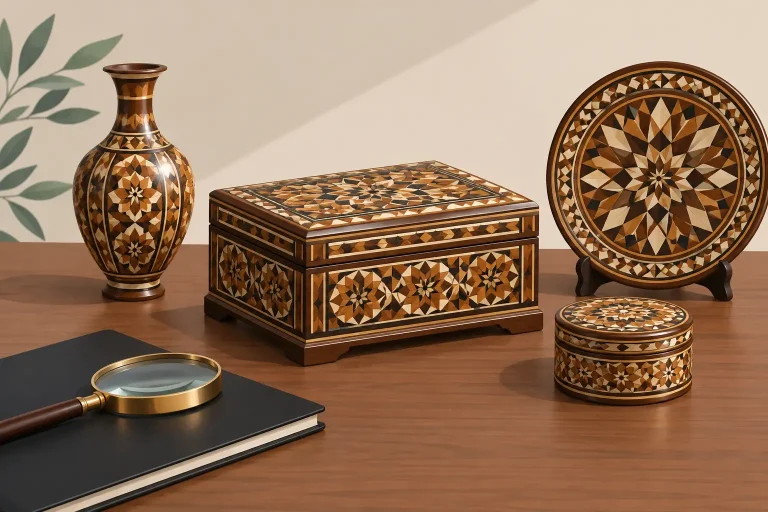
In a Damascene-inspired interior, walnut often becomes the rich ground beneath luminous mother-of-pearl, lemon wood mosaic, or copper inlay. The result can be breathtaking, but ornament should enhance the form rather than overwhelm it.
Study the placement of the inlay. Geometric patterns should appear balanced and thoughtfully centered. Mother-of-pearl pieces should sit flush with the surrounding wood, without rough ridges or careless gaps. Copper details should be cleanly set and protected by a finish suited to normal household use. Fine marquetry is especially compelling when it follows the lines of a table top, cabinet door, chessboard, or tray rather than appearing as a decorative afterthought.
Consider where the piece will live. A grand inlaid table can become the heart of a formal sitting room, while a smaller mosaic box, tissue box, or serving tray can bring the same cultural richness to a quieter corner. If your room already has patterned rugs, ornate lighting, or richly upholstered seating, a walnut piece with restrained inlay may create more harmony than the most elaborate available design. In a minimal room, however, an intricate statement piece can provide exactly the drama the space lacks.
Choose a Finish for Real Life
A finish affects both appearance and maintenance. A low-sheen finish lets walnut’s grain feel close and natural, while a glossier surface can heighten the drama of inlay and reflect ambient light. Neither is universally better. The choice depends on whether you want an understated, tactile presence or a more formal, polished effect.
Ask how the surface should be cared for before you buy. Walnut furniture generally appreciates gentle dusting with a soft, dry cloth and protection from standing water, direct heat, and harsh chemical cleaners. Coasters and felt pads are simple precautions that preserve a table’s finish without diminishing its usefulness.
Do not expect handcrafted wood to behave like plastic. Extreme dryness or humidity can cause natural wood to expand and contract. Keeping furniture away from radiator heat, air-conditioning blasts, and prolonged direct sunlight is a small act of care that protects a significant investment. A quality maker plans for seasonal movement in the construction, but thoughtful placement remains essential.
Measure Beyond the Room’s Dimensions
Many exceptional furniture purchases fail for a simple reason: the buyer measures the wall but not the life around it. A dining table needs clearance for chairs. A cabinet needs room for doors and drawers to open. A coffee table should leave a comfortable passage around seating. For a piece with elaborate inlay, also consider the viewing distance. Fine details deserve enough open space to be seen.
Before commissioning or ordering, note the room’s dimensions, ceiling height, doorways, elevators, stair turns, and the placement of rugs, outlets, and radiators. This is especially vital for custom furniture and larger statement pieces. A bespoke maker can adapt width, height, wood tone, pattern density, and functional details when given a clear plan.
At Damasch Magic East, custom work can be guided by sketches, finish samples, and workshop updates, helping clients select a piece that belongs to the architecture rather than merely fitting inside it. For a residence, office, boutique hotel, or reception space, this level of planning makes the finished furniture feel intentional.
Ask the Questions That Reveal Value
A premium handmade piece should come with clear answers, not vague promises. Before purchasing, ask about the wood species, construction method, finish, lead time, care needs, and how the item will be packed for international delivery. For inlaid furniture, ask which materials are used and whether the decorative work is completed by hand.
If the piece is custom, confirm the final dimensions, design approval process, production timeline, and what visual updates you will receive. A reputable artisan business should welcome these questions. The more intricate the commission, the more valuable good communication becomes.
Price should be considered in context. Handmade walnut furniture requires skilled labor, carefully prepared natural wood, and time-intensive finishing. A lower price may suit a temporary need, but an authentic, well-built piece is purchased differently. It becomes part of the setting for celebrations, conversations, hospitality, and family rituals.
When you find walnut furniture with honest materials, assured construction, and ornament that speaks to your home, give it the room to be seen. A single exquisite piece, chosen with care, can make the entire space feel more personal, rooted, and memorable.