Can Walnut Furniture Be Customized? Yes, Beautifully
A walnut console that is three inches too deep can interrupt an entire entryway. A coffee table that is visually too plain can disappear in a room built around rich textiles, brass, and art. These details are why clients often ask, can walnut furniture be customized? The answer is yes – and when the work is done by skilled artisans, customization can turn a beautiful furnishing into a personal landmark for the home.
Natural walnut already carries a sense of warmth and distinction. Its deep grain, varied movement, and enduring character make it a favorite for statement furniture. Yet the most breathtaking walnut pieces are not selected from a standard catalog alone. They are shaped around the room, the intended use, and the decorative story a client wants to tell.
Can Walnut Furniture Be Customized for Any Space?
Walnut furniture can be customized for residences, offices, hotels, majlis-style sitting rooms, reception areas, and intimate gift settings. The possibilities depend on the construction of the piece, the availability of suitable wood, and the level of hand-applied decoration involved. A simple walnut side table may allow more flexibility than a large inlaid dining table, but both can be tailored thoughtfully.
For a home, customization often begins with proportion. A narrow hallway may require a slimmer console with discreet storage. A formal living room may call for a generous coffee table that anchors the seating area. In a hotel suite or executive office, matching side tables, tissue boxes, trays, and wall décor can create a coordinated atmosphere without making the space feel overdesigned.
This is especially valuable when furnishing around architecture rather than forcing furniture into it. Alcoves, radiators, door swings, baseboards, and existing cabinetry all affect the ideal dimensions. A made-to-order walnut piece can respect those practical boundaries while still feeling luxurious and generous in scale.
Dimensions are more than measurements
Custom dimensions should account for how a piece will be used, not merely where it will sit. A serving tray table needs enough surface area for entertaining. A desk needs comfortable knee clearance. A storage chest should open fully without striking a wall or nearby chair.
When requesting a custom size, provide the overall width, depth, and height you need, along with photographs of the location if possible. It also helps to describe the room’s existing finishes – stone, fabric, metalwork, wall color, and flooring. These clues allow the maker to recommend proportions that feel intentional rather than undersized or overwhelming.
Choosing the Walnut Tone and Finish
Walnut is admired because it is never completely uniform. One board may show chocolate-brown richness, while another carries warmer honey or subtle purple undertones. That natural variation is part of its authenticity, not a flaw to erase.
Still, the final appearance can be guided through wood selection, stain, and finish. A lighter finish can reveal more of the walnut’s grain and pair beautifully with cream upholstery, limestone, or contemporary interiors. A deeper tone brings drama, particularly beside brass lighting, jewel-toned fabrics, and traditional rugs. Satin finishes tend to feel refined and practical for daily use, while a higher sheen can heighten the formal presence of a decorative piece.
There is a trade-off. Very dark staining may create a more uniform look, but it can soften the visual depth that makes natural walnut so appealing. For clients who value the wood itself, a hand-finished tone that lets the grain remain visible is often the more luxurious choice.
Matching a complete decorative scheme
A single custom walnut table can be striking. A coordinated collection can make a room unforgettable. Consider repeating a chosen wood tone across a coffee table, side tables, serving tray, organizer box, or mother-of-pearl accent piece. The result is not a matching furniture set in the mass-market sense. It is a composed interior with recurring materials and artisan details.
This approach works particularly well in hospitality spaces, where a shared visual language helps guests recognize quality from the entryway to the suite. It is equally rewarding in homes where a dining room, salon, or library deserves a stronger sense of identity.
Inlay, Marquetry, and Patterns That Tell a Story
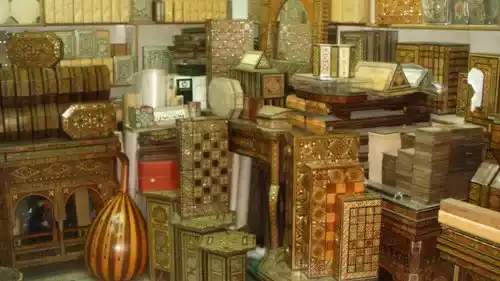
Customization becomes truly distinctive when it includes ornamental work. Damascene furniture is celebrated for intricate marquetry, luminous mother-of-pearl, lemon wood accents, and copper inlay. These are not decorative afterthoughts. They are hand-built expressions of a heritage carried through generations of craftsmanship.
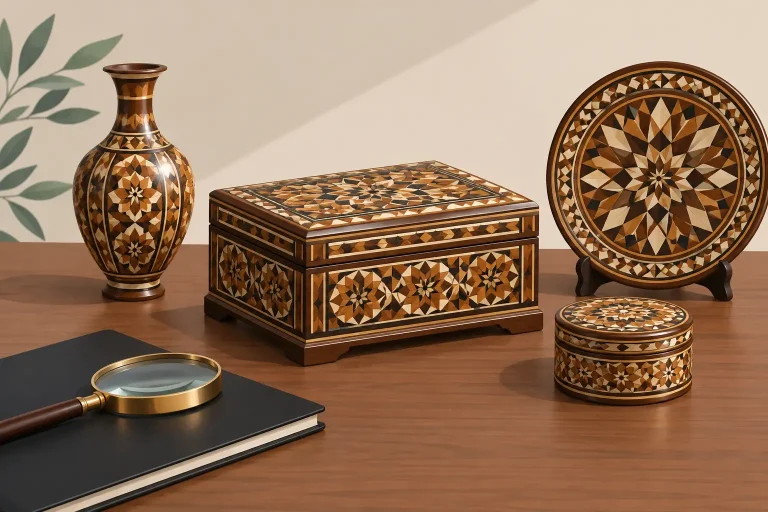
A client may choose a geometric pattern for a modern room, a floral composition for a more classical interior, or a richly detailed design inspired by authentic landmarks in Damascene old homes. Mother-of-pearl can be used sparingly for a refined glimmer, or more abundantly for a dramatic, collectible finish. Copper inlay adds warmth and contrast, especially against dark walnut.
The scale of the pattern matters. Fine, intricate motifs are extraordinary on jewelry boxes, chessboards, tissue boxes, and intimate tabletop pieces. On a large cabinet or dining table, the design may need broader fields and carefully placed borders so that the ornament remains elegant from across the room.
Custom does not have to mean crowded
More inlay is not always better. A minimalist interior may benefit from a walnut cabinet with a single mother-of-pearl panel or a restrained geometric border. A grand reception room may welcome a richer mosaic surface. The right choice depends on the room’s lighting, the surrounding décor, and whether the furniture should be the focal point or support other treasures already on display.
An experienced maker can help translate an inspiration image into a design that respects the medium. Some patterns that look appealing in print may be too delicate for a large tabletop or too busy beside heavily patterned rugs. Custom sketches and finish samples are valuable at this stage because they make decisions visible before the work begins.
The Custom Walnut Furniture Process
A well-planned commission protects both the client and the craftsmanship. At Damasch Magic East, bespoke furniture can begin with your preferred dimensions, pattern direction, wood tone, and functional needs. From there, sketches, material guidance, and production expectations help turn an idea into a clear, buildable design.
The process usually moves through several decisions: the furniture type and measurements, the walnut finish, the inlay or marquetry style, and the practical details such as drawers, shelving, hardware, or cable access. A custom media console, for example, may need ventilation and openings for cords. A statement dining table may need extension leaves or a base that permits comfortable seating.
Handmade work requires patience. Intricate mother-of-pearl and mosaic decoration takes time because each element is cut, fitted, and finished by hand. Production timing can also shift based on the complexity of the pattern and the size of the piece. That is not a disadvantage when expectations are clear – it is the nature of receiving an authentic artisan furnishing rather than a factory duplicate.
Before approving a design, ask for confirmation of final measurements, the placement of decorative panels, finish direction, and delivery considerations. For international orders, it is wise to measure elevators, stairwells, and doorways as carefully as the room itself. A magnificent walnut cabinet deserves a graceful arrival.
When Custom Walnut Is Worth Choosing
Custom walnut furniture is most rewarding when a standard size will not work, when a room needs a meaningful centerpiece, or when you want décor with cultural depth rather than generic ornament. It is also an exceptional choice for wedding gifts, housewarming gifts, executive offices, boutique hotels, and collectors building a home around handmade objects.
The investment is not only in walnut wood. It is in the eye of the artisan, the patience of handwork, and the ability to choose details that reflect your own space. A custom piece may cost more and require a longer wait than ready-made furniture, but it can offer a permanence that trend-driven décor rarely achieves.
Let the room lead the design. Whether you choose a quietly finished walnut side table or an exquisite mother-of-pearl cabinet with a breathtaking Damascene pattern, the best custom furniture feels as though it has always belonged there.