Aleppo Soap Comparison for Every Skin Ritual
A bar of Aleppo soap can look wonderfully simple: olive-green on the inside, warm brown on the outside, square-cut, and without elaborate packaging. Yet this ancient soap carries a world of difference from one bar to another. An honest Aleppo soap comparison begins with what is inside the bar, how long it has cured, and what kind of daily ritual you want it to serve.
For those drawn to authentic Damascene heritage, Aleppo soap is more than a bathroom essential. It is a practical expression of Levantine craftsmanship, traditionally made through a patient process of cooking olive oil with laurel berry oil, cutting the soap into blocks, and allowing it to mature over many months. Its clean ingredient profile and distinctive scent have made it a treasured choice for homes, guest baths, thoughtful gifts, and discerning skincare routines.
Aleppo Soap Comparison: What Actually Changes?
The most meaningful difference between Aleppo soap bars is the proportion of laurel berry oil. Olive oil forms the nourishing foundation of traditional Aleppo soap, while laurel oil gives the bar its herbal aroma, deeper green tone, and more cleansing character. A higher percentage is not automatically better. It is simply suited to a different preference.
A second distinction is curing time. Freshly made soap begins green, then develops its recognizable brown exterior as it rests and oxidizes. This outer shell is not a flaw or a sign that the soap is old in a negative sense. It is part of the bar’s character. Underneath, the green center reflects the olive and laurel oils within.
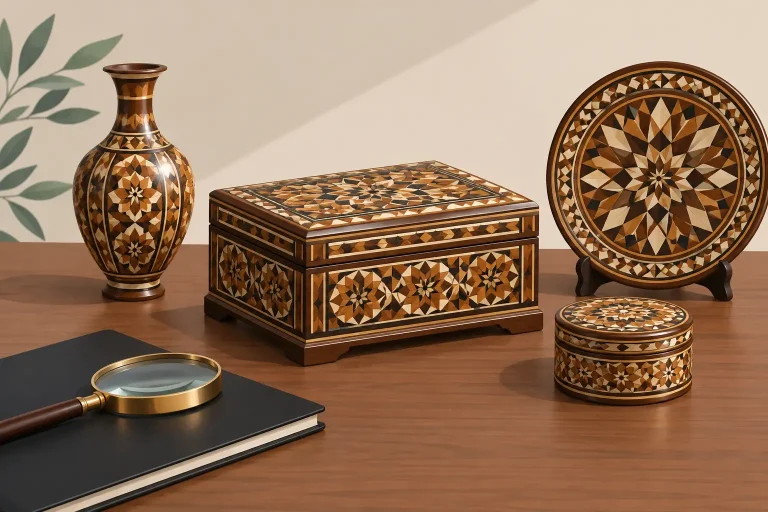
Finally, the experience changes with the maker’s process. Traditional Aleppo soap is often hand-cut and may vary slightly in shape, stamp, color, and surface texture. Those small variations are part of its handmade appeal, much like the natural grain in a walnut tray or the individual shimmer of mother-of-pearl inlay. A perfectly identical bar can be convenient, but it rarely carries the same visual evidence of human craft.
Low-Laurel Aleppo Soap: Gentle and Olive-Rich
Bars with a lower laurel oil content are typically the most approachable starting point. Their character is led by olive oil, giving them a milder, creamier lather and a softer herbal fragrance. Many people choose this style as an everyday hand and body soap, especially if they prefer understated scent and a less assertive cleanse.
Low-laurel bars are also an elegant choice for a guest bathroom. They feel luxurious without overwhelming the senses, and their natural brown-and-green appearance sits beautifully beside wood, copper, stone, or handcrafted accessories. The trade-off is that those seeking a strong laurel aroma or a more bracing wash may find them too gentle.
Mid-Laurel Aleppo Soap: The Versatile Choice
A moderate laurel oil percentage offers a balanced expression of the tradition. You still receive the richness of olive oil, but the laurel becomes more noticeable in both aroma and cleansing feel. For many households, this is the most versatile option: distinctive enough to feel special, yet comfortable for regular use on hands and body.
This middle range is particularly appealing to those who want one heritage bar for several purposes. It can work beautifully at the sink, in the shower, or as part of a curated self-care gift. If you appreciate products that are useful as well as culturally meaningful, a mid-laurel bar often provides the most satisfying balance.
High-Laurel Aleppo Soap: Herbaceous and More Intense
High-laurel Aleppo soap has a deeper, more aromatic personality. The scent is greener, sharper, and unmistakably herbal, while the cleansing sensation may feel more pronounced. It is often favored by experienced Aleppo soap users who enjoy the traditional laurel-forward character and want their bar to feel especially fresh.
However, high-laurel soap is not necessarily the right answer for every skin type or every routine. Those with very dry, reactive, or easily irritated skin may prefer to begin with a milder bar and observe how their skin responds. Natural ingredients can still be powerful ingredients. Patch testing a new soap and avoiding use on broken or actively irritated skin are sensible precautions.
Traditional Aleppo Soap Versus Ordinary Olive Oil Soap
Olive oil soap and Aleppo soap share an important family resemblance, but they should not be treated as identical. A true Aleppo-style formula pairs olive oil with laurel berry oil. That laurel component is central to the traditional identity, fragrance, and performance of the bar.
Ordinary olive oil soap may be beautiful in its own right. It can be mild, uncomplicated, and pleasant for daily washing. But if a bar contains no laurel oil, it will not offer the same aromatic profile or classic Aleppo character. Similarly, a product labeled with an Aleppo-inspired name may contain synthetic fragrance, palm oil, colorants, or a long list of additives. That does not make it unusable, but it makes it a different product.
For buyers who value authenticity, read the ingredient list rather than relying on a front-label promise. The simplest traditional formulas generally name olive oil, laurel berry oil, water, and the alkaline ingredients needed for saponification. Labels may use technical names, and exact wording can vary, but a short, understandable ingredient list is usually reassuring.
How to Recognize a Well-Made Bar
Authentic-looking Aleppo soap should never be judged by color alone. A brown exterior and green center are classic signs, but they can be imitated. Instead, look at the whole story: ingredients, country or region of production, stated laurel percentage when available, curing details, and the seller’s transparency about sourcing.
A quality bar often has a dry, firm feel rather than a soft or greasy surface. Its scent should be naturally herbaceous, not perfumed like a conventional fragranced soap. The stamp may be uneven or lightly impressed, and the edges may not be machine-perfect. These are not defects when the bar has been traditionally cut and handled.
Price can also offer context. Laurel berry oil is precious, and long curing requires time, storage, and careful handling. An unusually inexpensive high-laurel bar deserves a closer look at its ingredient list and origin. The most exquisite artisanal goods are rarely produced with the speed or uniformity of mass-market products.
Choose by Use, Not by Hype
If you are selecting your first bar, choose according to how and where you will use it. A low-laurel bar is a graceful everyday option for hands and body. A moderate-laurel bar suits a home that wants a little more scent and character without an overly intense experience. A high-laurel bar is best for those who already know they love laurel’s vivid herbal presence.
For a gift, consider the recipient’s preferences rather than assuming the highest percentage is the most luxurious. A beautifully presented moderate-laurel bar can feel more generous and usable than an intensely aromatic bar that sits untouched. Pairing Aleppo soap with a handcrafted wooden soap dish, an inlaid organizer, or a copper-accented bath tray creates a thoughtful ritual rooted in material beauty and old-world hospitality.
Make Your Aleppo Soap Last Longer
A well-cured bar can last surprisingly well, but it needs to dry between uses. Keep it on a draining soap dish rather than in a puddle of water, and avoid leaving it under a constant stream in the shower. If the bar is large, cutting it into smaller pieces lets you keep the rest clean and dry until needed.
The lather may be less billowy than that of a synthetic body wash. That is normal. Aleppo soap offers a more restrained, creamy foam, and its pleasure lies in the feel of the oils, the herbal scent, and the knowledge that a humble square bar can carry centuries of craft.
Choose the Aleppo soap that feels right in your hands, not the one with the boldest claim on its label. The finest bar is the one whose ingredients, aroma, and heritage make an ordinary wash feel quietly special.