Mother of Pearl Islamic Wall Art for the Home
A wall can hold more than decoration. In a home shaped by faith, memory, and beautiful objects, mother of pearl Islamic wall art becomes a quiet focal point: luminous in daylight, richly detailed up close, and deeply meaningful every time it is seen. Its beauty is not merely in the shimmer of the shell. It lives in the patient handwork, the sacred geometry, and the living connection to centuries of Damascene craftsmanship.
For collectors, homeowners, and designers seeking a distinguished Islamic accent, a handmade inlaid panel offers something that printed décor cannot. It carries natural materials, variation, and the presence of the artisan’s hand. Whether placed above a console, in a formal sitting room, or near a prayer area, it brings an exquisite balance of spiritual expression and luxurious interior design.
What Makes Mother of Pearl Islamic Wall Art Special?
Mother of pearl is the iridescent inner layer of certain shells. When cut into fine pieces and set into wood, it catches the light with tones that shift from creamy white to silver, soft pink, and pale green. No two fragments reflect light in exactly the same way, which gives every handmade artwork a distinctive character.
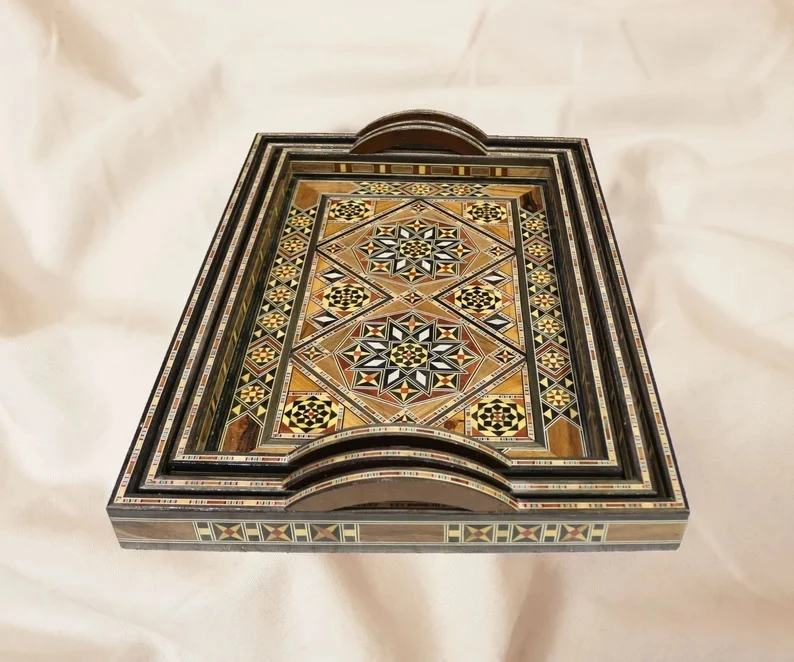
In Damascene marquetry, artisans often pair mother of pearl with warm walnut or lemon wood. The contrast is breathtaking: dark, expressive grain surrounding small luminous inlays arranged into stars, borders, arabesques, and calligraphic compositions. Some pieces also incorporate delicate copper or bone-colored accents, creating greater depth without overwhelming the design.
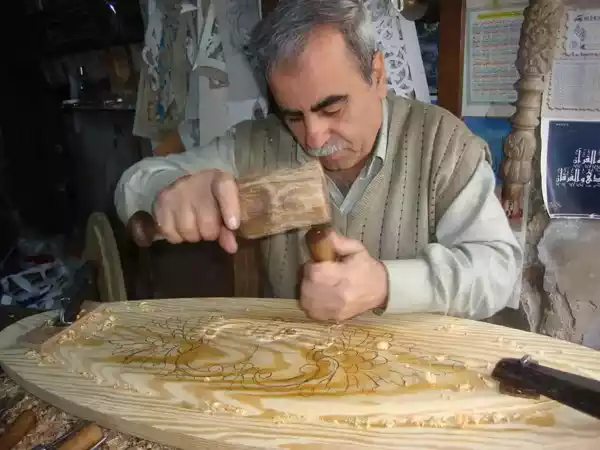
This is slow work. The shell must be selected, cut, shaped, and fitted by hand before the surface is refined and finished. A finely made panel is not intended to look machine-perfect. Its slight natural variations are evidence of authentic material and handcraft, the details that make it feel like an heirloom rather than an ordinary wall accessory.
Islamic Design That Speaks Without Excess
Islamic art has a remarkable ability to feel both ornate and disciplined. Repeating geometric patterns suggest order and infinity, while flowing floral motifs bring softness and movement. Calligraphy introduces a sacred, personal dimension, especially when a panel features verses, the names of Allah, the Basmala, or other beloved devotional phrases.
Geometric Marquetry
Star patterns and interlocking polygons are especially suited to mother-of-pearl inlay. Their precise repetition gives a room structure and visual rhythm. A larger geometric piece can hold its own in an entryway, dining room, office, or hotel reception area, where it reads as a work of art before its intricate construction is even noticed.
Calligraphy and Devotional Display
Calligraphic mother-of-pearl Islamic wall art is often chosen for a prayer room, living room, or as a wedding and housewarming gift. The key is respectful placement. Choose a clean, elevated location away from clutter and avoid positioning sacred text where it may be obscured or treated casually.
For those who prefer a more understated religious reference, a geometric panel can be equally meaningful. It draws from the visual language of Islamic heritage without using script, making it a graceful choice for mixed-use spaces and contemporary interiors.
Choosing the Right Piece for Your Space
The most beautiful choice depends on proportion, lighting, and the atmosphere you want to create. A compact panel can bring refinement to a narrow hallway or reading nook, while a substantial inlaid artwork deserves room around it. Mother of pearl needs light to reveal its full radiance, but harsh direct sun over long periods is not ideal for natural materials.
Consider the wood tone already present in your home. Walnut-framed art works beautifully with traditional furniture, leather, antique brass, warm neutral upholstery, and layered textiles. Lemon wood has a lighter, honeyed presence that can brighten a room with cream walls, stone finishes, or contemporary furnishings.
A richly patterned panel makes a strong statement against calm surroundings. If your room already includes patterned rugs, carved furniture, or colorful textiles, a design with a more open border or focused central motif may create better balance. If the wall is minimal, an elaborate mosaic composition can become the defining feature of the room.
Scale also matters. Hanging a small, intricate artwork too high can make its craftsmanship disappear. Position it where viewers can appreciate the inlay at close range, usually around eye level. In a grouping, give it enough space so that its luminous details are not visually crowded by other frames.
A Luxurious Gift With Lasting Meaning
A handmade inlaid wall piece is a meaningful gift because it joins beauty with permanence. It is especially fitting for weddings, new homes, Ramadan and Eid celebrations, anniversaries, and milestone occasions. Rather than offering something temporary, you are giving an object made to become part of a family’s story.
For a wedding gift, a calligraphic or geometric piece can honor both the couple’s faith and their new home. For a business or hospitality setting, a larger Damascene panel signals discernment, cultural appreciation, and an eye for exceptional craftsmanship. Custom dimensions or coordinated wood finishes are particularly valuable when furnishing a formal office, majlis-style reception room, boutique hotel, or luxury residence.
At Damasch Magic East, the appeal of such work begins with its origin: authentic Damascus-inspired artistry shaped through intricate inlay, natural wood, and heritage design. For bespoke interiors, selecting a pattern, scale, and finish that responds to the room can turn wall décor into a true architectural focal point.
How to Care for Mother-of-Pearl Inlay
Mother of pearl and natural wood are enduring materials, but they reward thoughtful care. Keep the piece in a stable indoor environment and away from excessive humidity, strong heat sources, and prolonged direct sunlight. These conditions can affect wood over time and may dull the luster that makes the inlay so captivating.
Dust gently with a soft, dry microfiber cloth. Do not use abrasive pads, household sprays, alcohol-based cleaners, or soaking wet cloths. Moisture should never be allowed to sit in seams or around the inlaid fragments. If a deeper clean is needed, use only a barely damp cloth followed immediately by a soft dry one, and always test a discreet area first.
When hanging the artwork, use hardware appropriate to its weight and wall type. A premium handcrafted panel deserves secure support, especially when it is framed in dense hardwood or features a substantial carved backing. It is worth having larger pieces professionally installed for a polished and safe result.
Why Handmade Details Matter
Mass-produced Islamic prints can offer affordability and convenience, and they have a place in many homes. Yet they cannot reproduce the tactile depth of shell set into wood, the changing glow of natural iridescence, or the sense of history found in traditional marquetry. A handmade artwork asks more of the maker, and it gives more back to the owner.
Its value is not only decorative. It is cultural, material, and emotional. Each small piece of pearl reflects light differently, each grain of wood gives the design a slightly different ground, and each composition carries a vocabulary refined across generations. That makes the work especially rewarding for those who want their home to feel collected rather than furnished.
Choose a piece that speaks to the scale of your wall and the spirit of your home, then allow it room to be seen. The finest mother-of-pearl Islamic art does not need to compete for attention. It quietly creates a sense of reverence, warmth, and enduring beauty wherever it is placed.