How to Commission a Console for a Grand Entry
A console table is often the first object guests notice after the door opens. It can hold a treasured vase, welcome flowers, frame a hallway mirror, or give an empty wall the presence of a true focal point. Learning how to commission a console means choosing more than furniture dimensions. It means creating a handmade piece that belongs to your home, your entertaining style, and the visual story you want to tell.
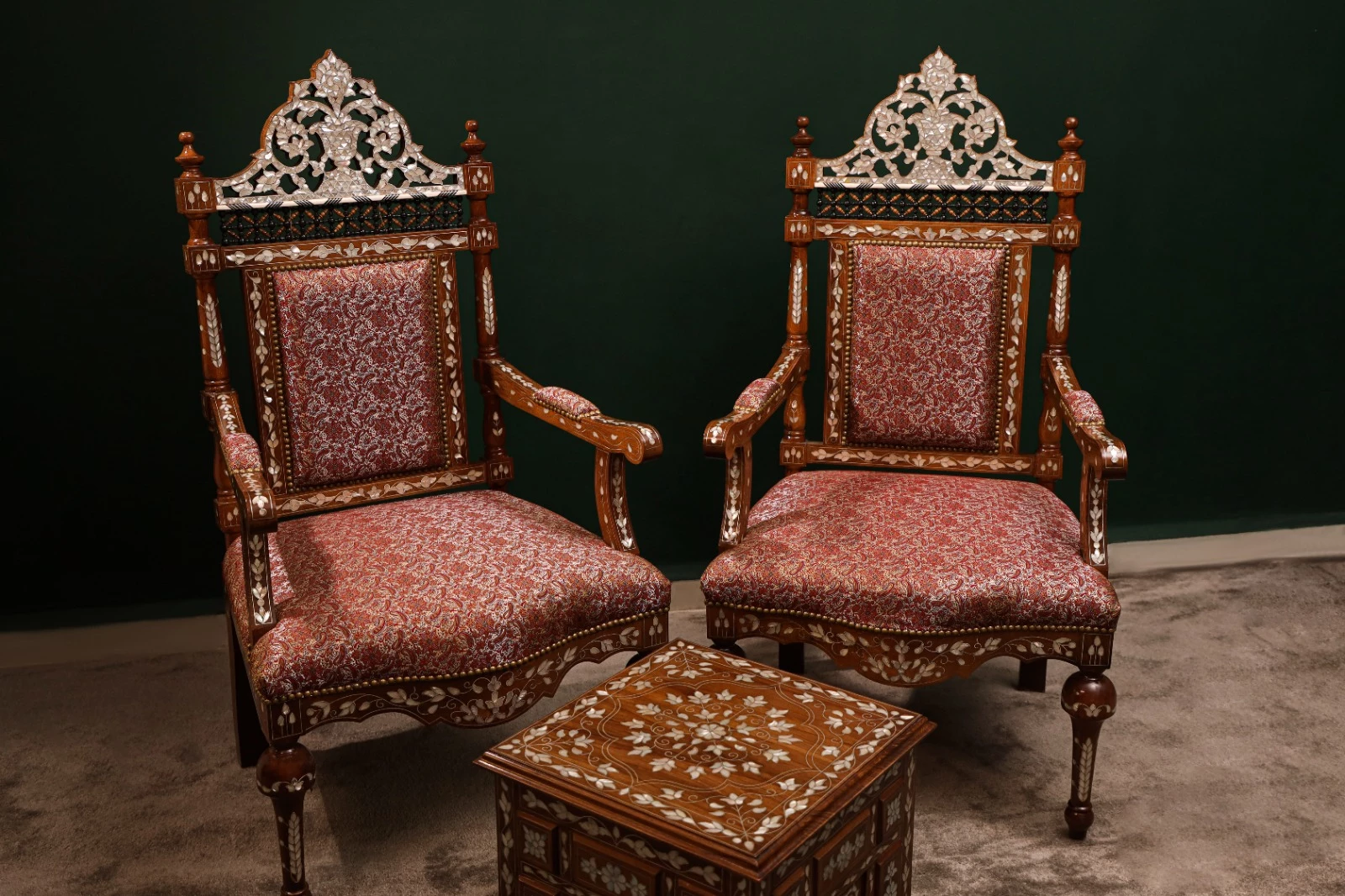
A custom Damascene console has a particular advantage: its beauty is built into the structure. Natural walnut or lemon wood brings warmth and depth, while mother-of-pearl, copper inlay, and geometric marquetry give the surface a luminous, intricate character. The best commission begins with practical measurements, then gives craftsmanship room to make the piece unforgettable.
Start With the Space, Not the Pattern
The ornate detail of a console may be what captures your attention, but scale determines whether it feels graceful once it arrives. Measure the full wall, the available depth, nearby door swings, and the clear path through the room. In a narrow entry hall, a shallow console can create luxury without interrupting movement. In a large foyer, a wider piece with a stronger silhouette may be needed so it does not disappear beneath a grand mirror or artwork.
Height deserves equal attention. Most consoles sit comfortably around 30 to 36 inches high, but the ideal proportion depends on what will hang above it and how the table will be used. A lower console can feel relaxed beneath a large painting. A taller design may better suit a formal entry where guests pause to set down keys, cards, or a small handbag.
Consider the room from several angles. If the console will be viewed from a staircase, an open living room, or a dining area, the side panels and legs become part of the design. A piece placed against a wall can emphasize its richly inlaid front and top. A console behind a sofa may require decorative work on more than one side.
How to Commission a Console With Purpose
Before selecting wood or ornament, decide what the console needs to do. A purely decorative table can favor delicate proportions, elaborate mosaic work, and a dramatic mother-of-pearl field. A daily-use entry console may need discreet drawers for keys, mail, reading glasses, and small essentials. A dining-room console may need a generous top for serving pieces, candles, or a sculptural bowl.
Share these intended uses at the beginning of the conversation. They influence the depth of drawers, interior organization, leg construction, and the finish selected for the surface. A home with young children or frequent entertaining may benefit from a finish chosen for everyday resilience. A formal reception room can prioritize fine visual detail and a lighter-touch use case.
It also helps to decide what you want the console to hold on an ordinary day. A pair of lamps requires consideration of cord placement and surface width. A heavy marble vase needs a sturdy top and a structure designed to carry its weight. If you display a family Quran, framed calligraphy, or a collection of meaningful objects, the piece should provide a dignified setting without competing with what rests upon it.
Choose Materials That Tell the Right Story
Damascene furniture gains its richness from the conversation between natural wood and inlay. Walnut is deeply expressive, with a warm, substantial grain that works beautifully in traditional, transitional, and richly layered interiors. Lemon wood can offer a brighter golden character, especially appealing where a room needs lightness without losing the authenticity of handmade timber.
Mother-of-pearl creates the signature glow many collectors seek. Its changing sheen catches daylight and lamplight differently throughout the day, giving the furniture a living quality. It is breathtaking on a console top, drawer fronts, borders, or a central medallion. Yet more inlay is not always the better choice. A room already filled with patterned rugs, textiles, and decorative art may call for a quieter frame with a focused panel of pearl rather than all-over ornament.
Copper inlay offers another direction. It brings a warm metallic line through the wood and can coordinate beautifully with brass lamps, bronze mirrors, or antique hardware. When paired with mother-of-pearl, copper adds definition to the geometry and gives a design extra depth. Ask for finish samples when possible, because the same wood tone can look quite different in a sun-filled California entryway than in a softly lit New York apartment.
Select a Pattern With the Room in Mind
A custom console is an opportunity to choose an authentic design language instead of settling for a generic decorative motif. Damascene geometric marquetry, star patterns, floral compositions, and carefully framed panels each create a different mood. A repeating geometric design can bring rhythm and order to a contemporary home. Floral or arabesque-inspired detailing can soften a formal room and connect naturally with Islamic art, carved mirrors, or patterned textiles.
Bring reference images of your space, not just pictures of furniture you admire. A craft workshop can better advise on proportion when it sees your wall color, flooring, existing wood finishes, and surrounding pieces. This avoids a common disappointment: selecting a magnificent pattern in isolation, then finding that it clashes with the undertone of the room’s cabinetry or competes with a heavily veined stone floor.
A balanced design often uses a hierarchy of ornament. The top may carry the most detailed mosaic work, while the apron and legs provide a calmer visual frame. Or a bold inlaid drawer front can become the centerpiece, with understated wood around it. That balance is what allows exquisite handwork to remain luxurious rather than visually crowded.
Approve the Details Before Production Begins
A serious custom commission should move from idea to clear specification. Provide exact width, height, and depth in inches, along with photographs and notes about the installation area. Then review the proposed sketch carefully. Confirm the silhouette, number of drawers, handle style, wood tone, inlay placement, and any special requirements before production starts.
This is the moment to ask practical questions. Will the console arrive in one piece? Are the legs removable for access through a narrow hallway? How will drawers open, and what is their usable internal depth? If your floor is uneven, can adjustable feet or protective pads be included? These details are less romantic than mother-of-pearl, but they are what make a bespoke piece enjoyable to live with for years.
Production timelines for handmade furniture should be treated with respect. Inlay work, wood preparation, finishing, and quality checks cannot be rushed without compromising the very character you are commissioning. A worthwhile maker will set realistic expectations, provide a design sketch or finish direction, and keep you informed as the piece takes shape. Damasch Magic East approaches bespoke work as a conversation, with dimensions, patterns, wood tones, and workshop updates chosen around the client’s vision.
Plan for Arrival and Placement
Before shipping, measure the route from your entrance to the final room. Account for elevators, stair turns, door frames, and low ceilings. A console that fits perfectly against the wall is of little use if it cannot pass the entryway. For large or heavily inlaid pieces, arrange help for unpacking and place a clean blanket or rug nearby to protect the finish during installation.
Once positioned, give the console space to breathe. A mirror, a pair of lamps, or one exceptional vessel is often enough. The inlay itself is artwork, so styling should complement rather than conceal it. Avoid leaving wet glasses, harsh cleaning products, or abrasive objects directly on the surface. A soft dry cloth and thoughtful daily use will preserve the wood and the luminous detail.
The finest console commissions are not made to fill a blank wall. They are made to become part of the welcome your home offers. Choose the dimensions with care, let authentic materials guide the design, and leave room for the hands of the artisan to turn a useful table into a lasting landmark.