Wood Inlay Comparison: Pearl, Copper, and Marquetry
A beautiful inlaid box or serving tray should do more than fill an empty corner. It should catch the eye from across the room, reward a closer look, and carry a human story in every line. This wood inlay comparison looks at the materials and techniques behind luxurious Damascene pieces, helping you choose a design that feels right for your home, a meaningful gift, or an elegant hospitality setting.
Why the Inlay Material Changes Everything
The base wood establishes warmth, structure, and character. Walnut brings deep brown tones, expressive grain, and a stately presence that suits traditional interiors as easily as richly layered contemporary spaces. Lemon wood offers a paler golden contrast, giving intricate patterns more brightness and definition.
Inlay is what transforms this natural foundation into decorative art. Mother-of-pearl reflects light with a soft, luminous shimmer. Copper introduces a warm metallic glow. Wooden marquetry builds its beauty through contrast, geometry, and patient precision. Each material has a different visual language, a different care profile, and a different role in the room.
Choosing between them is not simply a question of which is more ornate. It depends on where the piece will live, how it will be used, the colors already present in your interior, and whether you want a quiet accent or a breathtaking focal point.
Wood Inlay Comparison: The Three Signature Styles
Mother-of-pearl inlay: luminous and ceremonial
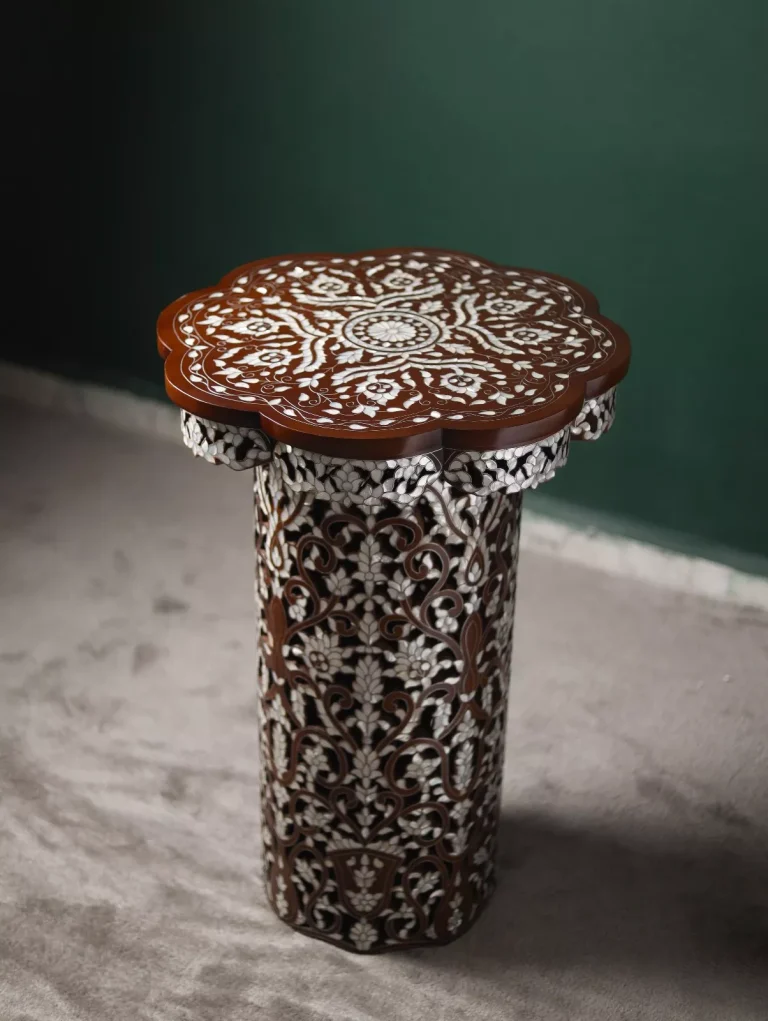
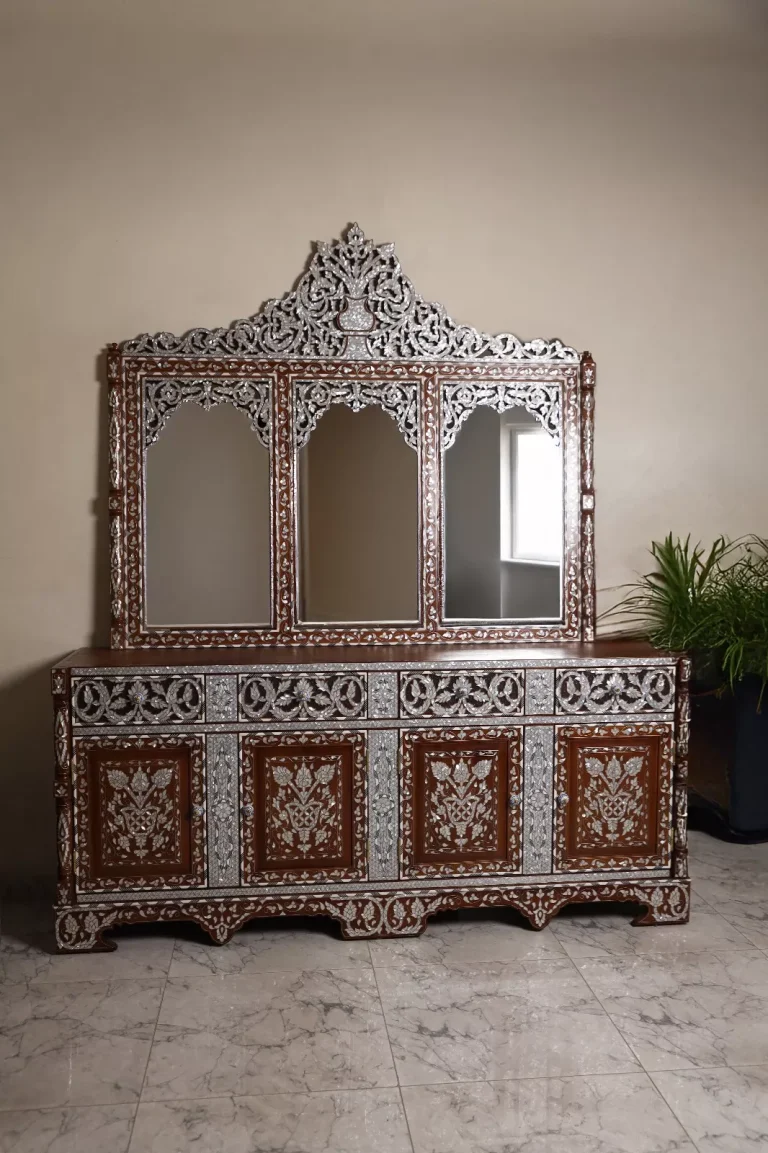
Mother-of-pearl is the most immediately captivating of the traditional inlay materials. Artisans carefully cut and set natural shell into carved recesses in the wood, often arranging it into stars, floral motifs, arabesques, and elaborate geometric fields. Under changing light, its surface can shift from creamy white to silver, pale pink, or a subtle green-blue iridescence.
This is the ideal choice for buyers who want unmistakable luxury. A mother-of-pearl jewelry box on a dressing table, a pearl-inlaid tissue box in a formal living room, or an ornate chess set placed on a library table can become a true conversation piece. The material has a celebratory quality, making it especially fitting for wedding gifts, milestone anniversaries, housewarmings, and collectors of Islamic decorative arts.
Its trade-off is that it deserves thoughtful handling. Mother-of-pearl is strong enough for well-made functional pieces, but it should not be exposed to harsh chemicals, abrasive scrubbing, or sharp impacts. For serving trays, use liners or coasters beneath very hot vessels and wipe spills promptly. The reward for that care is an exquisite surface that retains its glow for years.
Mother-of-pearl works especially well against dark walnut, where the contrast makes every detail shine. On lemon wood, it produces a gentler, airier expression that can suit brighter rooms and refined bedroom décor.
Copper inlay: warm, graphic, and grounded
Copper inlay offers a very different kind of richness. Rather than the luminous play of shell, copper brings a confident metallic line into the wood. It can define borders, frame a central motif, or form repeating stars and interlocking geometry across a tray, box, or tabletop.
Its appearance is warm rather than flashy. Copper sits beautifully beside terracotta, olive, tobacco leather, brass, cream stone, and natural textiles. It is a particularly compelling option for an office, study, entryway, or dining area where you want the room to feel polished without becoming overly formal.
Copper also speaks to the architectural side of Damascene ornament. Fine metal lines sharpen the geometry of a pattern and give it visual discipline. A copper-inlaid walnut organizer, for example, has enough decorative presence for a desk or console table while remaining grounded in daily utility.
Over time, copper may develop a deeper tone or gentle patina. Many collectors appreciate this evolution because it makes the object feel lived with rather than factory-new. If you prefer a brighter finish, regular dusting with a soft dry cloth and careful, appropriate polishing can help preserve its luster. Avoid soaking the piece or using aggressive household cleaners, which can affect both the metal and the wood finish.
Wooden marquetry: pattern, depth, and timeless warmth
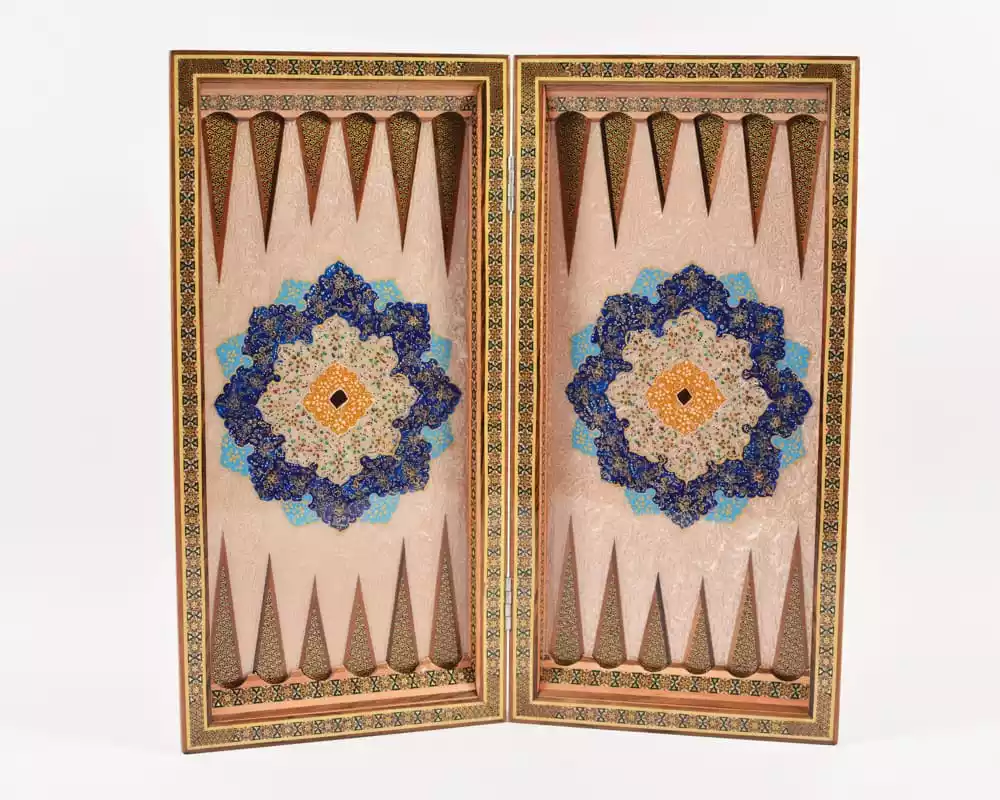
Wooden marquetry is an art of contrast created entirely through veneers and carefully selected woods. The artisan cuts small pieces into precise shapes and assembles them into stars, diamonds, borders, and mosaics. In a fine Damascene-style piece, the pattern can look almost woven, with dark walnut and pale lemon wood creating rhythm across the surface.
For buyers drawn to natural materials, marquetry is often the most versatile choice. It brings detail without the reflective brightness of pearl or metal, so it can blend into a wider range of interiors. It feels at home in a warm minimal room, a classic study, a rustic-luxury dining space, or a hotel suite that needs a sense of place.
Marquetry is also an excellent choice for larger functional furnishings. On a coffee table, side table, backgammon board, or decorative wall panel, its pattern remains visually rich without overwhelming the scale of the piece. It allows the wood itself to remain the main event.
The distinction to look for is precision. In authentic handmade marquetry, the joins should appear intentional and close, the pattern should feel balanced, and the grain and tone of the woods should enhance rather than distract from the design. Slight variations are not flaws to fear. They are often evidence that the material is natural and the work is made by hand.
How to Choose for Your Space
Start with the role of the object. A showpiece intended for a mantel, reception table, or formal entertaining deserves the radiance of mother-of-pearl. A hardworking tray, organizer, or office accessory may benefit from copper’s composed warmth or the resilience and natural elegance of marquetry. A hand-inlaid chess or backgammon set can go in any direction, depending on whether you want it to read as ceremonial, architectural, or quietly traditional.
Then consider the light in your room. Pearl is especially beautiful near windows, lamps, or pendant lighting because it responds to illumination. Copper thrives in rooms with warm bulbs, rich woods, and earth-toned furnishings. Marquetry remains steady in both bright and low light, making it a reliable choice for spaces that need texture more than sparkle.
Color matters as well. If your room features black, deep brown, navy, jewel tones, or gilded accents, mother-of-pearl can create dramatic contrast. If you have clay, caramel, forest green, warm gray, or aged brass, copper will feel naturally at home. If your palette relies on linen, stone, oak, cream, and organic texture, marquetry will add ornament while preserving calm.
For a coordinated interior, you do not need every piece to use the same inlay. A pearl-inlaid box can sit beautifully with a copper-accented tray when walnut is the common thread. A marquetry fountain or tabletop can anchor the room while smaller pearl details provide moments of light. The key is repetition of tone, pattern family, or wood species rather than exact matching.
What Authentic Handcraft Looks Like
Premium inlay should never feel printed, flat, or anonymous. Look closely at the pattern: real craftsmanship has depth because materials are set into the wood, not simply applied as a surface image. The design should be cleanly arranged, but it should not have the sterile sameness of mass production.
Natural mother-of-pearl will show small shifts in iridescence. Copper will carry its own warm tonal character. Walnut will reveal grain that changes from one panel to the next. These variations make each piece unique, particularly when it is made to order.
For custom furniture and decorative objects, it is worth deciding early how ornate you want the composition to be. A dense all-over mosaic creates grandeur and collector appeal. A restrained border with a central medallion gives more room for the beauty of the wood. At Damasch Magic East, custom choices such as dimensions, wood tone, and pattern placement allow a piece to answer the needs of a particular home rather than asking the home to adapt to it.
Care That Protects the Detail
All fine wood inlay benefits from the same basic habits: dust with a soft dry cloth, keep the piece away from prolonged direct sun and strong heat, and clean spills quickly. Do not use abrasive pads, alcohol-heavy sprays, or furniture products that leave a heavy residue in the inlaid lines.
For trays and tabletop accessories, remember that handmade decorative wood is best treated as refined serveware rather than restaurant equipment. Use coasters, avoid standing water, and lift objects instead of dragging them across the surface. These small rituals preserve the finish and respect the hours of handwork held within it.
The right inlaid piece does not need to match every object in the room. It only needs to feel intentional. Choose the glow of pearl, the warmth of copper, or the quiet complexity of marquetry, then give it a place where its craftsmanship can be seen and enjoyed every day.