What Makes Damascene Furniture Authentic?
A genuine Damascene cabinet, table, chair, or screen does not ask quietly for attention. Light catches its mother-of-pearl, geometric patterns seem to move across the surface, and the warmth of natural walnut gives the piece a depth that mass-produced décor cannot imitate. But what makes Damascene furniture authentic is more than an ornate appearance. It is the meeting of Damascus heritage, patient handwork, honest materials, and designs created to be lived with for generations.
For collectors and homeowners, this distinction matters. Furniture inspired by the Middle East is widely available, yet authentic Damascene work carries a particular visual language and workshop tradition. Knowing what to look for helps you choose a breathtaking statement piece with real cultural and decorative value.
What Makes Damascene Furniture Authentic?
Authenticity begins with a craft tradition rooted in Damascus, where skilled artisans have refined wood inlay and marquetry techniques over centuries. The finest pieces are not simply decorated wood furniture. They are carefully built objects in which the structure, wood selection, ornamental geometry, and inlaid materials work together.
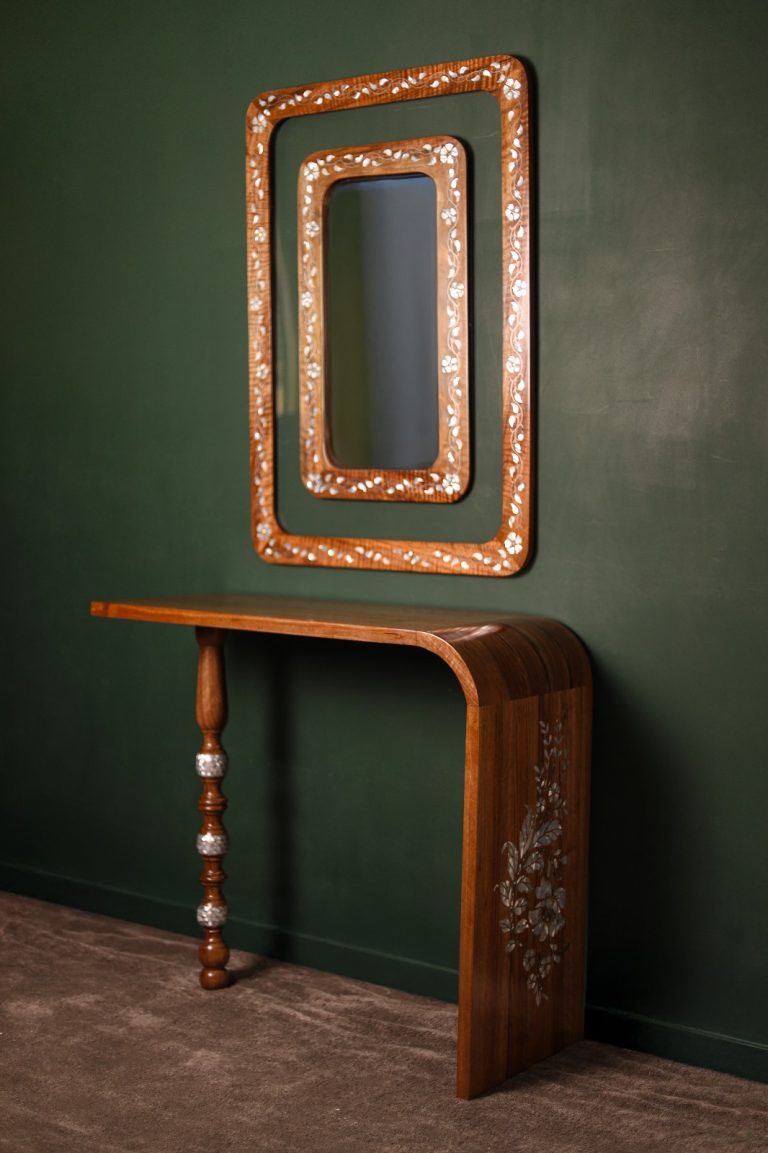
A true Damascene piece may feature mother-of-pearl, bone, copper, or other contrasting materials set into a wood ground. The patterns often draw from Islamic geometry, floral arabesques, and repeated star forms. These motifs are not randomly applied decoration. Their balance, repetition, and symmetry are central to the identity of the work.
That said, authenticity is not frozen in time. A custom walnut desk made for a contemporary home can still be genuinely Damascene when it is produced by artisans working within this craft language, with traditional materials and techniques. The shape may be tailored to a modern room, while the craftsmanship remains connected to its Damascus roots.
The Wood Should Have Character, Not a Plastic Finish
Natural wood is one of the first signs of quality. Walnut is especially prized in Damascene furniture for its rich grain, warm brown color, and strength. Lemon wood may also be used for contrast, fine detailing, or lighter decorative elements. Each board has its own figure, which means no two handmade pieces will look exactly alike.
Look closely at the surface around the inlay. In fine work, the wood feels substantial and visually alive rather than flat and printed. A deep, overly glossy coating can conceal the beauty of the grain and make a piece feel synthetic. A carefully finished handcrafted surface, by contrast, protects the furniture while allowing the natural character of the wood to remain visible.
This is also where expectations should be realistic. Handcrafted furniture can show subtle differences in grain, tone, and pattern placement. These are not defects when the construction is sound. They are evidence that the piece was made from natural materials by human hands, not stamped out in identical runs.
Hand-Cut Mother-of-Pearl Is the Signature Detail
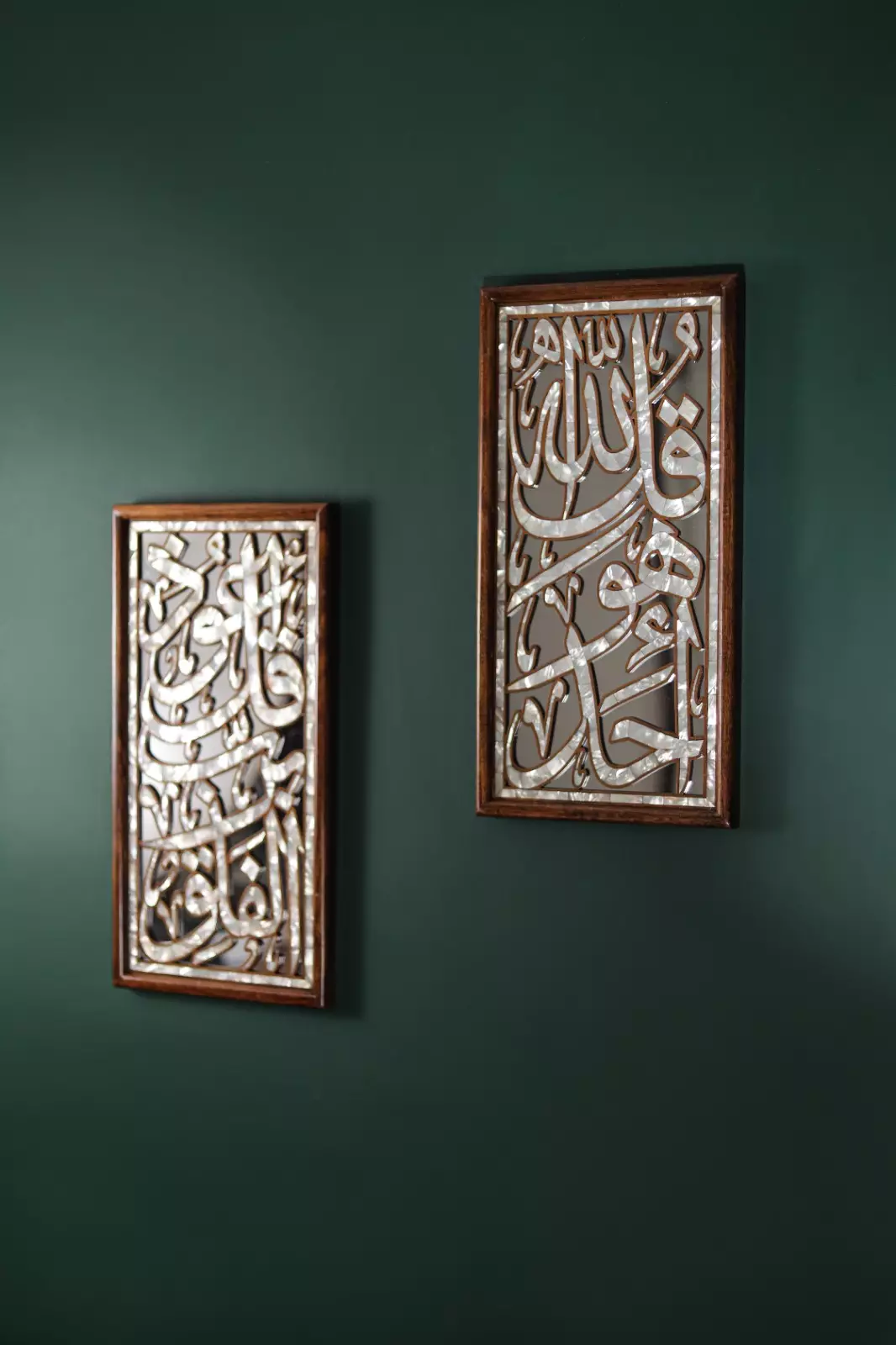
Mother-of-pearl is among the most recognizable features of Damascene furniture. Its beauty comes from the way it reflects light: white at one angle, then silver, cream, blue, or soft green at another. No printed imitation can recreate that shifting, luminous quality.
In authentic work, small pieces of pearl are cut, arranged, and fitted into prepared areas of the wood. The process requires precision. A pattern may use hundreds or thousands of individual elements, especially on a large cabinet, coffee table, mirror frame, or decorative chest. Fine lines separate the inlaid pieces, while the overall surface should feel level, secure, and carefully finished.
The most luxurious examples use pearl to create elaborate geometric fields or floral borders without overwhelming the form of the furniture. A skilled artisan knows when to let the walnut breathe. Dense inlay can be exquisite on a focal panel, while a quieter edge or frame gives the eye a place to rest.
Not every authentic Damascene item must be covered in mother-of-pearl. Copper inlay, mosaic work, and beautifully shaped natural wood can carry the same heritage. What matters is that the ornament is integral to the design rather than a superficial layer added for effect.
Geometry Reveals the Hand of the Maker
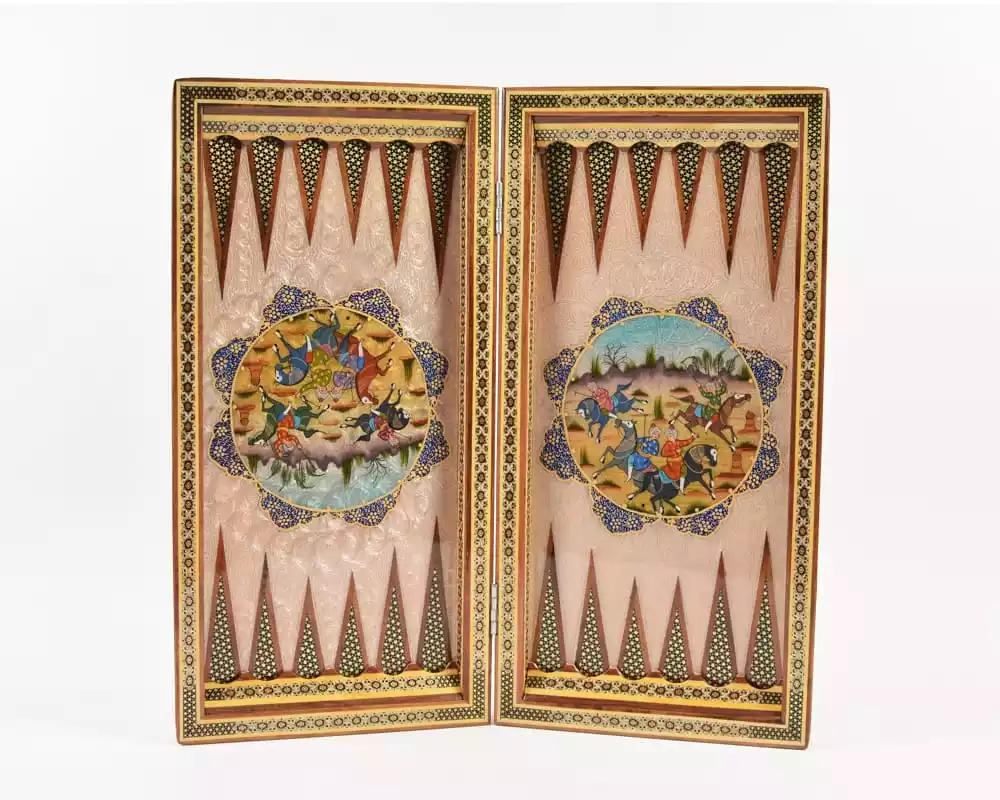
Damascene design is often immediately recognizable through its geometry. Interlocking stars, polygons, radiating rosettes, and delicate borders create a sense of order that is both architectural and decorative. On furniture, these patterns can transform a practical object into an authentic landmark of a room.
The quality lies in proportion and precision. Lines should meet cleanly, repeated units should feel balanced, and the design should follow the shape of the piece. On a well-made side table or chest, a central star may anchor the top while borders frame it naturally. On a larger armoire, panels may be arranged to complement doors, drawers, and structural divisions.
Small variations are normal in handmade marquetry, particularly in very detailed work. However, gaps, lifting inlay, visibly printed patterns, or motifs that ignore the furniture’s proportions are warning signs. Decorative complexity alone is not proof of quality. The composition must be disciplined.
Construction Matters as Much as Ornament
A magnificent inlaid panel has little value if the furniture beneath it is poorly made. Authentic Damascene furniture is intended to serve a purpose, whether it is a dining table for generous gatherings, a cabinet for treasured objects, a chess table for long evenings, or a console that welcomes guests in an entryway.
Examine how the piece functions. Doors should sit properly, drawers should open with ease, legs should feel stable, and the body should have a reassuring weight. Joints, edges, and interior areas deserve attention too. A maker who respects the visible inlay but cuts corners on the structure has not delivered heirloom furniture.
There is a practical trade-off with highly ornate surfaces. Mother-of-pearl and intricate mosaic deserve thoughtful care. They are ideal for spaces where visual impact matters, but a heavily used family dining table may benefit from a design with inlay concentrated on borders or a protected central panel. The right choice depends on how the furniture will be used, not only on how dramatic it looks in a photograph.
Provenance Is More Than a Marketing Phrase
Damascus-origin craftsmanship gives Damascene furniture its deepest meaning. The city is not merely a style reference. It represents a living tradition of workshops, artisans, materials knowledge, and inherited design vocabulary. When a seller can speak clearly about where a piece is made, what materials are used, and how it is constructed, buyers have a stronger basis for judging authenticity.
Provenance should be supported by specifics. Descriptions such as natural walnut, hand-cut mother-of-pearl, copper inlay, and handmade marquetry tell you more than vague claims of “oriental style” or “luxury design.” For a made-to-order piece, a reliable maker should also be able to discuss dimensions, wood tone, pattern options, production timing, and the expected character of the finished work.
At Damasch Magic East, custom commissions can begin with your room’s needs rather than forcing your vision into standard measurements. A sketch, finish sample, and workshop updates help turn a heritage-inspired idea into furniture that belongs naturally in your home, office, or hospitality project.
How to Choose an Authentic Piece for Your Space
Start with the role the furniture must play. A grand mother-of-pearl cabinet can become the focal point of a formal living room, while an inlaid serving tray or side table brings the same Damascene spirit to a smaller space. If you are furnishing a hotel, reception area, or executive office, scale and durability may guide the design as much as visual richness.
Then consider the relationship between pattern and surrounding décor. Damascene furniture pairs beautifully with neutral walls, natural stone, velvet, brass, and warm textiles because these materials allow the inlay to shine. It can also create an exciting contrast in a clean contemporary interior. One exceptional piece often has more presence than a room filled with competing ornament.
Finally, buy with patience. Genuine handmade work takes time because the details take time. A lower price can be attractive, but it may reflect machine-made veneer, synthetic inlay, rushed finishing, or furniture built without the structural quality expected of a long-term investment. The right piece should feel luxurious on arrival and meaningful years later, as its materials develop the gentle character of a well-loved heirloom.
Authentic Damascene furniture brings more than decoration into a home. It carries the precision of the artisan’s hand, the warmth of natural wood, and a visual heritage strong enough to make every gathering, gift, and quiet daily moment feel more considered.