Walnut Versus Lemon Wood: Which Suits Your Home?
A hand-inlaid table is never only a table. Its wood sets the entire mood before the mother-of-pearl catches the light, before the copper lines define a geometric pattern, and before it becomes the piece guests ask about. In the choice of walnut versus lemon wood, the difference is not simply light versus dark. It is a decision between two beautiful personalities, each deeply suited to the expressive tradition of Damascene furniture and décor.
Walnut brings depth, warmth, and quiet authority. Lemon wood offers radiance, contrast, and a more luminous decorative presence. Both can be exquisite in the hands of skilled artisans. The right choice depends on the room, the surrounding finishes, the level of ornamentation, and the feeling you want a piece to create for years to come.
Walnut Versus Lemon Wood at a Glance
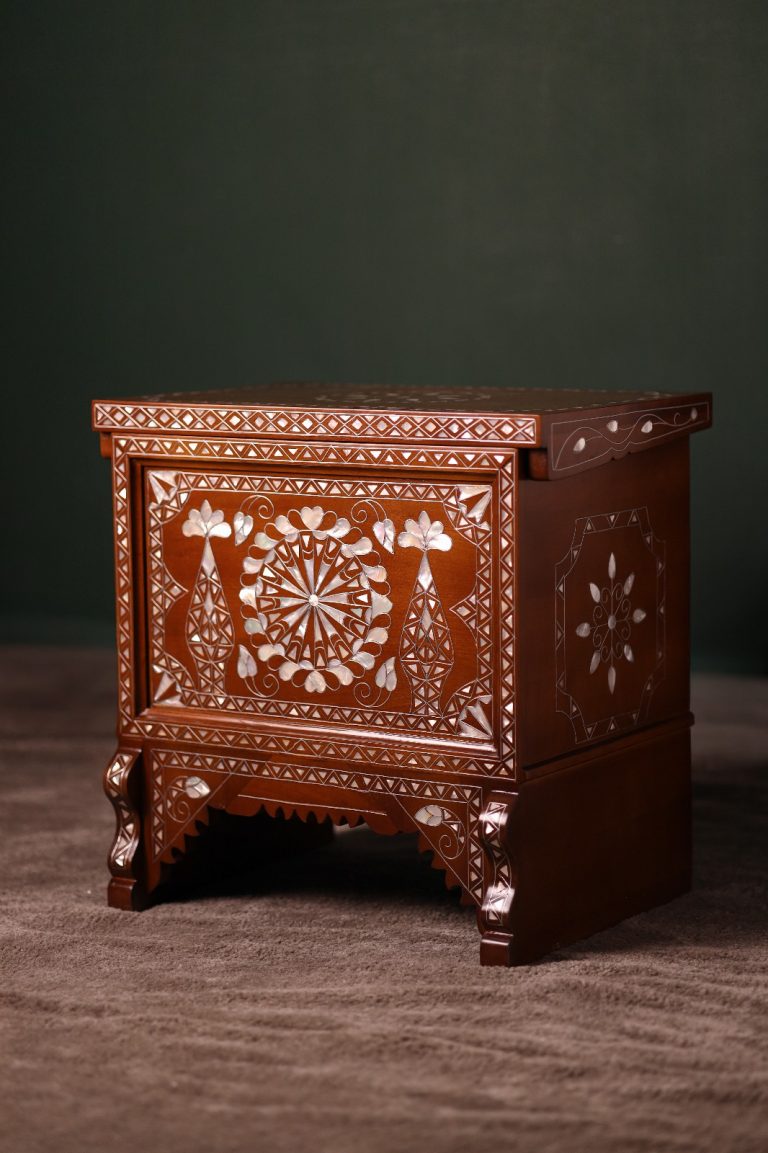
Walnut is prized for its rich chocolate-brown tones, sometimes carrying notes of coffee, amber, or soft violet in the grain. It has a naturally refined appearance that makes it especially compelling for statement furniture: coffee tables, side tables, dining pieces, chess tables, cabinets, and large inlaid wall panels. Its color gives mother-of-pearl a dramatic stage, allowing every iridescent detail to stand forward with remarkable clarity.
Lemon wood is generally much lighter, ranging from creamy golden hues to honeyed yellow-brown. Its fine grain and bright natural color can make an ornate object feel open rather than heavy. This is particularly lovely in decorative boxes, serving trays, tissue boxes, small organizers, and marquetry pieces intended to brighten a console, bedside table, or entertaining setting.
Neither wood is automatically better. A grand, dark walnut piece may feel breathtaking in a spacious entryway with stone floors and warm lighting, while lemon wood can bring welcome light to a city apartment, coastal interior, or room already furnished with darker woods.
Why Walnut Remains a Classic for Heirloom Furniture
Walnut has a visual confidence that few woods can match. Its grain often has a graceful movement, so even unadorned areas of a cabinet or table retain interest. When paired with intricate mother-of-pearl inlay, the dark ground creates a jewel-box effect. Fine floral motifs, stars, arabesques, and geometric bands appear crisp and luminous against walnut’s depth.
For collectors and homeowners who want furniture to anchor a room, walnut is an exceptional choice. A walnut backgammon table or an inlaid coffee table can hold its own among textured rugs, brass lighting, leather seating, and richly colored fabrics. It gives an interior permanence, especially when the piece is built in a traditional Damascene form with hand-cut decorative work.
There is also a practical reason walnut is admired in furniture making. It is a stable, workable hardwood with a longstanding reputation for serving fine cabinetry and detailed joinery. The exact performance of any finished piece will depend on construction, humidity, the finish used, and daily care, but walnut is well suited to lasting decorative furniture when properly made and maintained.
Its trade-off is visual weight. In a small room with limited daylight, several dark walnut pieces can make the setting feel more formal or enclosed. If you love walnut but want to avoid this effect, choose a single focal piece and surround it with pale upholstery, cream walls, glass, or brushed metal accents.
Best settings for walnut
Walnut feels especially natural in formal living rooms, studies, dining areas, libraries, executive offices, and hospitality spaces seeking a sense of heritage. It is also an inspired choice for a meaningful gift meant to become part of a family home: a mother-of-pearl chess set, a keepsake box, or a handcrafted serving tray with a rich, ceremonial presence.
Lemon Wood Brings Light to Damascene Design
Lemon wood has a different kind of luxury. Where walnut feels grounded and dramatic, lemon wood feels illuminated. Its lighter surface lets the craftsmanship read differently, emphasizing delicate line work, color variation in the wood, and the bright flash of pearl or copper inlay.
In traditional marquetry, contrast is part of the artistry. A pale lemon wood field can make dark inlaid details more pronounced, while pearl retains a soft, ethereal glow rather than a high-contrast sparkle. The result is often elegant, warm, and inviting. It can suit interiors that favor natural linen, ivory upholstery, pale oak, travertine, or sun-filled rooms.
Lemon wood is especially appealing when an item has a detailed mosaic surface. On a smaller object, dark wood can sometimes make dense ornamentation appear more formal from a distance. Lemon wood keeps the visual impression lively. A handcrafted tray, jewelry box, or tabletop organizer becomes an artistic accent without overwhelming the surface beneath it.
Because lemon wood can vary naturally in tone and grain, it rewards buyers who appreciate handmade individuality. This is not a synthetic, uniform finish. A true artisan piece may show gentle differences in color that give it character. Those variations are part of the material’s charm, much like the individual shimmer found in natural mother-of-pearl.
Best settings for lemon wood
Choose lemon wood for bedrooms, bright kitchens, relaxed entertaining areas, dressing spaces, entry consoles, and gift pieces that should feel immediately cheerful and refined. It also works beautifully in interiors where the goal is to introduce Damascene artistry without adding another dark furniture mass.
Consider the Inlay, Not Only the Wood
The most useful way to choose between walnut and lemon wood is to look beyond the base material. In Damascene work, wood and ornament are inseparable. A piece with extensive mother-of-pearl inlay will present very differently from one with restrained borders or copper detailing.
Walnut heightens contrast. It is often the stronger option for bold pearl mosaics, intricate black-and-white patterns, and designs intended to read as luxurious from across a room. If you are choosing a substantial coffee table, chess board, or cabinet with elaborate inlay, walnut can give the pattern a commanding presence.
Lemon wood softens contrast and expands light. It can be ideal for floral marquetry, delicate geometric work, and designs with warm metallic accents. If your room needs a handcrafted detail that feels luminous rather than imposing, lemon wood may be the more harmonious direction.
Finish also matters. A high-gloss finish reflects light and can make both woods look more formal, while a softer satin finish highlights the grain and feels more natural. When commissioning custom furniture, ask to see finish samples beside your paint, fabric, or flooring selections. A color that looks perfect in a workshop or online photograph can shift noticeably under your home’s daylight and evening lamps.
Which Wood Fits Your Existing Interior?
Start with what will sit closest to the piece. If your home has charcoal upholstery, jewel tones, dark floors, antique brass, or traditional architectural details, walnut will likely feel intentional and richly layered. It can also create a wonderful contrast in a pale contemporary room when used sparingly as a centerpiece.
If your space features cream, sand, sage, pale blue, light stone, or natural woven textures, lemon wood may blend more naturally while still bringing a distinctive cultural signature. It can prevent a detailed artisan object from feeling too visually dense.
Scale is equally important. A large walnut dining table can be magnificent because its dark color helps define its stature. For a smaller box, tray, or occasional table, lemon wood may allow the same intricate craftsmanship to feel airy. Conversely, a pale wood piece in a vast, dramatic room may benefit from more pronounced inlay or a darker border to ensure it does not disappear.
Care That Preserves Natural Beauty
Both walnut and lemon wood deserve considerate care, particularly when they carry pearl, copper, or mosaic detail. Keep handcrafted furnishings away from prolonged direct sun, which can change natural wood tones over time. Avoid placing hot dishes directly on decorative surfaces, and use a soft, dry or only lightly damp cloth for routine cleaning.
Harsh sprays, abrasive sponges, and excessive water have no place near fine inlay. For serving trays, use them with care and wipe spills promptly. For furniture, maintain a stable indoor environment where possible, since dramatic swings in heat and humidity can affect wood over time.
A handmade piece is meant to be used and enjoyed, not hidden away. Care simply ensures that its finish, joinery, and luminous decorative details continue to look extraordinary.
Let the Piece Tell the Story
The choice between walnut and lemon wood becomes easiest when you decide what story the object should tell. Walnut speaks of depth, heritage, and grand decorative contrast. Lemon wood speaks of warmth, light, and intricate artistry made approachable. Both hold the spirit of Damascus beautifully when shaped by patient hands and finished with genuine attention to detail.
For a custom commission through Damasch Magic East, choosing the wood tone early allows every other decision – dimensions, pattern, inlay, and finish – to support the atmosphere you want to create. Select the wood that makes you pause when you see it, because the finest handcrafted furnishing should feel at home long before it is placed in the room.