How to Display Islamic Art With Lasting Elegance
A hand-inlaid Islamic art panel should never feel like an afterthought above a sofa. Its geometry, calligraphy, and shimmering mother-of-pearl deserve room to speak. Learning how to display Islamic art is less about filling an empty wall and more about creating a setting that honors its meaning, reveals its craftsmanship, and gives your home a distinctive sense of place.
Whether you have chosen a carved wooden panel, a framed calligraphic work, a copper-inlaid mirror, or a mosaic piece inspired by Damascus, the finest display begins with intention. Light, scale, surrounding materials, and the nature of the artwork all shape the result.
Begin With the Meaning of the Piece
Islamic art is wonderfully broad. It may feature Quranic verses, devotional names, poetic calligraphy, architectural motifs, arabesques, or repeating geometric patterns. Before deciding where it belongs, consider what the artwork communicates.
Pieces containing Quranic text or sacred names call for particular care. Many collectors prefer to place them in a clean, quiet, elevated area such as a living room, entry hall, study, or dedicated prayer space. Avoid locations where the work may be overlooked, crowded by clutter, or placed near a bathroom. There is no single rule followed by every household, but thoughtful placement reflects respect for both the text and the tradition.
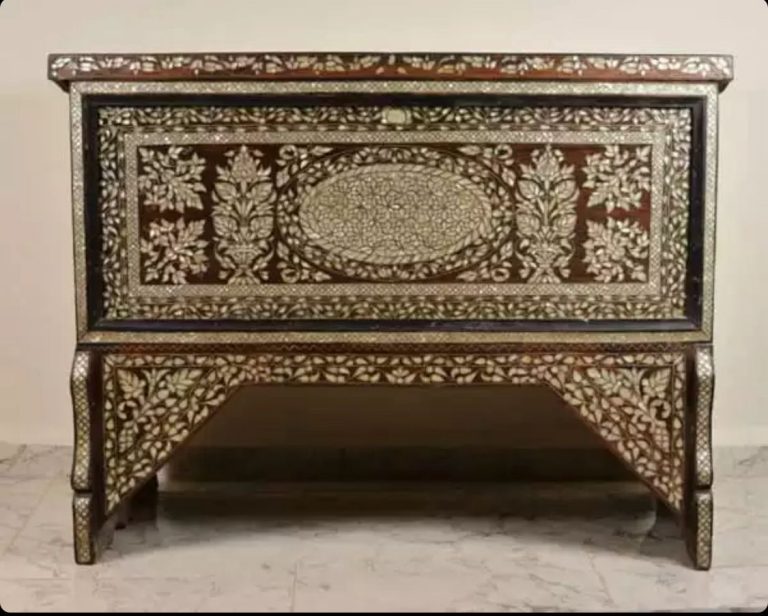
Geometric and floral works offer more freedom. Their balance and rhythmic detail can enrich a dining room, library, bedroom, or hospitality setting. A Damascene mother-of-pearl panel, for example, can bring luminous detail to a walnut wall, while a warm copper-inlaid piece can beautifully anchor a room with stone, linen, or plaster finishes.
Choose One Wall With Purpose
A statement work needs breathing room. Rather than scattering several ornate pieces across every available surface, select a wall that naturally draws the eye: above a console table, behind a dining table, at the end of an entry corridor, or over a fireplace that is not used intensely.
The wall should support the piece rather than compete with it. Soft ivory, sand, warm white, muted olive, charcoal, and deep navy all create handsome backdrops for Islamic art. A heavily patterned wallpaper can work, but only if the artwork has a simple border and enough visual contrast to remain legible.
In rooms with elaborate furnishings, restraint is often the more luxurious choice. One breathtaking work surrounded by calm space usually has greater presence than a crowded wall of unrelated décor. Let the handmade details – pearl tesserae, carved walnut, painted gold, or engraved copper – remain the focal point.
Consider scale before hanging
The right size is not simply a matter of taste. A small panel hung too high above a large sectional can look lost, while an oversized work in a narrow hallway can feel imposing. As a practical guide, artwork above furniture often looks most balanced when it measures roughly two-thirds to three-quarters of the furniture’s width.
Keep the visual center of a single piece near eye level, usually around 57 to 60 inches from the floor. When displaying art above a console, sideboard, or sofa, leave enough space for the furniture and art to read as one composition. About 6 to 10 inches above the furniture is often effective, though a tall panel may need a slightly different relationship.
Use Light to Reveal Handmade Detail
Islamic art is often transformed by light. Mother-of-pearl catches illumination differently throughout the day, while rich walnut and lemon wood gain depth under warm evening lighting. Positioning matters as much as the fixture itself.
Avoid strong direct sunlight, especially for painted works, textiles, old paper, and richly toned wood. Ultraviolet exposure can fade pigments, dry natural materials, and alter finishes over time. If your preferred wall receives abundant sun, use window treatments or select a piece made for a more durable decorative role.
For evening display, a focused picture light or adjustable ceiling spotlight brings out fine marquetry without washing out the design. Choose warm white light rather than cool blue light. The goal is a gentle glow that makes the inlay sparkle and the calligraphy readable, not a harsh retail-style beam.
If your art has glass, test the lighting before committing. Reflections can hide the very details you wish to showcase. Slightly angling a spotlight or choosing anti-reflective glazing may make a remarkable difference.
Build a Layered Damascene Arrangement
Not every display needs to be wall-mounted. Islamic art becomes especially inviting when it is layered with complementary handmade objects. A panel can stand above a low walnut console dressed with a copper tray, mosaic box, or a pair of thoughtfully chosen candlesticks. The result feels collected over time rather than purchased all at once.
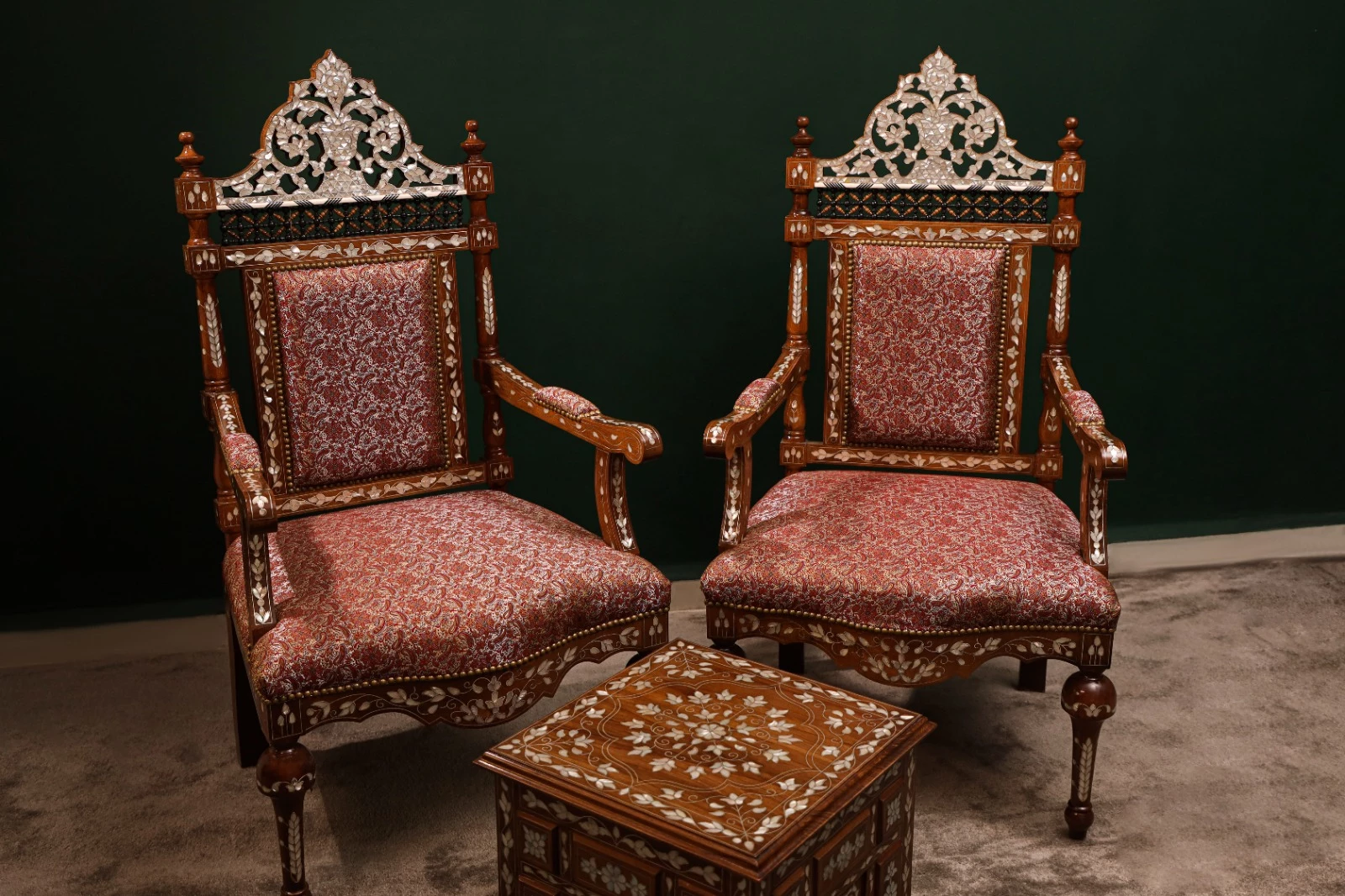
Keep the materials connected. Walnut furniture complements warm wood-carved art; mother-of-pearl works beautifully with ivory ceramics, linen, brass, and dark green accents; copper inlay gains richness beside handblown glass or natural stone. These combinations recall the gracious interiors of old Damascene homes, where craftsmanship appeared in furniture, doors, fountains, and intimate decorative details.
Still, do not match every surface too precisely. A room filled entirely with intricate patterns can lose the quiet rhythm that makes each object special. Pair an ornate work with simpler supporting pieces, and allow negative space between accessories.
Create a gallery wall only with a clear thread
A gallery wall can be exquisite when the collection shares a visual language. You might combine calligraphic works in related wood frames, arrange geometric panels in a measured grid, or mix vintage-style architectural motifs in a single palette of walnut, black, and antique gold.
What tends not to work is random accumulation. If the frames, colors, and subjects have no connection, even beautiful pieces can appear busy. Begin with the largest work, establish the center, then arrange smaller pieces around it with consistent spacing. Lay the composition on the floor first or mark it with paper templates before making holes in the wall.
For sacred calligraphy, many owners prefer a more singular presentation rather than mixing it into a dense decorative gallery. This is both a visual and personal decision. Let the character of the text guide the level of formality.
How to Display Islamic Art in a Prayer Space
A prayer area benefits from calm, not excess. One calligraphic panel, a subtle geometric work, or a small handcrafted shelf with a meaningful piece can establish a peaceful atmosphere without creating distraction.
Place artwork where it can be appreciated before or after prayer rather than where it dominates the prayer line. If the piece includes sacred text, keep it elevated and away from the floor. Choose soft lighting and avoid reflective surfaces that cause glare during daytime use.
For a home with limited space, a beautifully made wooden organizer, a modest inlaid box, or a small wall plaque may be more appropriate than a large framed work. Meaning is not measured by size. A single authentic handmade object can give a small corner extraordinary dignity.
Protect the Work as You Enjoy It
Fine Islamic art is often made from natural materials, and natural materials respond to their surroundings. Keep wood and inlay away from persistent humidity, heating vents, fireplaces, and abrupt temperature changes. Use proper wall anchors for heavy panels, mirrors, and carved frames, particularly in high-traffic homes or commercial interiors.
Dust gently with a soft, dry microfiber cloth. Avoid household sprays, abrasive cleaners, and excessive moisture around mother-of-pearl, wood, and copper. If a treasured piece requires deeper care, consult a qualified conservator rather than experimenting with polish or oil.
For collectors commissioning a custom work, plan the display location before ordering. Share wall dimensions, surrounding finishes, and lighting conditions. At Damasch Magic East, custom proportions, wood tones, and patterns can help a piece feel designed for the room rather than merely placed within it.
The most memorable interiors do not treat Islamic art as a trend. They give it a visible, considered home where its geometry can calm the eye, its calligraphy can carry meaning, and its handworked details can tell a story for generations.