Hand Carved Wood Home Decor That Tells a Story
A room can have beautiful paint, expensive lighting, and carefully chosen textiles yet still feel anonymous. Hand carved wood home decor changes that feeling because it carries the visible evidence of a maker’s hand: the cut of a chisel, the movement of grain, and the patience required to turn natural timber into an object worth keeping.
For collectors and design-minded homeowners, carved wood is more than a finishing touch. A walnut box with mother-of-pearl detail, an inlaid serving tray, or a richly ornamented side table can become the visual center of a room while serving a real purpose every day. The finest pieces bring warmth without becoming rustic, ornament without becoming excessive, and heritage without feeling confined to one style of home.
Why Hand Carved Wood Home Decor Feels Different
Mass-produced décor often aims for perfect repetition. Artisan woodwork makes a more compelling promise: no two pieces will have precisely the same grain, tone, or subtle hand-finished character. That variation is not a flaw. It is the proof that the material is natural and the work is personal.
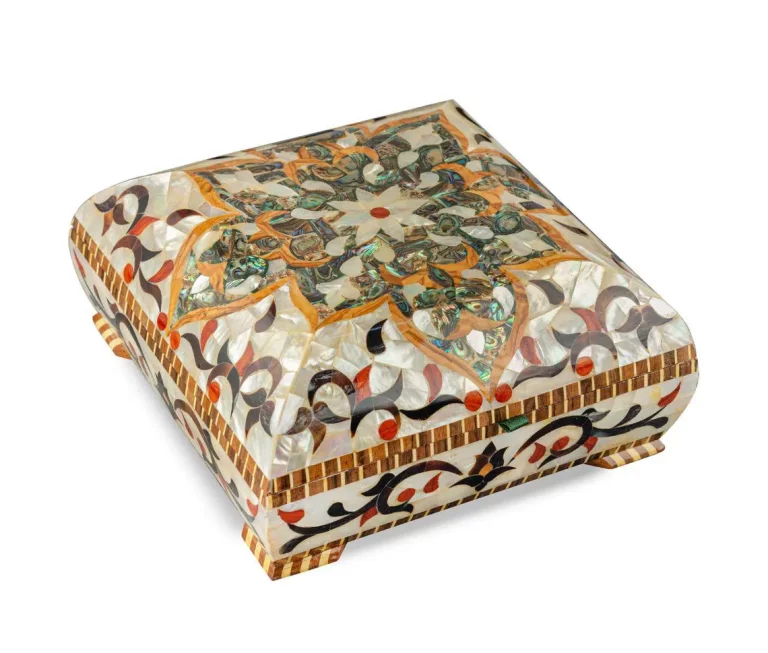
In Damascene decorative traditions, wood is often treated as a canvas for remarkable detail. Walnut and lemon wood provide a warm, substantial foundation, while mother-of-pearl, copper, and fine geometric marquetry create flashes of light across the surface. A carved furniture piece or mosaic box can therefore read differently through the day – quiet and earthy in morning light, luminous and intricate in the evening.
This is also why handcrafted wood works so well in rooms that feel overly polished. Stone, glass, metal, and clean-lined upholstery gain depth beside carved wood. The contrast lets both materials feel more intentional. In a traditional interior, the same piece can reinforce a collected, layered atmosphere with a sense of continuity rather than imitation.
Choose a Piece With a Purpose
The most satisfying decorative objects are not bought simply to fill an empty surface. Start with the moment you want the piece to serve. An exquisite inlaid tray can elevate coffee service when guests arrive. A handcrafted tissue box can make an everyday necessity feel considered in a guest room or office. A substantial chess or backgammon set invites people to sit down, play, and stay longer.
For an entryway, look for a carved organizer, console accent, or box with enough presence to greet visitors without crowding the space. In a living room, a low table, water fountain, or large serving tray can anchor the seating area. Bedrooms benefit from smaller treasures: a jewelry box, a bedside organizer, or a mother-of-pearl accent that catches the light near a lamp.
Scale matters as much as ornament. A highly detailed small box may disappear on a large dining table, while an elaborate cabinet can overwhelm a compact apartment. Leave visual breathing room around a statement piece. When the craftsmanship is exceptional, it does not need competition from a crowded shelf of unrelated accessories.
Let the Wood Tone Guide the Room
Walnut’s deep brown character feels especially at home with cream, camel, olive, charcoal, brass, and jewel-toned textiles. It gives rooms a grounded, luxurious mood and can balance pale walls or contemporary upholstery. Lighter lemon wood brings a brighter, more golden note that pairs beautifully with sand, ivory, blue, and warm white.
Do not feel obligated to match every wood tone in the room. Matching can look orderly, but a home with only one shade of wood may feel flat. The better approach is to repeat one connecting element, such as warm metal, a dark frame, or a textile color, while allowing the natural woods to show their differences.
Know When Inlay Is the Right Choice
Mother-of-pearl and copper inlay deliver a more formal, luminous effect than plain carving alone. They are ideal when a room needs a focal point: a reception space, dining room, formal sitting room, hotel suite, or a carefully designed home office. The shimmering surface can make even a functional item feel collectible.
There is a trade-off. Intricate inlay deserves a setting where it can be seen, so it is usually stronger as one memorable note than as decoration on every surface. Pair an inlaid table or box with simpler ceramics, linen, or glass. This lets the geometry and craftsmanship remain the main event.
Styling Carved Wood Without Making It Look Like a Theme
Culturally rooted décor is at its best when it is displayed with respect and confidence, not turned into a costume for a room. A Damascene piece has a heritage and visual language of its own. Give it enough space to be appreciated, then build a conversation around it through texture and proportion rather than trying to recreate an entire historic interior.
A contemporary home might place an ornate walnut-and-pearl tray on a streamlined ottoman, adding only a sculptural vase and a small stack of art books. In a more classic room, a carved chest can sit beneath a gilded mirror or beside upholstered seating with patterned cushions. The connection is the richness of material, not strict period matching.
For open-plan spaces, repeat the handcrafted language in two or three carefully chosen places. For example, an inlaid centerpiece in the living room may be echoed by a smaller mosaic box on a nearby console and a coordinating serving tray in the dining area. The result feels composed rather than overly coordinated.
Hand carved pieces are also unusually strong gifts because they carry both utility and sentiment. A wedding gift should feel lasting, not temporary. A finely made jewelry box, tray, game set, or tabletop accessory gives the recipient something useful, beautiful, and deeply personal. For religious occasions or meaningful milestones, Islamic art and heritage-crafted objects can add an even greater sense of connection.
What Quality Looks Like Up Close
Photographs can show pattern and color, but a discerning buyer should consider construction as closely as appearance. Quality wood décor should feel stable and substantial for its size. Carved edges should be crisp or deliberately softened by design, never rough from rushed finishing. Doors, lids, drawers, and game-board components should operate cleanly without forcing.
Examine the relationship between the decorative surface and the underlying structure. Inlay should sit neatly within the wood, with patterns aligned carefully and borders resolved with precision. Natural materials will show variation, especially mother-of-pearl and wood grain. That is expected. What matters is whether the overall composition looks balanced and expertly finished.
Ask about dimensions before purchasing furniture or a large statement piece, particularly if you are designing around a narrow entry, a specific wall, or existing seating. Custom work is often the wiser choice when standard measurements will not serve the room. Selecting the pattern, wood tone, and scale in advance can prevent a beautiful piece from becoming an awkward fit.
For bespoke projects, the process should feel clear rather than mysterious. Design sketches, finish samples, realistic timelines, and workshop updates give buyers confidence that the final work will suit their home, office, or hospitality project. Damasch Magic East brings this reassurance to custom commissions while preserving the richly detailed character of Damascus-origin craftsmanship.
Caring for an Heirloom Surface
Wood and inlay reward gentle care. Keep prized pieces away from direct, prolonged sun, which can alter wood tone over time, and avoid placing them next to intense heat sources. Sudden shifts in humidity are harder on natural wood than the normal rhythms of a lived-in home.
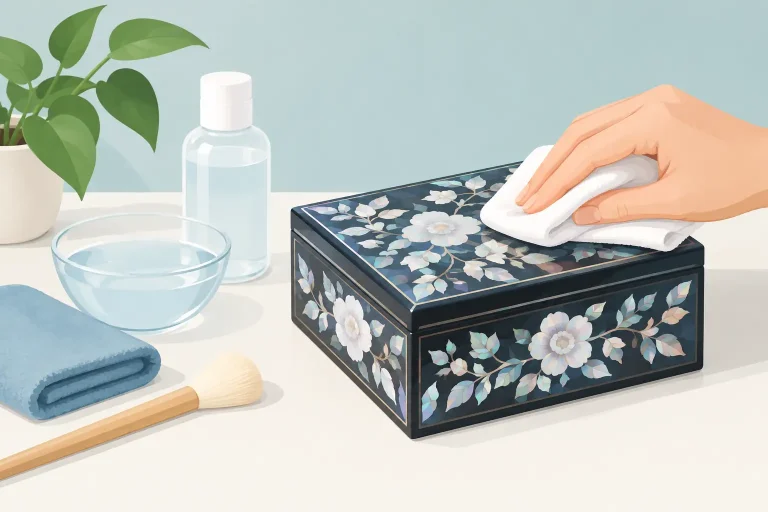
For regular cleaning, use a soft, dry microfiber cloth to lift dust from carved details and inlaid surfaces. If a piece needs more attention, use only a slightly damp cloth, then dry it promptly. Harsh household sprays, abrasive pads, and excessive water can dull finishes or affect delicate decorative work.
Use coasters beneath drinks and a protective mat under hot serving dishes, especially on trays and tabletops. These simple habits preserve the finish while allowing the piece to remain part of daily life. An heirloom should not be hidden away for fear of use. It should be used thoughtfully, gaining memories as it gains character.
The right handcrafted object does more than complete a room. It gives the home a point of human connection – a beautiful reminder that patience, heritage, and natural materials still have a place in the way we live.