Custom Inlay Furniture for Hotels That Guests Remember
A hotel guest may forget the exact shade of the lobby walls, but they remember the reception desk that caught the light with mother-of-pearl, the suite table with a hand-laid geometric pattern, and the quiet sense that the property has a story. Custom inlay furniture for hotels gives hospitality spaces that kind of visual memory. It turns functional furnishings into authentic landmarks – pieces guests photograph, discuss, and associate with their stay.
For boutique hotels, luxury resorts, heritage properties, and design-forward urban stays, generic contract furniture can make even a well-planned interior feel interchangeable. Handmade walnut and lemon wood furnishings with pearl, copper, and mosaic inlay offer a different proposition: craftsmanship with cultural depth, made to fit the room rather than forced into it.
Why Inlay Furniture Belongs in Hospitality Design
Hospitality furniture must work hard. It must welcome arrivals, withstand daily use, support housekeeping routines, and remain beautiful under changing light and constant attention. Yet it also carries the responsibility of setting a property apart from every competing hotel on the same booking page.
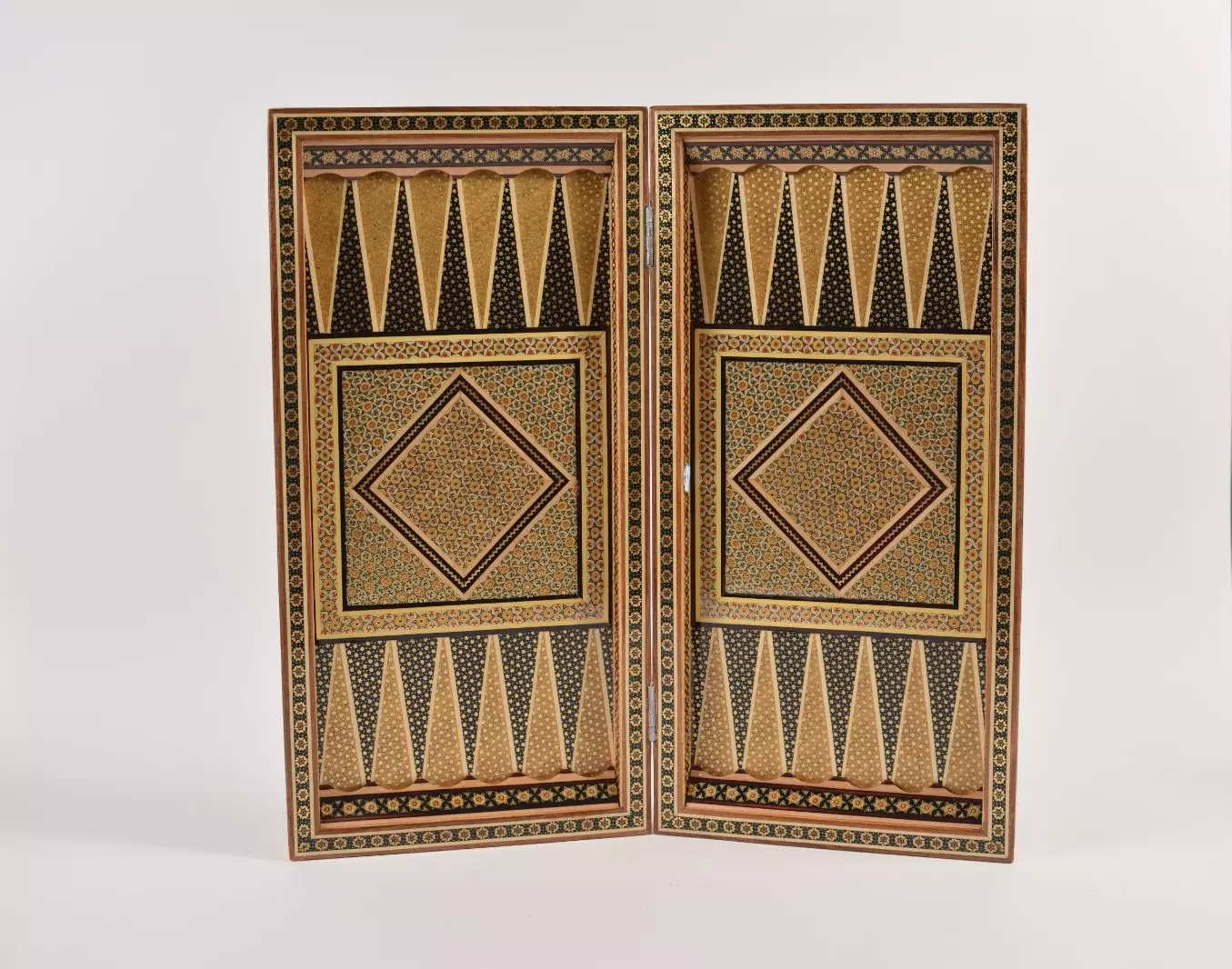
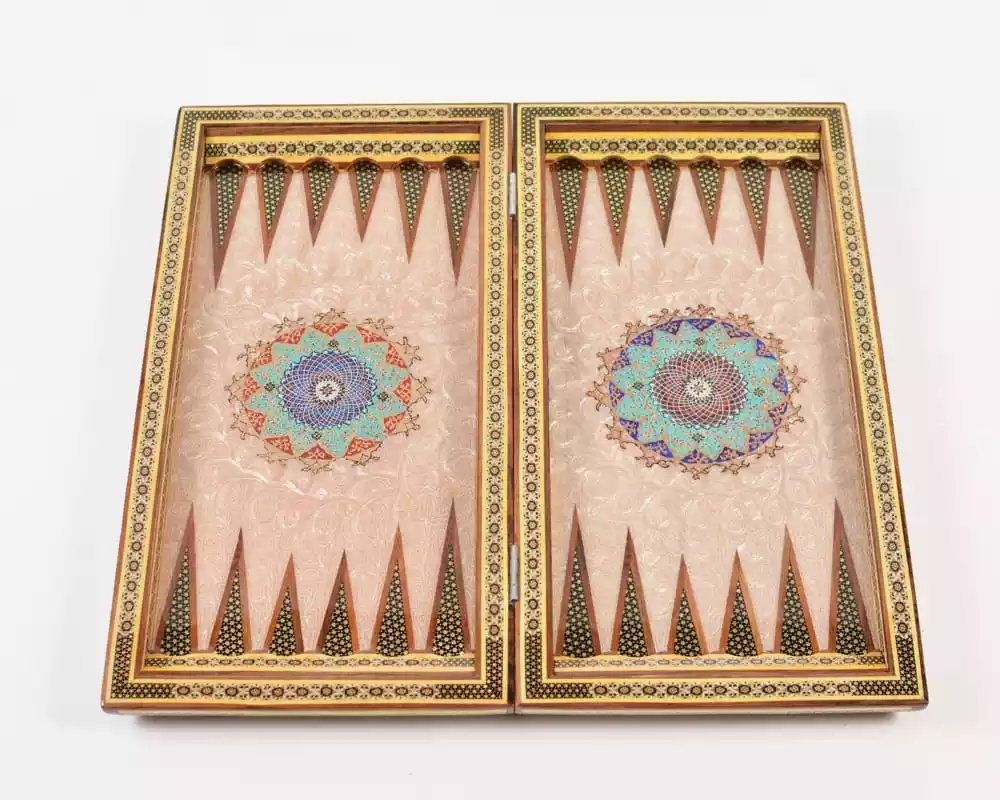
Damascene inlay answers both needs when it is specified thoughtfully. A hand-finished side table, console, mirror frame, or statement cabinet introduces pattern, warmth, and material richness without requiring an entire room to be ornate. Natural walnut brings depth to a lobby or suite, while mother-of-pearl reflects a soft, luminous shimmer that changes from morning to evening. Copper inlay can add a warmer, more architectural note, particularly alongside stone, aged brass, leather, and plaster finishes.
The strongest hotel interiors do not simply place decorative objects in a room. They create moments of recognition. A mosaic coffee table in a library lounge, a refined inlaid chest beside a presidential-suite bed, or a custom reception counter detail can become part of the guest experience. These are useful pieces, but they are also visual signatures.
Where Custom Inlay Furniture for Hotels Makes the Greatest Impact
The lobby is the obvious starting point, but it is not always the best place to use the most elaborate work. A front desk needs careful planning for height, cable management, luggage activity, and daily wear. Often, an inlaid welcome table, concierge console, decorative screen, or centerpiece cabinet can deliver greater impact while protecting the most intricate surfaces from hard use.
Guest suites offer more freedom. Inlaid nightstands, writing desks, luggage benches, accent tables, and mirror frames bring a private sense of luxury that a guest can appreciate up close. In a larger suite, a bespoke coffee table or low cabinet can anchor the living area and make the room feel collected rather than furnished from a catalog.
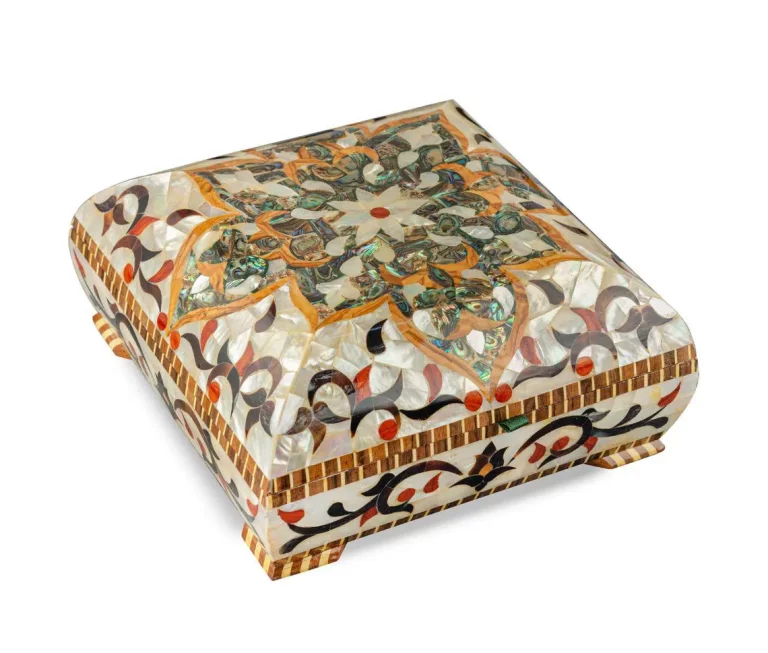
Restaurants, tea lounges, and private dining rooms are also natural settings for Damascene craftsmanship. Serving trays, tissue boxes, organizer boxes, and tabletop accessories create a coordinated layer of detail without requiring every major furniture piece to carry ornament. This approach works especially well when the hotel wants a strong regional identity but needs the overall interior to remain calm and contemporary.
Spa lounges, prayer rooms, executive areas, and bridal suites can benefit from more intimate decorative pieces. A finely inlaid table beside a seating arrangement or a handmade cabinet for presentation items gives these spaces an atmosphere of care. The scale should match the experience: intricate, collectible work feels most luxurious when guests have time to notice it.
Begin With the Hotel Story, Not the Pattern
A beautiful inlay pattern is not automatically the right pattern for a hotel. Before selecting motifs, define what the property needs to communicate. Is the interior inspired by old Damascus homes, Mediterranean warmth, contemporary Arabesque geometry, or a modern international aesthetic softened by heritage details? The answer guides the pattern density, wood tone, metal accents, and number of statement pieces required.
A heritage hotel may embrace intricate mother-of-pearl marquetry across larger surfaces, balanced with carved wood and rich textiles. A modern luxury hotel may choose cleaner geometric borders, restrained copper details, and dark walnut silhouettes. Both can be authentic. The difference is proportion and placement.
It also helps to identify the visual hierarchy of each space. A lobby should have one or two clear focal points, not five competing ones. A suite can carry a larger furniture statement if the surrounding materials are quieter. If marble, patterned tile, and dramatic lighting already dominate the room, a less dense inlay design may feel more expensive because it gives the eye space to rest.
Materials and Finish Choices That Support Daily Use
Hotels should never specify custom furniture by appearance alone. The beauty of hand-inlaid walnut, lemon wood, mother-of-pearl, and copper lies in the material itself, but hospitality use requires a practical conversation about surface protection, placement, and maintenance.
Walnut is valued for its handsome grain and naturally luxurious depth. Lemon wood offers a lighter, warmer character that can brighten suites and lounges. Mother-of-pearl is breathtaking under ambient light, yet an elaborate pearl surface may be better suited to vertical panels, cabinet fronts, decorative tables, or low-contact furnishings than to a busy breakfast-service counter. Copper inlay can develop character over time, which may suit a heritage concept but should be discussed if the design team expects a uniform new-metal appearance indefinitely.
The finish should be selected according to use. A bedside table encounters water glasses, luggage, and routine cleaning. A lobby console may face handbags, keys, and frequent contact. A decorative wall panel has very different demands. Specify the intended location early so the workshop can recommend construction details and protective finishes that preserve the inlay without making the piece look overly coated or artificial.
Maintenance planning matters as much as material selection. Housekeeping teams need clear guidance on soft cloth cleaning, avoiding abrasive products, and responding quickly to spills. A small care protocol can protect a significant investment and preserve the rich glow that guests notice.
The Bespoke Process: What Hotels Should Prepare
Custom furniture works best when the hotel team provides more than rough dimensions. Floor plans, elevation drawings, photographs of surrounding finishes, lighting plans, and reference images help translate an idea into a piece that belongs in its final setting. The more precisely the context is shared, the more confidently a maker can advise on scale and ornament.
For made-to-order work, start with the furniture function. Will a console conceal equipment? Does a desk need discreet power access? Must a cabinet accommodate minibar dimensions or secure storage? These questions should be resolved before the decorative pattern is finalized. Inlay should enhance the construction, not compete with its purpose.
A reliable custom process includes sketches, finish samples, production timing, and workshop updates. Sketches allow the designer or hotel owner to review proportions before materials are committed. Samples make it easier to compare walnut tones, pearl placement, and copper accents against flooring, fabric, and wall finishes. Updates during production provide welcome visibility for projects that involve several rooms or coordinated furnishings.
Lead time is a genuine trade-off. Handmade work cannot be treated like quick-ship contract inventory, especially when several pieces must match in tone and pattern. Hotels working toward an opening date should begin the conversation early and allow room for approvals, production, packing, and international delivery. The reward is a furnishing program that feels considered rather than rushed.
Create a Coordinated Look Without Overdecorating
The most memorable hotel schemes repeat materials with discipline. One suite might pair an inlaid coffee table with a simpler walnut side table, a mother-of-pearl tissue box, and a matching serving tray. The common language is visible, but the room does not become a showroom.
This principle is equally useful across public areas. A reception console may feature a signature geometric border, while nearby organizer boxes, trays, and wall accents repeat a related motif. Guests sense cohesion even if they cannot name the detail that connects each piece.
For larger properties, consider establishing tiers. Premium suites can receive highly detailed statement furniture, while standard rooms use smaller handcrafted accents in the same wood family. Public spaces can carry the boldest pieces, especially where guests pause, meet, and take photographs. This creates a luxurious progression while keeping the investment aligned with room type and revenue potential.
A Lasting Detail Guests Can Feel
Luxury hospitality is not only about adding more. It is about choosing details with enough integrity to hold a guest’s attention. Custom inlay furniture brings the patience of handmade Damascus craftsmanship into spaces built for welcome, rest, and celebration.
For hotel teams seeking pieces with presence, begin with one room that deserves its own identity. A carefully designed inlaid console, suite table, or reception feature can set the direction for an entire property – and give every guest a reason to remember where they stayed.