Best Handmade Accent Tables for Lasting Style
A beautiful room can still feel unfinished when every surface is ordinary. The best handmade accent tables solve that problem with purpose: they hold a lamp, welcome a guest’s drink, frame a favorite chair, and introduce a level of detail that gives the entire room presence. Inlaid wood, warm walnut, luminous mother-of-pearl, and hand-cut geometric patterns turn a small furnishing into a meaningful focal point.
Unlike mass-produced side tables, an authentic artisan table carries visible evidence of its making. The grain shifts naturally across the surface. Tiny pieces of pearl catch the light differently as you move around the room. A handcrafted pattern feels considered rather than printed on. For homes that value heritage, hospitality, and distinctive design, those qualities matter as much as the table’s practical role.
What Makes the Best Handmade Accent Tables Different?
An accent table earns its place through proportion, material, and character. It should be useful enough to live beside a sofa or bed, yet expressive enough to be noticed without competing with every other element in the room. Handmade construction gives it that balance because the maker can respond to the wood, the inlay pattern, and the intended setting rather than producing one generic shape thousands of times.
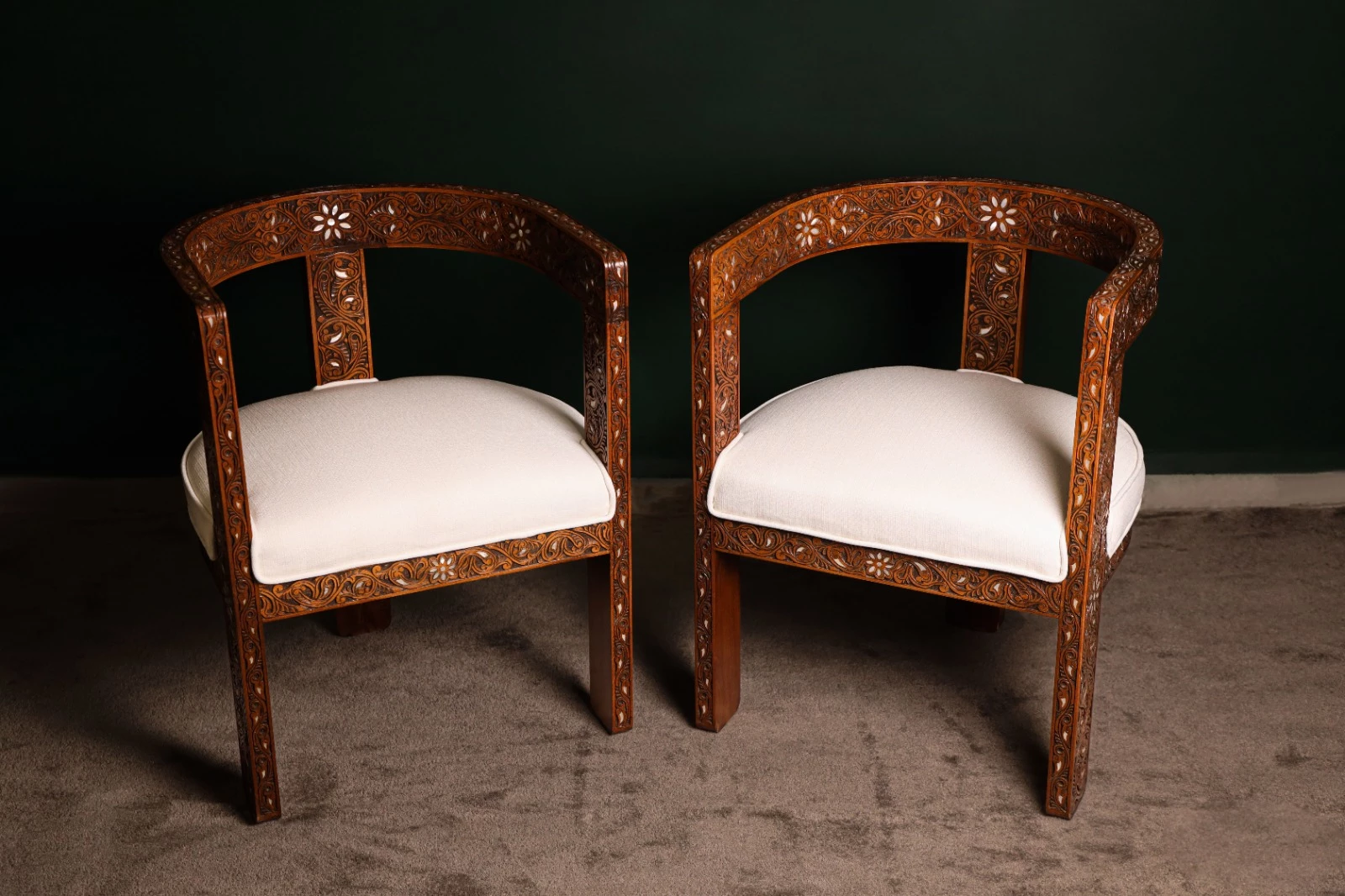
Walnut is especially prized for this kind of furniture. Its rich brown tones bring depth to pale interiors and blend beautifully with leather, linen, brass, and jewel-toned upholstery. Lemon wood offers a lighter warmth and a refined contrast in rooms that need brightness. When either wood is paired with mother-of-pearl or copper inlay, the table becomes a luxurious piece of functional art.
The best examples also have a design language with roots. Damascene marquetry is not ornament added as an afterthought. Its repeating stars, floral forms, and geometric arrangements reflect generations of craftsmanship associated with the old homes and workshops of Damascus. A table made in this tradition can sit comfortably in a classic interior, a Mediterranean-inspired room, or a clean contemporary space that needs one breathtaking handmade statement.
Choose the Right Table for the Way You Live
Before falling in love with a pattern, consider the table’s job. A petite round table beside a reading chair needs enough surface for a book, glasses, and a small lamp. A narrow rectangular table in an entry should leave comfortable passage while offering a graceful place for keys, flowers, or a serving tray. A more substantial inlaid table can stand between two lounge chairs or beside a formal sofa where it will be seen from every angle.
Height is the detail many buyers overlook. For a sofa-side table, the top should generally sit close to the sofa arm, or slightly below it, so setting down a drink feels natural. Beside a bed, aim for a height that works with the mattress rather than following a fixed rule. A low, deeply upholstered bed may need a lower table, while a tall upholstered headboard can support a more substantial companion.
Scale is equally important. An elaborate mother-of-pearl top can hold visual weight even when the table itself is small. In a quiet room, that can be exactly what is needed. In a space already filled with patterned rugs, carved case goods, and colorful textiles, consider a table with a calmer wood field and a more restrained inlay border. Handmade does not have to mean visually overwhelming.
For a Living Room
Place an inlaid accent table where guests naturally gather: next to a sofa arm, between occasional chairs, or at the end of a chaise. A round silhouette softens a room with many straight lines, while a square or octagonal top can echo the geometry of a rug or ceiling detail. If the table will regularly hold drinks, select a stable base and a finish designed for everyday use.
For a Bedroom
A handmade bedside accent table introduces intimacy and warmth. Walnut works beautifully against ivory bedding, deep green textiles, or soft blue walls. A mother-of-pearl detail can make the bedroom feel more personal and collected, especially when paired with a matching jewelry box, tissue holder, or mirror frame. Keep the tabletop usable. A beautiful surface should still have room for a glass of water and the book you are reading.
For an Entry, Office, or Hospitality Space
In an entryway, a narrow handcrafted table immediately tells visitors that the home is considered. In an office or hotel suite, a larger accent table can create a memorable welcome while providing a place for brochures, refreshments, or a decorative arrangement. Commercial interiors often benefit from custom dimensions because circulation, durability, and visual impact all need to work together.
Materials That Reward a Closer Look
The finest handmade accent tables are made from materials that become more compelling over time. Solid natural wood has depth and variation that veneer-heavy furniture cannot reproduce. Walnut develops a mellow richness, while carefully selected lemon wood can bring a golden note to an otherwise dark composition.
Mother-of-pearl is prized because it changes with the light. In daylight it may appear soft and silvery; under evening lamps, it can reveal cream, rose, and subtle green reflections. This shimmer gives an inlaid tabletop an elegant sense of movement. Copper inlay offers a different kind of beauty: warmer, earthier, and particularly striking with dark walnut.
There is a trade-off. Highly detailed inlay requires a little more mindfulness than a plain utility table. Use coasters for very hot drinks, wipe spills promptly with a soft dry or lightly damp cloth, and avoid harsh chemical cleaners. These are simple habits, not burdens, and they help preserve the finish and brilliance of the handcrafted surface.
Why Craftsmanship Matters More Than a Trend
A handmade table is not valuable simply because it takes longer to make. Its value comes from judgment. The artisan decides how the grain should run, how closely each inlay piece should meet its neighbor, where a pattern should begin and end, and how the finish should reveal rather than obscure the wood. Those decisions create the difference between decorative furniture and an heirloom-quality object.
Look closely at the pattern work. Cleanly fitted mother-of-pearl pieces should feel intentional, with symmetry where symmetry is expected and graceful variation where handwork naturally appears. Examine the table’s edges, legs, and underside as well. A serious maker respects areas that may not be immediately visible, because structural quality is part of the piece’s beauty.
Authenticity also creates a stronger emotional connection. A Damascene-inspired table is not a generic global pattern applied to furniture. When made by artisans working within this craft tradition, it carries a story of place, patience, and cultural artistry. That story is especially meaningful for collectors, thoughtful gift buyers, and homeowners who prefer furnishings with a point of view.
When Custom Is the Better Choice
Standard sizes work well for many rooms, but custom work is worth considering when a table must fit a particular alcove, sit precisely beside a favorite chair, or coordinate with existing wood finishes. The difference between a table that almost fits and one made for the space is immediately visible.
A bespoke commission also allows you to choose the balance between ornament and restraint. You may prefer a dark walnut finish with a delicate pearl border, a brighter lemon wood field with geometric marquetry, or a larger central motif that becomes the room’s artistic anchor. For an upscale residence, office, or hospitality project, requesting sketches and finish samples before production gives confidence that the final piece will suit the wider design scheme.
At Damasch Magic East, custom possibilities can extend to dimensions, wood tones, and signature patterns, allowing a table to feel designed for its home rather than merely selected from a catalog. This is particularly valuable when furnishing a coordinated interior with matching trays, boxes, game sets, or other Damascene decorative pieces.
Styling an Inlaid Table Without Hiding It
The temptation is to cover an exquisite tabletop with objects. Resist it. Let the craftsmanship breathe. One sculptural lamp, a small vase of fresh flowers, or a single art book is usually enough. If the top has detailed mother-of-pearl work, choose accessories in materials that complement rather than compete with it, such as clear glass, aged brass, hand-thrown ceramics, or a small polished stone object.
Lighting changes everything. Positioning an inlaid table near a window lets the materials reveal their natural variation during the day. In the evening, a warm table lamp can make pearl inlay glow and deepen the richness of walnut. This is one reason these pieces work so well in entertaining spaces: they continue to reward attention as the mood of the room changes.
Choose the table that makes you pause when you enter the room, then give it enough space to be seen. A handmade accent table should support daily life gracefully, but it should also remind you that even the smallest surface in a home can carry beauty, memory, and the enduring hand of an artisan.