What Is Wood Marquetry? Art Made in Wood
A walnut box catches the light differently when its surface is alive with tiny stars, borders, and geometric paths in lemon wood, mother-of-pearl, or copper. That visual richness is not printed decoration. It is the patient result of a craftsperson cutting, fitting, and assembling individual materials by hand. So, what is wood marquetry? It is decorative artwork created by arranging thin pieces of wood veneer, and sometimes other fine materials, into a precise pattern on a wooden surface.
For centuries, marquetry has transformed practical objects into breathtaking focal points. A serving tray becomes part of a table setting. A chessboard becomes a collectible. A cabinet, mirror frame, or tissue box gains the presence of an authentic work of decorative art. In Damascene craftsmanship, the technique carries particular warmth because it brings together natural woods, ornate geometry, and the generous spirit of a home made for gathering.
What Is Wood Marquetry and How Is It Made?
Wood marquetry begins with very thin sheets of wood called veneers. Unlike solid lumber, veneer allows the maker to use the natural grain, color, and texture of a beautiful wood as a painter might use pigment. Walnut may bring deep chocolate tones and expressive grain; lemon wood offers a lighter, honeyed contrast. Rosewood, beech, olive wood, and other species may also be selected for their individual character.
The artisan first develops a design, whether it is a floral motif, a radiating star, an Islamic geometric pattern, or an intricate border. Each tiny component is cut from veneer with exceptional accuracy. The pieces are then fitted together edge to edge, often like an extraordinarily detailed wooden puzzle, and adhered to a base panel. Once the design is secured, the surface is pressed, leveled, sanded, and finished to reveal a smooth plane of pattern and natural color.
The most remarkable marquetry does not hide that it is handmade. Minute variations in grain, tone, and hand-cut detail give it life. No two sections of natural walnut are identical, which means a handcrafted marquetry piece will have a character that a factory-printed surface cannot reproduce.
The pattern is built, not painted
This distinction matters when evaluating quality. In true marquetry, the contrast is created by real pieces of wood. A dark line is not simply ink applied on top of a panel; it may be a slender sliver of walnut placed beside pale lemon wood. The design has depth because the materials themselves create the image.
Some workshops shade veneers with sand, heat, or carefully controlled staining to broaden the range of tones. This can add softness to flowers and dimension to figurative work. Yet the central appeal remains the same: each color comes from wood, grain, and craftsmanship rather than a repeated digital print.
Marquetry, Inlay, and Mosaic: What Is the Difference?
These terms are often used together, especially in richly ornamented Middle Eastern furniture, but they describe related techniques rather than one identical process.
Marquetry usually refers to a pattern assembled from thin veneers laid across a surface. The finished composition is generally flush and level, creating an elegant decorative skin over a wood panel. It is especially suited to large geometric fields, detailed borders, and expressive wood-grain designs.
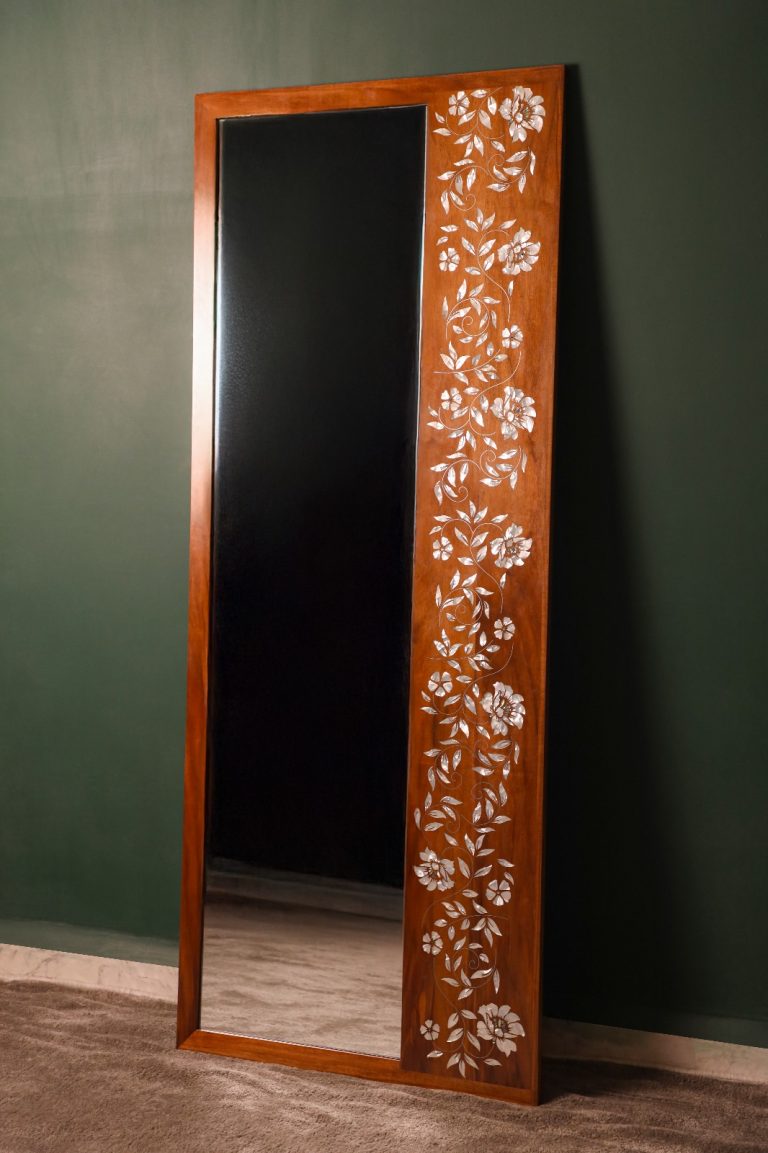
Inlay involves setting a contrasting material into a recessed area of a base material. The inlaid element may be wood, mother-of-pearl, brass, copper, bone, or stone. A shimmering mother-of-pearl flower embedded into walnut, for example, is inlay. In Damascene furniture and giftware, this luminous material is often used alongside wood marquetry for a stunning fusion of earthy warmth and iridescent light.
Mosaic work is built from many small components arranged into repeated decorative forms. It can be made with wood, shell, metal, or other materials. A fine mosaic box may use hundreds or even thousands of tiny pieces to form stars, polygons, and bands. It requires tremendous patience, and its closely repeated geometry is one of the most recognizable expressions of Damascus heritage.
A single luxurious piece can combine all three methods. A handcrafted backgammon board, for instance, might feature a marquetry field of walnut and lemon wood, mother-of-pearl inlay around the playing points, and mosaic detailing around the border. The terminology matters, but so does the complete visual effect.
Why Wood Marquetry Has Enduring Value
The value of marquetry lies partly in its labor. A complex pattern demands planning before the first piece is cut. The maker must consider grain direction, material thickness, symmetry, adhesion, and how every detail will sit once the surface is finished. One misplaced piece can disrupt a repeating design, especially in the exacting geometry found in Islamic decorative arts.
It also lies in material honesty. Wood has warmth that painted plastic and synthetic laminate cannot imitate. Walnut ages gracefully, often gaining greater depth over time. Lemon wood provides natural brightness without looking artificial. Mother-of-pearl changes with the angle of the light, giving a tray, jewelry box, or table a quiet sense of movement throughout the day.
For a collector or homeowner, the result is more than ornament. Marquetry makes an object feel considered. It invites a closer look and creates a story within a room. A richly inlaid coffee table can anchor a formal sitting room; a small mosaic organizer can bring a touch of heritage to a desk; an exquisite serving tray can make everyday hospitality feel ceremonial.
That said, intricacy is not the only measure of quality. A bold, restrained geometric panel can be as sophisticated as a densely ornamented one. The right choice depends on the scale of the room, the surrounding furniture, and whether the piece is intended to command attention or complement a broader decorative scheme.
Where Marquetry Belongs in the Home
Marquetry is most at home where people can see and use it. In an entryway, a decorative console or wall mirror offers an immediate statement of welcome. In a living room, a coffee table, side table, or mother-of-pearl-inlaid box introduces texture among upholstered pieces and smooth stone surfaces.
Dining spaces offer another natural setting. A handcrafted tray in walnut and lemon wood can serve coffee, sweets, or dates while remaining beautiful enough to display when not in use. For gift giving, smaller marquetry pieces have lasting appeal because they are both useful and personal. A jewelry box, tissue box, chess set, or Quran stand can honor a wedding, housewarming, anniversary, or meaningful religious occasion without feeling ordinary.
For designers furnishing hotels, offices, or upscale residences, marquetry can establish a distinct cultural point of view. The key is proportion. One large, exceptional piece may create more impact than many competing patterns. Custom dimensions, wood tones, and motifs are especially valuable when a project calls for a coordinated look rather than an off-the-shelf solution.
How to Recognize Fine Wood Marquetry
Look closely at the joins. Well-made marquetry has crisp edges and carefully aligned pattern repeats, with no obvious gaps between veneer pieces. The surface should feel level and properly finished, not rough or uneven. Natural variation in color is desirable, but accidental mismatching or poorly aligned grain is not.
Examine the materials, too. Fine walnut should show real grain and depth rather than a flat, printed appearance. If mother-of-pearl is included, it should have a natural glow and be set securely. Copper or brass details should complement the wood rather than overwhelm it.
Finally, consider construction beyond the decorative face. A beautiful top panel deserves a solid, properly built base, stable legs, dependable hinges, and finishes suited to the piece’s intended use. An heirloom-quality tray should be functional in the hand. A board game should be enjoyable to play. Decorative craftsmanship becomes truly luxurious when beauty and utility are treated with equal respect.
Caring for Marquetry Furniture and Décor
Marquetry does not require complicated care, but it does reward thoughtful handling. Dust it with a soft, dry cloth and wipe spills promptly. Avoid soaking the surface or using harsh cleaners, alcohol, abrasive pads, or silicone-heavy polishes. These can dull the finish or work their way into delicate seams over time.
Keep marquetry away from prolonged direct sun, strong heat sources, and dramatic swings in humidity. Wood naturally responds to its environment, and stable indoor conditions help preserve fine veneer work. Use coasters under drinks, felt pads beneath decorative objects, and protective mats when serving hot dishes on a tray or table.
With appropriate care, a handmade piece can become more expressive over the years. Its wood deepens, its sheen softens, and the marks of thoughtful use become part of its history.
A marquetry object is worth choosing slowly. Let the pattern speak to the architecture of your home, the rituals you enjoy, and the heritage you want your spaces to hold. Whether it is a grand table or a small, exquisite box, the right piece brings the hand of the artisan into everyday life.