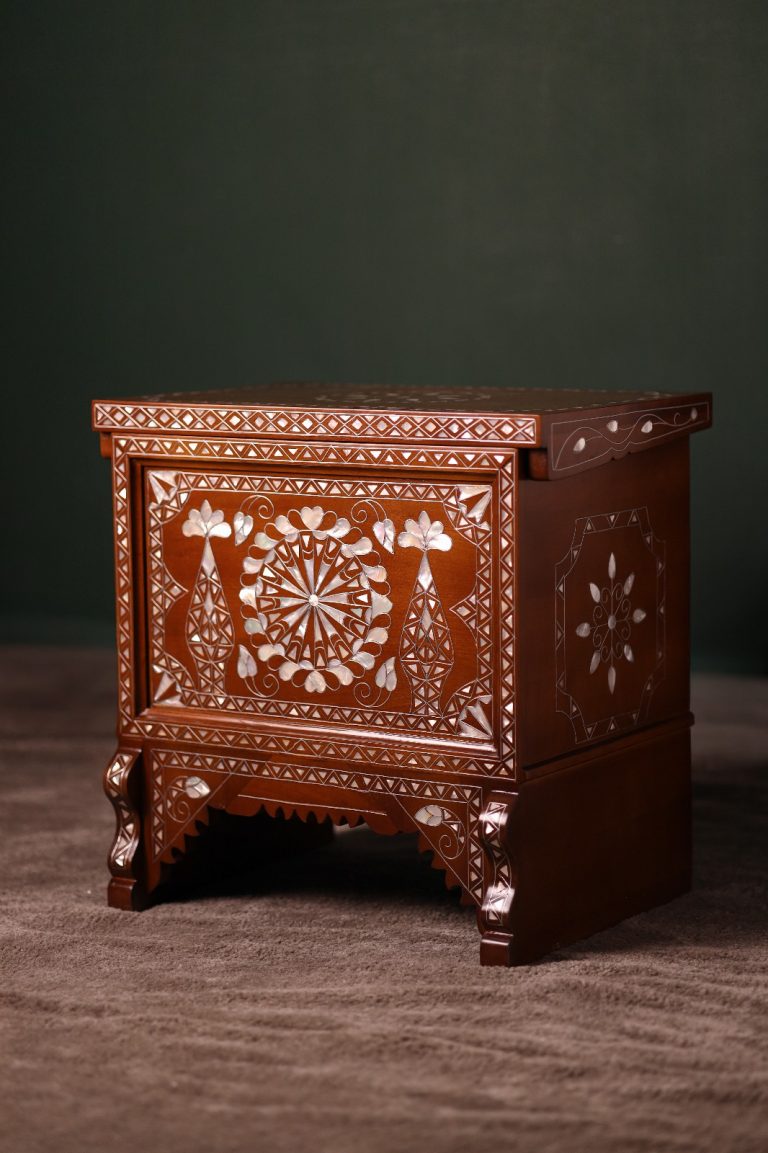
Mosaic Fountains That Make a Room Memorable
A quiet fountain changes the character of a room before anyone has studied its details. The gentle movement of water softens an entryway, courtyard, or reception area, while hand-set ornament gives the eye a place to rest. Mosaic fountains do both at once: they introduce sound, light, pattern, and a sense of permanence that a standard decorative object rarely achieves.
For a home shaped by collected pieces rather than passing trends, a fountain can become the focal point that connects everything around it. Natural wood, carved stone, brass accents, richly woven textiles, and mother-of-pearl inlay all gain greater presence beside water. The effect is not simply decorative. It recalls the graceful interior courtyards and welcoming salons that have long defined homes across the Middle East.
Why Mosaic Fountains Have Lasting Presence
A fountain is already a visual anchor, but mosaic work gives it depth. Tiny pieces of colored glass, ceramic, stone, shell, or hand-cut tile catch light differently throughout the day. From a distance, the surface may read as a single jewel-toned field. Up close, its geometry, floral motifs, and subtle irregularities reveal the handwork behind it.
That visible labor is part of the appeal. Machine-made décor can be neat, but it often feels anonymous. An artisanal mosaic surface has small variations in spacing, tone, and reflection. These are not flaws to hide. They are evidence that the piece was made with patience, and they give a fountain the character of an object worth keeping.
Mosaic fountains also carry a rich design language. Geometric stars, interlaced bands, arabesque curves, and floral medallions can reference Islamic decorative traditions without overwhelming a room. A finely detailed fountain can be opulent, yet its water feature brings calm and balance. This contrast is precisely why it works so well in interiors that need warmth rather than clutter.
Choosing the Right Mosaic Fountain for Your Space
The most breathtaking fountain is not always the right one. Scale, location, finish, and water management should guide the choice as much as pattern and color. A piece intended for a sheltered courtyard has different requirements from one placed beside a formal dining room or in a hotel lobby.
Start with proportion, not ornament
Measure the available floor area and consider the visual height of nearby furniture. A low, wide basin can ground a large living room or courtyard without blocking sightlines. A taller wall fountain or vertical design can make better use of a narrow entrance, patio wall, or reception area where floor space is limited.
Leave enough room around the fountain for it to be admired and maintained. It should feel intentional, not squeezed between chairs or placed where passing guests may brush against its edges. In a large room, a fountain that is too small can look incidental. In a compact space, an oversized piece can make the setting feel heavy.
Match the palette to the atmosphere
For a serene, architectural setting, look to ivory, soft turquoise, deep blue, sand, and muted green. These colors pair beautifully with walnut furniture, limestone floors, linen upholstery, and warm brass. A blue-and-white mosaic fountain can create a refined Mediterranean mood, especially in a sunlit courtyard or conservatory.
If the room calls for drama, richer tones have extraordinary impact. Cobalt, emerald, burgundy, black, and copper-toned accents create a more formal and luxurious presence. In a foyer, boutique hotel, or dining space, these colors can hold their own beside carved furniture and statement lighting.
The best choice often depends on what already commands attention. If a room includes elaborate Damascene marquetry, mother-of-pearl cabinetry, or richly patterned rugs, choose a fountain with a disciplined palette and a clear motif. If the surrounding scheme is restrained, the mosaic can take center stage with more intricate color and detail.
Consider indoor and outdoor realities
Not every mosaic fountain belongs outside, and not every exterior setting is suitable for every material. A covered patio protects delicate finishes from harsh sun, heavy rain, and freezing temperatures. In regions with cold winters, water should not remain in an outdoor fountain when temperatures drop below freezing, since expanding ice can damage basins, grout, pumps, and tilework.
For interiors, think beyond appearance. A recirculating fountain needs access to power, a level surface, and a practical way to refill and clean the reservoir. The sound should fit the room as well. A stronger cascade may suit an outdoor entertaining area where it masks traffic noise, while a gentle trickle is usually more appropriate near a reading chair, bedroom, or private office.
The Materials Behind an Heirloom Look
The base structure matters as much as the mosaic itself. Stone and ceramic offer classic weight and durability, while metal can introduce a more architectural silhouette. Handcrafted wood elements, particularly richly grained walnut, bring warmth when properly protected from moisture and used in appropriate parts of the design.
Mosaic can be made from many materials, each creating a distinct finish. Glazed ceramic has saturated color and a traditional feel. Glass reflects light with a brighter, almost luminous quality. Natural stone offers a quieter, earthier surface. Mother-of-pearl adds exceptional iridescence and is especially striking when paired with dark wood or copper inlay, although it is better suited to protected decorative applications than exposed outdoor conditions.
Grout and sealing deserve attention, particularly on fountains that will see regular use. Well-finished joints help protect the structure and keep the mosaic looking clean. A handcrafted fountain should feel luxurious, but it should also be built for the reality of water, mineral deposits, and routine care.
Styling a Fountain Without Making It Feel Themed
A mosaic fountain does not require an entire room of matching ornament. In fact, the most elegant spaces usually let it speak alongside a few carefully selected companions. Place it near a carved mirror, a pair of brass lanterns, or a hand-inlaid side table, then give those objects breathing room.
In a courtyard, a fountain looks particularly inviting when framed by leafy plants, textured walls, and low seating. The planting does not need to be elaborate. Olive trees, ferns, jasmine, or potted herbs can soften hard surfaces and make the water feature feel established. At night, warm indirect lighting will reveal the mosaic’s shimmer without flattening its color.
For hospitality settings, placement should serve the guest experience. A fountain near a lobby seating area can create a more welcoming first impression. In a spa, it can support a feeling of retreat. In a restaurant courtyard, it can add romance, though its sound should never compete with conversation. The goal is atmosphere, not spectacle for its own sake.
Care That Protects the Craft
A fountain’s beauty depends on simple, consistent maintenance. Keep the water level above the pump, remove leaves or dust before they collect in the basin, and clean mineral residue gently with products suitable for the specific tile and base material. Abrasive pads and harsh chemicals can dull glazed surfaces, scratch shell details, or weaken grout.
Water quality also matters. Hard water can leave visible deposits, especially on dark tile and around spouts. Depending on your local water, filtered or distilled water may reduce buildup. If the fountain will sit unused for an extended period, empty it, clean it, and follow the maker’s instructions for protecting the pump.
When ordering a handmade piece, ask practical questions before it arrives: Is it designed for indoor, outdoor, or covered use? What is the pump access like? Does it need a dedicated water line, or is it self-contained? Can the dimensions, colors, or motif be tailored to the project? For custom interiors and commercial spaces, these details are as valuable as the pattern itself.
Damasch Magic East understands that a statement fountain is often part of a larger vision. A custom approach to dimensions, wood tones, decorative motifs, and finish samples can help a fountain belong to its setting from the first day rather than feel added afterward.
Choose a mosaic fountain with enough presence to reward a second look, and enough craftsmanship to remain meaningful after years of daily living. When water moves across a surface shaped by human hands, the room around it feels less furnished and more deeply inhabited.