Islamic Home Decor Guide for a Refined Home
A home should not feel like a showroom assembled in one afternoon. It should feel collected, personal, and rich with meaning. This Islamic home decor guide begins with that idea: create rooms that honor beauty, hospitality, craftsmanship, and spiritual calm without turning every surface into a display.
Islamic interiors are not defined by a single color, pattern, or country. A Damascus reception room, a Moroccan riad, an Ottoman-inspired salon, and a contemporary American home with Islamic art can all carry a distinct identity. What connects them is a reverence for proportion, ornament, natural materials, and the quiet power of objects made with care.
Begin With Intention, Not a Theme
The most memorable interiors do not simply add an Islamic pattern to every pillow, wall, and tray. They choose a feeling first. Perhaps you want a formal living room made for generous entertaining, a peaceful prayer corner, or a dining room where every gathering feels special. That purpose should determine the pieces you bring in.
Start by choosing one visual anchor for the room. In a living room, it may be a mother-of-pearl inlaid coffee table, an ornate wall mirror, or a substantial walnut sideboard. In an entryway, an exquisite mosaic console or a handcrafted organizer box can establish the tone before guests reach the main room.
A statement piece needs breathing room. If a large inlaid table is covered by decorative objects, its intricate marquetry disappears. Let the craftsmanship remain visible, then support it with quieter companions: linen upholstery, a handwoven rug, warm plaster walls, or a simple brass lamp. Opulence becomes far more convincing when it is balanced by restraint.
Islamic Home Decor Guide: Choose Materials That Age Beautifully
Luxury in Islamic decor is often tactile. It comes from the depth of natural walnut, the brightness of lemon wood, the shimmer of mother-of-pearl, and the warm gleam of copper inlay. These materials offer far more character than disposable surfaces because they change gently with light and use.
Walnut is especially effective as a foundation material. Its deep grain grounds ornate details and gives furniture a sense of permanence. A handcrafted walnut table, chest, or tray can bring visual weight to a light, contemporary room without making it feel heavy. Lemon wood introduces a softer golden note and works beautifully when a room needs warmth rather than darkness.
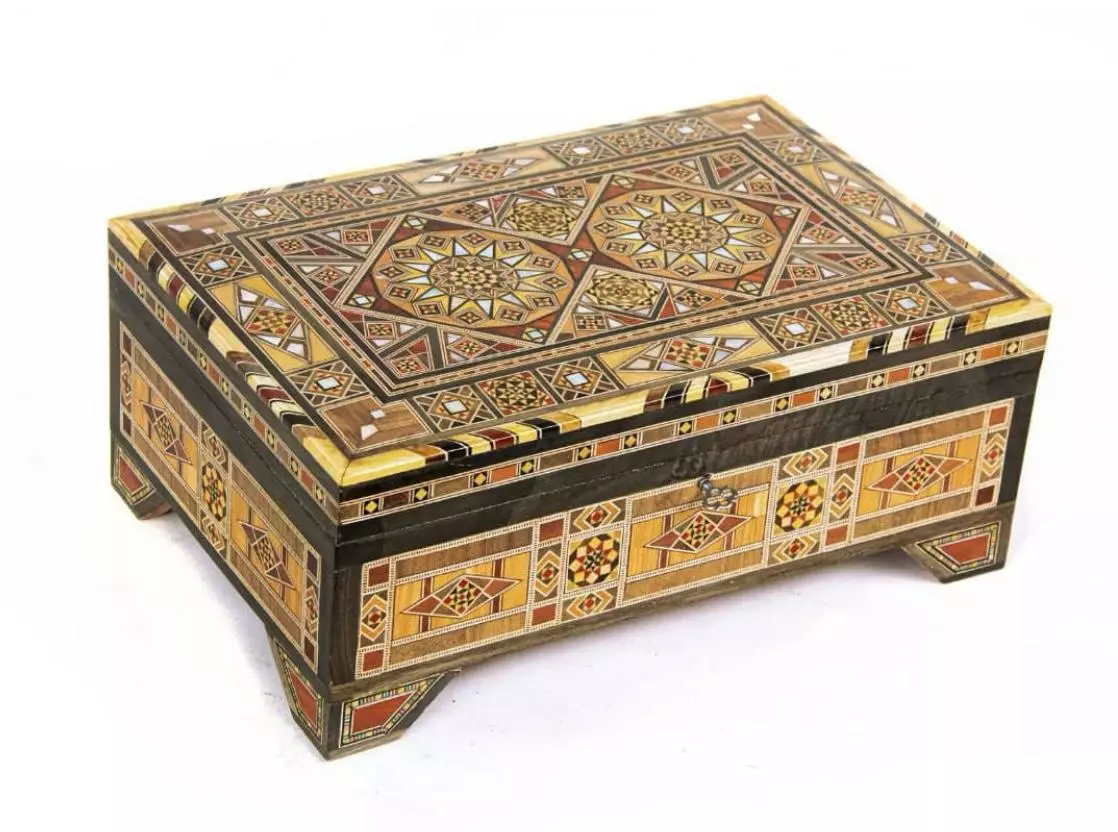
Mother-of-pearl inlay creates a breathtaking focal point because it reflects light differently throughout the day. It is ideal for boxes, tabletops, mirrors, tissue holders, and furniture intended to be admired up close. The trade-off is that pearl inlay is inherently decorative. If your room already has a patterned rug, colorful tile, and elaborate drapery, choose a smaller inlaid object rather than another large patterned surface.
Copper inlay offers a more grounded contrast. Its metallic detail feels sumptuous against dark wood and can connect a room to brass candleholders, lanterns, or antique metalwork. Mixing metals is welcome, but repeat each finish at least twice so the room looks intentional rather than accidental.
Let Geometry and Calligraphy Have Their Proper Place
Geometric pattern has long been cherished across Islamic decorative traditions because it creates movement, rhythm, and endless visual interest. A star pattern on a mosaic box, an interlaced border on a tray, or a carved lattice detail can enrich a room without demanding attention from every corner.
Use geometric ornament as a thread, not a uniform. A single pattern may appear on a serving tray and a pair of decorative boxes, while the rest of the room stays visually calm. Matching every motif exactly can make an interior feel staged. Coordinating by material, scale, or color usually produces a more sophisticated result.
Calligraphy deserves particular thought. Whether it presents a Quranic verse, a divine name, poetry, or a traditional phrase, it should be displayed with knowledge and respect. Place sacred calligraphy in a clean, elevated area rather than near the floor, in a bathroom, or where it may be obscured by clutter. If you cannot verify the text or its meaning, select non-sacred geometric art instead.
For a prayer space, one well-chosen calligraphic work, a beautiful prayer rug, soft lighting, and a small wood stand may be all that is needed. The purpose is not ornament for ornament’s sake. It is to create a setting that encourages stillness.
Design Each Room Around How You Live
The entryway
The entryway offers the first gesture of welcome. A carved mirror catches the light, while an inlaid tray provides a refined place for keys and correspondence. If space allows, a narrow handcrafted console or chest gives the entrance a stronger architectural presence. Keep this area practical, especially in busy households, by choosing one decorative object that also organizes daily essentials.
The living and dining room
These rooms are made for hospitality. Begin with a central table or a pair of side tables that invite conversation. A large Damascene serving tray can become part of the experience, carrying coffee, tea, dates, or desserts with far more ceremony than a standard tray.
On a dining table, avoid crowding every meal with permanent decoration. A mosaic centerpiece, a low bowl, or elegant candleholders are enough. Store special serving pieces where they can be brought out for gatherings. The ritual of setting the table is part of the pleasure.
The bedroom and home office
Bedrooms benefit from softer expressions of Islamic decor. Choose a pearl-inlaid jewelry box, a small bedside chest, or art in a serene palette. A home office can carry more structure: a handsome organizer, a small wooden box for personal items, or a striking chess or backgammon set that doubles as collectible decor when not in play.
Use Light to Reveal Handwork
Fine inlay is meant to be seen, not lost in shadows. Warm lamps, shaded sconces, and carefully directed picture lights reveal the depth of wood grain and the luminous surface of mother-of-pearl. Avoid harsh cool-white bulbs, which can flatten warm wood tones and make a room feel more commercial than inviting.
Natural light matters too. Position reflective pearl-inlaid pieces where they receive gentle, indirect daylight. Strong, prolonged sun can fade textiles and may affect wood finishes over time. If a treasured piece must sit near a bright window, use sheer curtains or rotate its placement seasonally.
Do not feel obligated to fill every wall. Negative space makes ornament more powerful. A richly detailed mirror on an otherwise quiet wall can feel far more luxurious than a crowded gallery of unrelated prints.
Buy Handmade Work With a Collector’s Eye
Authentic handcraft carries subtle variations. The placement of inlay, the tone of wood, and the movement of natural grain will not look mechanically identical from piece to piece. These details are not flaws. They are evidence of the artisan’s hand and part of what gives a piece heirloom value.
Before selecting a major item, consider scale, delivery access, and the room’s existing finishes. Measure doorways as well as the intended placement area. For a custom commission, request dimensions that respect circulation around the furniture, not just the open space visible on a floor plan. A magnificent table that blocks a pathway will never feel luxurious in daily life.
Customization is particularly valuable when you are furnishing a hotel suite, office, formal reception room, or an unusually proportioned home. Choosing the wood tone, pattern density, and dimensions allows the final piece to belong to the architecture rather than merely sit inside it. Damasch Magic East brings this Damascene tradition to contemporary homes through handcrafted furniture, giftware, tabletop pieces, and bespoke designs made for lasting distinction.
Care is simple but necessary. Dust wood and inlay with a soft dry cloth, wipe spills promptly, and avoid abrasive cleaners or excessive moisture. Treat a handcrafted piece as you would a fine instrument: use it, enjoy it, and protect the details that make it exceptional.
The most beautiful Islamic interiors are built patiently. Begin with the piece that moves you most, let its materials guide the rest of the room, and leave space for future treasures to earn their place in your home.