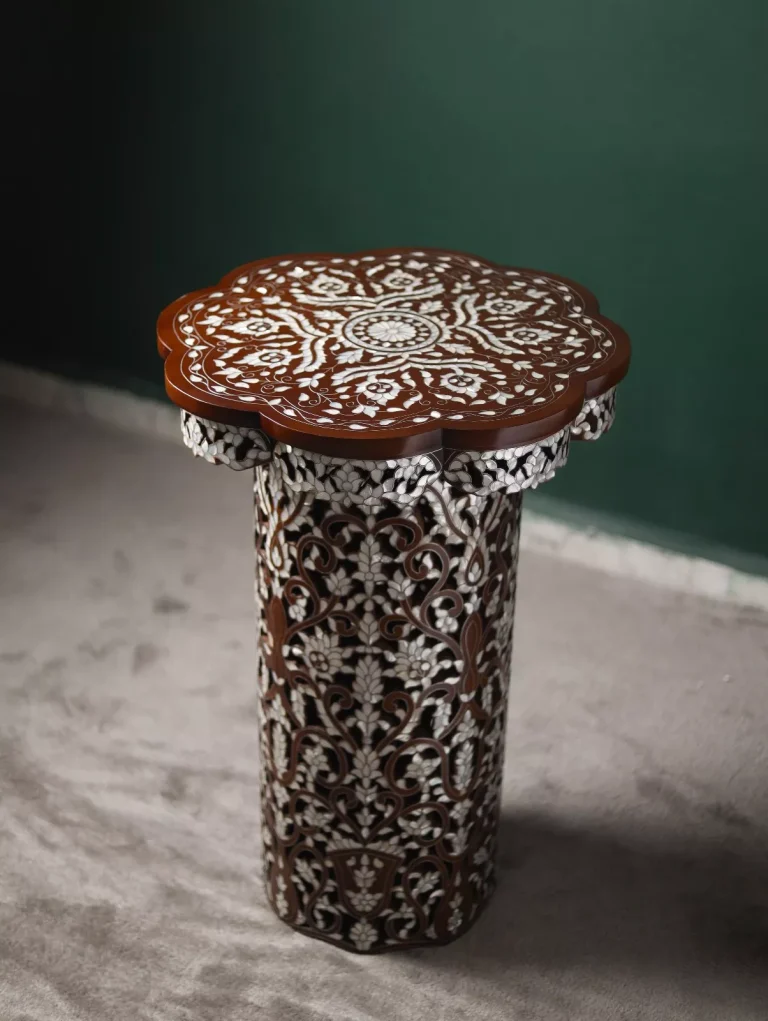
How to Clean Mother-of-Pearl Inlay Safely
A mother-of-pearl inlay catches light differently from every angle, which is exactly why dust, fingerprints, and dull residue can change the character of a cherished box, tray, chess set, or statement piece of furniture. Knowing how to clean mother-of-pearl inlay means preserving that luminous surface without saturating the surrounding wood, weakening the adhesive, or scratching the hand-cut shell.
In exquisite Damascene marquetry, mother-of-pearl is rarely the only material. It may sit beside rich walnut or lemon wood, detailed geometric mosaic work, copper accents, and fine dark lines. Care should therefore be gentle and measured. A treatment that is acceptable for glass or polished metal can be far too aggressive for natural shell and handcrafted wood.
Why Mother-of-Pearl Needs Gentle Care
Mother-of-pearl, also called nacre, is the iridescent inner layer of certain shells. It is naturally beautiful, but it is not indestructible. Abrasive cloths can leave fine scratches that soften its glow. Acidic cleaners, alcohol, bleach, and strong household sprays may cloud the surface or affect the finish around it.
The greater concern with inlay is often the construction itself. Each small piece of shell is carefully cut, fitted into the wood, and secured as part of a larger handmade pattern. Excess water can work its way into seams, swell the wood, or compromise older adhesive. That is why the goal is not to make the surface wet. The goal is to lift away dust and oils with as little moisture and friction as possible.
A well-cared-for inlaid piece should look warm, dimensional, and naturally radiant. It does not need a heavy coat of polish to look luxurious.
How to Clean Mother-of-Pearl Inlay Step by Step
Start in a well-lit area so you can see dust settled along the edges of the shell. Remove rings, watches, and bracelets before handling the piece. Even a small metal edge can catch on an elevated corner of inlay.
Begin With a Dry Dusting
For routine care, a clean, soft microfiber cloth is usually all you need. Wipe lightly in the direction of the pattern, using almost no pressure. On detailed mosaic work, a very soft, dry artist’s brush or makeup brush can release dust from narrow grooves before you wipe it away.
Do not use paper towels, rough cotton rags, or stiff brushes. Their fibers can drag across shell and wood, particularly where a handcrafted surface has tiny variations in height. Compressed air is also best avoided, since a strong blast can force dust farther into seams or disturb a delicate loose fragment.
Use a Barely Damp Cloth for Fingerprints
When dry dusting does not remove fingerprints or a faint sticky film, dampen a microfiber cloth with distilled water. Wring it out thoroughly. The cloth should feel barely moist, never wet enough to leave droplets behind.
Wipe a small section with light strokes, then immediately dry that area with a second clean microfiber cloth. Work in sections rather than wiping the entire surface at once. This is especially useful for a mother-of-pearl serving tray, a decorative tissue box, or a tabletop object that receives regular handling.
Distilled water is preferable because it leaves fewer mineral deposits than hard tap water. If distilled water is not available, use only a minimal amount of clean water and dry the surface promptly.
Treat Stubborn Grime With Mild Soap, Sparingly
For a localized mark that remains after a damp wipe, mix one or two drops of mild, fragrance-free dish soap into a cup of distilled water. Dampen the corner of the cloth with the solution, not the piece itself. Test it first on an inconspicuous area, particularly if the item is antique, richly finished, or has visible age-related wear.
Gently dab or wipe the affected spot. Follow immediately with a separate cloth barely dampened with plain distilled water to remove soap residue, then dry fully. Do not scrub. If the mark does not lift easily, stop rather than increasing pressure or adding stronger products.
Some stains are not surface dirt. A darkened seam, cloudy patch, or discoloration beneath the shell may be related to moisture, adhesive, age, or the underlying wood. Cleaning cannot correct those issues, and further rubbing can make them more noticeable.
What Never Belongs on Pearl Inlay
Mother-of-pearl looks polished and jewel-like, but it should not be treated like a countertop, mirror, or metal serving piece. Keep the following products away from both the shell and its wooden setting:
- Vinegar, lemon juice, and other acidic cleaners
- Bleach, ammonia, disinfecting sprays, and all-purpose cleaners
- Alcohol, acetone, nail polish remover, and solvent-based products
- Furniture sprays, silicone polishes, waxes, and oily conditioning products
- Powder cleaners, baking soda, toothpaste, and abrasive sponges
- Steam cleaners and soaking wet cloths
These products can strip or alter finishes, leave a haze on shell, create residue in fine marquetry lines, or introduce moisture where it does not belong. A commercial wood polish may promise instant shine, but on an ornate inlaid surface it often creates a greasy film that attracts more dust and dulls the crisp contrast between pearl and wood.
Caring for the Wood Around the Inlay
The shell is only one part of the composition. The surrounding walnut or lemon wood deserves equal protection. Place inlaid furniture and décor away from direct sunlight, heating vents, fireplaces, and dramatic changes in humidity. Intense sun can fade wood tones over time, while very dry or overly humid conditions can cause natural wood to expand and contract.
Use coasters beneath drinks and felt pads beneath decorative objects placed on an inlaid tabletop or tray. For serving trays, remove spills as soon as possible with a dry absorbent cloth, then use the barely damp cloth method only if needed. Do not allow water, wine, perfume, or food oils to sit along the joints of a pattern.
If an inlaid box or chessboard is displayed rather than used often, dust it every week or two. A piece used daily may need quick dry dusting more frequently, but regular gentle care is far better than occasional deep cleaning. The less buildup you allow to settle, the less moisture and handling will ever be required.
When to Stop Cleaning and Seek Restoration
A lifted pearl edge, a loose piece, cracking wood, white haze beneath the shell, or an area that feels soft should be treated as a restoration concern, not a cleaning task. Do not press a loose fragment back into place, and do not apply glue from a household repair kit. Adhesives can spread across the nacre, stain porous wood, and make a professional repair harder.
Likewise, do not attempt to polish away scratches with metal polish, jewelry cleaner, or buffing compounds. A skilled restorer can assess the piece’s finish, adhesive, and construction, then recommend the least invasive repair. This matters most for antique or heirloom work, but it is also wise for contemporary handmade pieces whose intricate patterns took many hours to create.
For newly commissioned or high-value Damascene décor, retain any care notes provided by the maker. Different finishes may call for slightly different handling, and the workshop that created the piece is best placed to advise on its particular materials.
A Simple Routine for Lasting Brilliance
The safest routine is wonderfully uncomplicated: dust with a soft dry cloth, address fingerprints with a barely damp cloth, dry immediately, and keep harsh cleaners far away. Handle ornate objects with clean, dry hands and protect them from standing water, heat, and direct sun.
Mother-of-pearl is meant to be seen, used, and admired, not hidden away out of fear. With patient care, the luminous shell, richly grained wood, and precise geometry of Damascene craftsmanship can remain a breathtaking focal point in your home for years to come.