Damascene Marquetry Buying Guide for Collectors
A remarkable inlaid box, chess table, or serving tray should never feel like a generic decorative object. It should hold the eye from across the room, then reward a closer look with hundreds of precisely placed details. This Damascene marquetry buying guide helps you choose a piece that carries the character of Damascus craftsmanship, suits the way you live, and remains beautiful long after the first unboxing.
Damascene marquetry is made for people who want more than furniture or giftware that merely fills a space. Natural walnut and lemon wood, luminous mother-of-pearl, warm copper, and geometric mosaic patterns create a visual language with deep cultural roots. The best piece is not always the most ornate one. It is the one whose craftsmanship, scale, materials, and purpose feel right for your home or the person receiving it.
Start With the Craft, Not the Photograph
Online photographs can show the sparkle of pearl and the richness of wood, but they cannot fully communicate handwork. A truly handmade Damascene piece will have a living quality: slight variations in the grain, fine shifts in tone, and intricate pattern work that reflects the hand of the artisan. These are marks of authenticity, not flaws to fear.
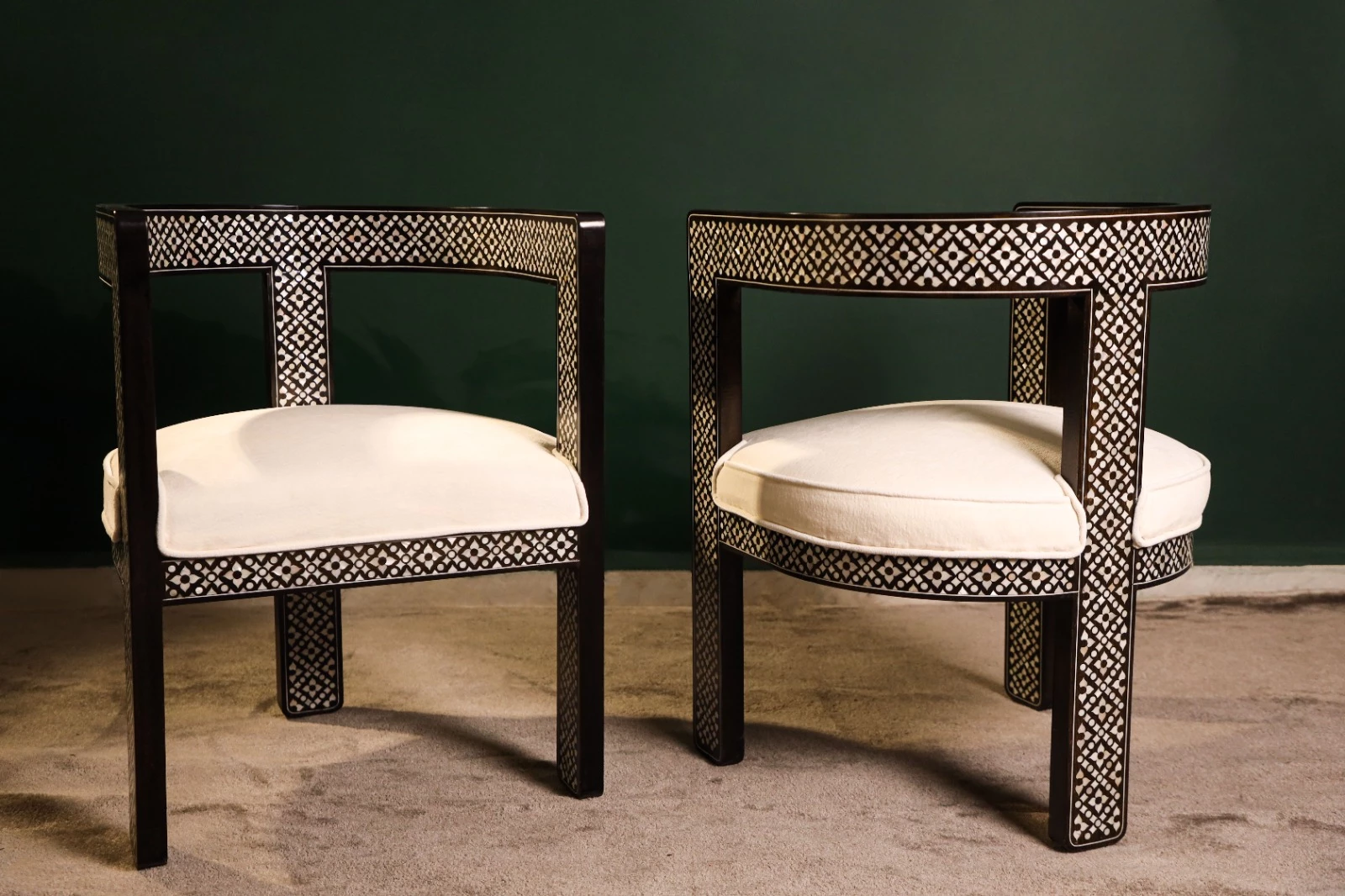
Look closely at how the inlay is arranged. Mother-of-pearl should sit cleanly within the wood, with intentional edges and a polished surface that catches light without looking plastic or overly uniform. Copper inlay should complement the design rather than appear as a thin, painted-looking line. On mosaic work, the small wood components should form crisp geometric fields with steady rhythm, even where the pattern turns around corners or frames a lid.
The wood itself matters just as much. Walnut brings depth, weight, and a handsome dark grain that works beautifully in libraries, dining rooms, offices, and traditional interiors. Lemon wood offers a lighter golden contrast, allowing mother-of-pearl and copper details to stand forward with greater brightness. A well-made piece celebrates these natural materials rather than covering them with a heavy, artificial finish.
Choose the Right Damascene Marquetry Piece for Its Setting
Before choosing a pattern, decide what role the piece will play. A large mother-of-pearl table or chest can become the visual center of a formal sitting room, entrance hall, or hotel suite. A smaller mosaic box may be better suited to a bedside table, dressing area, desk, or meaningful gift occasion. Scale is especially important with intricate inlay because dense ornament naturally draws attention.
For entertaining, a handcrafted serving tray offers both utility and ceremony. It can transform the presentation of coffee, sweets, or tea while adding a luxurious focal point to a gathering. If you are furnishing a desk or reception area, an organizer, tissue box, or document box can bring warmth and cultural distinction to a practical daily setting.
Chess and backgammon sets deserve their own consideration. A board may be a serious game surface, a conversation piece, or both. If it will be used frequently, seek a stable construction, a smooth playing area, and a size that gives players comfortable room. If it will primarily be displayed, you may prefer a more elaborate pattern with bolder pearl work or a larger presentation format.
A useful rule is to match visual density to the room. In a quiet, minimal interior, one breathtaking inlaid statement piece can carry the entire space. In a room already layered with pattern, textiles, and artwork, a smaller object or a design with more visible natural wood may create better balance.
Understand the Materials and Their Trade-Offs
Mother-of-pearl is prized for its iridescence. Its surface changes gently as daylight moves across it, making it especially captivating on boxes, wall art, furniture panels, and games tables. It brings a ceremonial, luxurious character, but it also deserves thoughtful placement. Avoid treating it as outdoor furniture or exposing it to prolonged direct sun, standing moisture, or harsh cleaners.
Copper inlay introduces a different kind of richness. Its warm metallic accent works beautifully alongside dark walnut, creating contrast without the cooler look of silver-toned decoration. Copper can be particularly appealing in interiors that include brass lighting, warm stone, leather, or traditional textiles. As with all metal details, gentle care preserves the finish and prevents unnecessary abrasion.
Wood mosaic is often the heart of a Damascene work. Repeated stars, polygons, borders, and interlocking motifs give the surface its architectural precision. The finest patterns may be extraordinarily detailed, but more detail is not automatically better for every buyer. A bold, well-proportioned geometric design can have greater presence in a contemporary home than a pattern so dense that it disappears from normal viewing distance.
Consider function as well. A decorative wall panel is free to be delicate and highly ornate. A table, tray, or storage box must also withstand regular use. Ask about the intended use, the finish, the lid or drawer action, and the weight of the piece. A high-ticket handmade object should be admired, but it should also work beautifully when its purpose calls for it.
Ask Questions That Reveal Real Quality
A premium purchase deserves clear answers. Ask whether the item is handmade, where the craftsmanship originates, and which woods and inlay materials are used. Dimensions should be confirmed carefully, including height, depth, and interior storage measurements when relevant. This is essential for furniture, water fountains, board games, and organizer boxes, where a few inches can determine whether the piece fits its intended place.
For made-to-order work, ask what can genuinely be customized. Pattern, wood tone, dimensions, and inlay balance may all be possible, but custom work requires time and mutual clarity. A trustworthy maker should be able to discuss sketches, finish samples, production timing, and the practical limits of a chosen design. An intricate pattern may need to be adjusted when a table is made very small, while a larger cabinet can support more elaborate borders and panel work.
Also ask how the piece will be packed and shipped. Marquetry has traveled from Damascus to homes around the world for generations, but fine craftsmanship still deserves careful protection. Secure packaging, clear communication, and reliable support matter as much as the transaction itself, particularly for furniture and one-of-a-kind commissions.
Buy for Authentic Connection, Not Perfection Alone
Machine-made imitation can mimic a motif, but it rarely conveys the depth of genuine Damascene marquetry. Authentic work has a sense of patience in it. The pattern is not simply printed onto a surface. It is built from material, proportion, and skilled repetition.
That does not mean every handmade object must look identical. Tiny differences in pearl tone, wood grain, or hand-cut mosaic elements make each piece unique. If you expect industrial sameness, handcrafted décor may not be the right category. If you value a piece with an individual story and visible artistry, those variations become part of its appeal.
At Damasch Magic East, this connection to Damascus heritage is paired with practical choices for modern homes, from gift-sized boxes to custom furniture designed for residences, offices, and hospitality spaces. The most satisfying purchase begins with a clear vision of where the piece will live and what you want it to express.
Care for the Piece as an Heirloom
Most Damascene marquetry needs only gentle, consistent care. Dust with a soft, dry cloth. For occasional cleaning, use a barely damp cloth followed immediately by a dry one, unless the maker provides different instructions. Avoid abrasive pads, strong chemical sprays, excess water, and furniture products that may leave residue on pearl, copper, or fine inlay.
Keep furniture and boxes away from radiators, strong heat sources, and dramatic humidity changes. Wood responds to its environment, and a stable interior climate helps preserve joints, finishes, and inlaid surfaces. Use coasters on tables and trays, lift rather than drag furniture, and give frequently handled objects a protected place when not in use.
The right Damascene piece does more than decorate a room. It gives daily rituals a sense of occasion, whether you are serving guests, opening a treasured box, arranging a desk, or gathering around a game. Choose the work that makes you pause for a second look, because that is often the piece you will be proud to live with for decades.