How to Style Damascene Furniture at Home
A mother-of-pearl inlaid cabinet is not a background piece. It catches the eye from across the room, drawing attention to the warmth of walnut wood, the shimmer of shell, and the patient geometry shaped by hand. That is precisely why learning how to style Damascene furniture begins with restraint. Let the craftsmanship speak, then build a room that gives it the presence it deserves.
Damascene furniture belongs in homes that value story as much as surface. Whether you have chosen an exquisite inlaid side table, a grand mirror, a mosaic chest, or a custom-made seating piece, the goal is not to make every corner ornate. The goal is to create a rich, considered setting where authentic Damascus heritage feels luxurious, personal, and beautifully lived in.
Start With One Defining Piece
The most successful rooms usually give Damascene furniture a clear role. A large mother-of-pearl cabinet can anchor a formal entryway or dining room. A small inlaid table may become the jewel beside a reading chair. A mosaic chest can bring character to the foot of a bed, beneath a window, or along a quiet hallway wall.
Choose the piece that will carry the strongest visual weight, then allow the rest of the room to support it. This matters especially with detailed marquetry. When an inlaid surface competes with busy wallpaper, several patterned rugs, and crowded open shelving, the beauty of the handwork gets lost. A little breathing room makes pearl, copper, and natural wood appear even more breathtaking.
Scale matters as much as ornament. A substantial buffet needs an open wall and enough surrounding floor space to feel intentional rather than oversized. Conversely, a delicate side table can disappear beside a deep sectional or a very large bed. Before committing to a placement, consider sightlines from the doorway and the height of neighboring furnishings.
Give the Inlay a Quiet Backdrop
Walls in warm ivory, sand, putty, soft taupe, charcoal, and muted clay work especially well behind walnut and lemon wood. These tones reveal the material’s depth without competing with its patterns. For a more dramatic setting, deep olive, midnight blue, or a smoky aubergine wall can make mother-of-pearl glow with extraordinary contrast.
White can also work, but cool, stark white sometimes makes a heritage piece feel isolated or overly formal. If your home leans contemporary, introduce warmth through a natural-fiber rug, antique brass lighting, or linen drapery. The contrast between clean architectural lines and intricate Damascene work can be striking when the room still feels inviting.
Build a Color Palette From the Materials
Rather than adding every color found in a mosaic pattern, choose two or three notes already present in the furniture. Walnut often brings espresso, chestnut, and honey tones. Mother-of-pearl reflects cream, silver, and soft iridescence. Copper inlay may suggest burnished rose, terracotta, and aged gold.
A refined palette might pair a walnut-and-pearl console with ivory walls, olive velvet pillows, and a single antique brass lamp. For a warmer, more layered room, combine carved wood with rust linen, tobacco leather, muted teal, and handwoven textiles. These colors echo the richness of traditional interiors without turning the space into a theatrical set.
Avoid matching every wood surface exactly. A room filled only with dark walnut can feel heavy, particularly in a smaller apartment or low-light space. Instead, use variation: a walnut inlaid chest beside an oak floor, a woven cane chair, or a pale travertine lamp base. The shared warmth keeps the room cohesive while the differences make it feel collected over time.
How to Style Damascene Furniture With Modern Pieces
Damascene craftsmanship does not require a fully traditional interior. In fact, a modern room often gives ornate furniture its most compelling stage. Think of the inlaid piece as functional art: a handmade focal point that softens minimal architecture and introduces a meaningful human touch.
Pair a geometric mother-of-pearl sideboard with simple upholstered dining chairs in cream, camel, or black. Place a detailed coffee table in front of a low, tailored sofa with clean lines. Hang a large contemporary painting above a Damascene console, keeping the artwork calm in color so both elements can breathe.
The key is contrast with connection. Modern furniture contributes simplicity, while Damascene pieces contribute intricate pattern, natural materials, and cultural depth. Connect them through one repeated element, such as warm metal, a shared wood tone, or upholstery that picks up a color from the inlay.
Be careful with highly decorative furniture from many different traditions in the same small room. A French rococo cabinet, a heavily carved Victorian chair, and a richly inlaid Damascene table may each be beautiful, but together they can compete. It can work in a collector’s home with generous space and an experienced eye. For most interiors, choose one dominant decorative language and use the others sparingly.
Layer Textiles, Metal, and Handmade Objects
The most elegant styling comes from texture, not clutter. Damascene furniture has a polished, detailed surface, so it benefits from softer companions: linen curtains, wool rugs, velvet cushions, hand-knotted runners, and tactile ceramics. These materials bring warmth while keeping the furniture at the center of attention.
On an inlaid console, style with a few purposeful objects rather than a crowded arrangement. A sculptural lamp, a framed piece of Islamic art, and a low ceramic vessel may be all that is needed. If the furniture itself has a dramatic mosaic top, choose accessories with simple silhouettes and avoid covering the pattern.
Metal can create a particularly luxurious conversation with mother-of-pearl and copper inlay. Aged brass, antique silver, and dark bronze are all natural companions. Keep finishes relatively consistent within view. One brass lamp and a bronze tray can feel layered; chrome, bright gold, black iron, and brass all together may feel accidental.
Use Functional Pieces as Daily Rituals
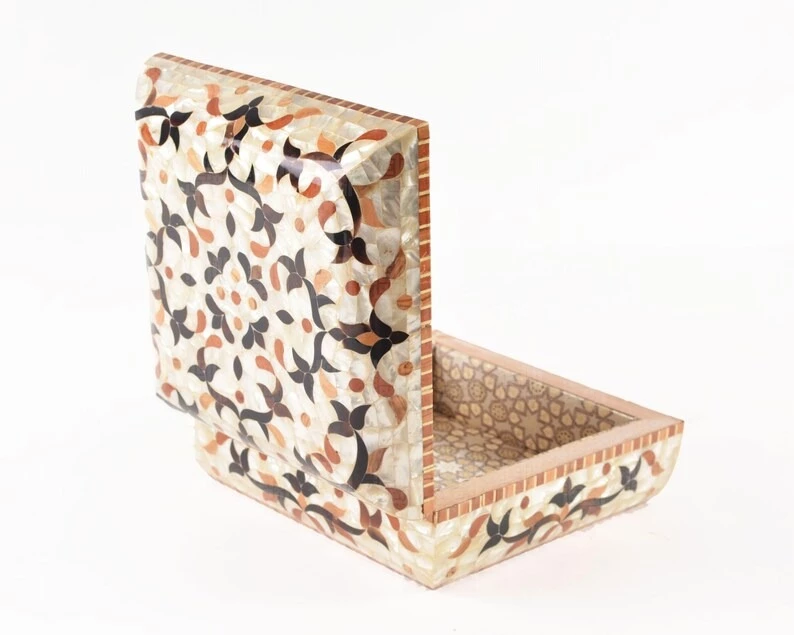
Damascene décor is at its best when it is used and admired. A handmade serving tray can elevate coffee or tea for guests. An inlaid organizer box can make a desk feel personal and polished. A tissue box in walnut and pearl turns an ordinary necessity into part of the room’s visual language.
In a dining room, pair an inlaid sideboard with understated dinnerware and richly textured napkins. In a home office, let a mosaic box hold correspondence or small essentials rather than hiding it away. These details create a home that feels composed without becoming untouchable.
Light the Details With Intention
Mother-of-pearl changes character throughout the day. In natural light it can appear soft and luminous; under a warm lamp, it takes on a deeper, more intimate glow. Position furniture where it receives indirect daylight when possible, but avoid prolonged, harsh sun that may affect wood finishes over time.
At night, use layered lighting. A table lamp near a cabinet or side table reveals the delicate inlay better than a single overhead fixture. Picture lights, wall sconces, and dimmable lamps are especially effective in entryways, dining rooms, and hospitality spaces where you want the craftsmanship to create atmosphere.
Choose bulbs with a warm white temperature rather than stark cool lighting. The goal is to flatter the natural walnut, lemon wood, and copper tones. A warm pool of light can make even a compact inlaid piece feel like an authentic landmark within the room.
Let Custom Dimensions Shape the Room
Standard furniture sizes do not always serve a distinctive space. A narrow entry, a deep hotel lobby wall, an alcove beside a fireplace, or a formal office reception area may call for a custom console, cabinet, mirror, or fountain designed around the architecture.
Custom work offers more than a better fit. It allows you to choose a wood tone, inlay pattern, and scale that complements your existing interiors. If your home is pale and coastal, a lighter finish with restrained pearl detail may feel right. If you are furnishing a richly appointed study or majlis-inspired reception room, a deeper walnut tone and more elaborate marquetry can create the grandeur you want.
At Damasch Magic East, bespoke pieces can be planned with sketches, finish samples, and workshop updates, helping clients make considered decisions before a handmade statement piece enters the room.
A beautiful Damascene piece should never feel like it was added merely to fill a space. Place it where hands will open its drawers, guests will notice its luminous details, or quiet daily rituals will make it part of your story. That is how heritage craftsmanship becomes not only decoration, but a treasured part of home.