Geometric Marquetry Serving Tray: A Lasting Statement
A geometric marquetry serving tray does more than carry coffee, sweets, or glasses into a room. It creates a focal point before the first cup is poured. In a home filled with ordinary surfaces and mass-produced accessories, the measured repetition of wood, mother-of-pearl, and copper inlay brings warmth, rhythm, and a distinctly luxurious presence to the table.
For lovers of Damascene craftsmanship, a tray is never merely a utility piece. It is a small architectural composition – one that reflects the ornate interiors, intricate woodwork, and enduring decorative language associated with Damascus. Whether it rests on an ottoman, serves guests after dinner, or stands upright as a decorative accent, an exquisitely crafted tray makes everyday hospitality feel considered.
What Gives a Geometric Marquetry Serving Tray Its Presence
Geometric marquetry is defined by precision. Artisans cut and arrange small pieces of contrasting wood and inlay into repeated stars, polygons, radiating forms, and interlocking bands. The geometry may appear effortless from a distance, yet its visual harmony relies on exact alignment, balanced color, and patience at every stage of construction.
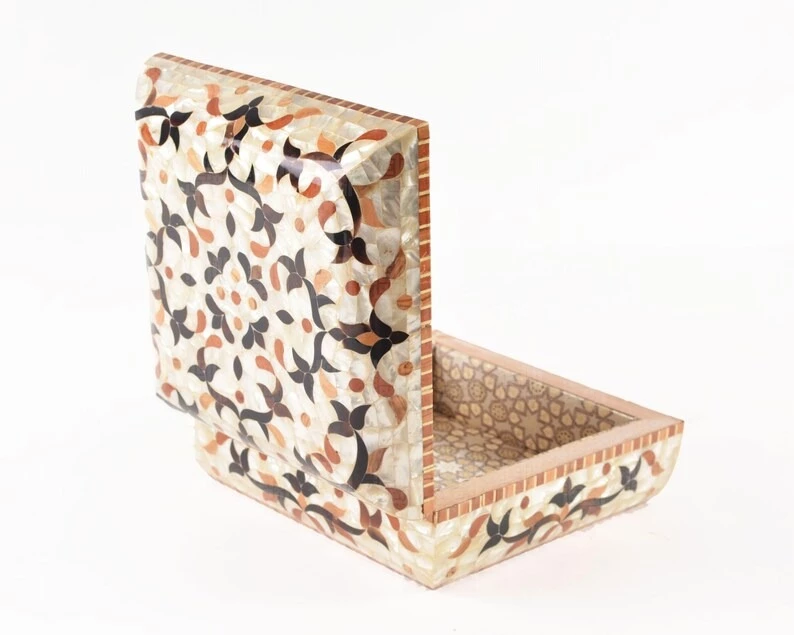
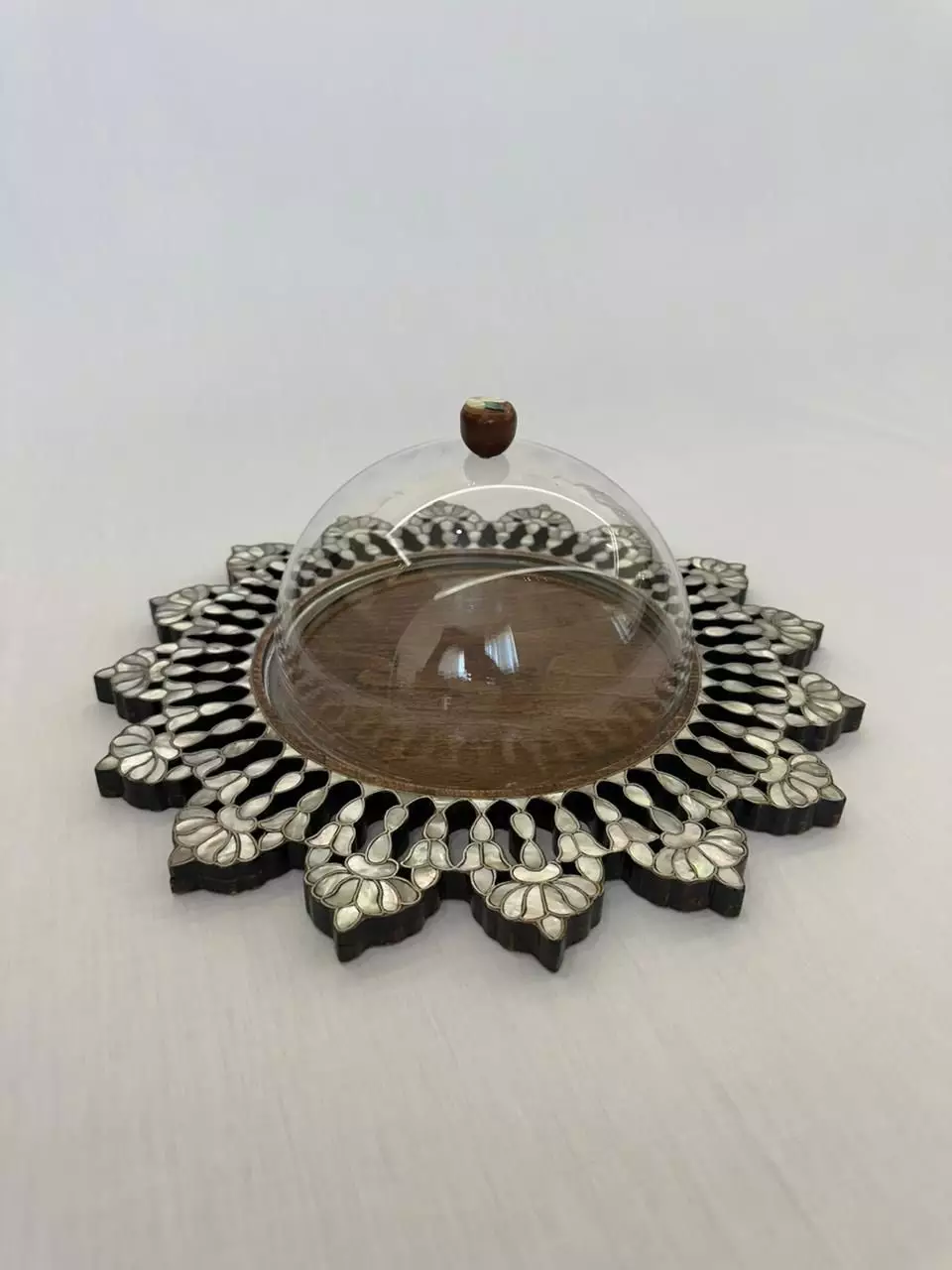
Natural walnut is often chosen for its deep, expressive grain and rich brown tone. Lemon wood introduces a lighter contrast, allowing the pattern to emerge with greater clarity. Mother-of-pearl adds a luminous, almost changing surface that catches light from different angles, while copper inlay can provide a warmer metallic detail. Together, these materials create a tray with depth rather than a flat printed pattern.
This is the difference between decorative imitation and handmade marquetry. A printed geometric motif has one visual note. A hand-inlaid surface reveals variation in the grain, subtle shifts in pearl, and the human precision behind every repeated detail. No two pieces of natural wood or shell are exactly alike, which gives each tray its own character.
The geometry also carries cultural meaning. Repeating patterns have long been central to Islamic decorative arts, where balance, proportion, and infinite repetition create visual movement without relying on figurative imagery. A geometric tray can therefore feel traditional and contemporary at once. It belongs naturally in a richly layered, classic interior, but it can also bring soul and contrast to a clean-lined modern room.
A Tray Made for Hosting and Display
The most successful tabletop pieces earn their place through both beauty and use. A generously proportioned serving tray can hold an Arabic coffee set, tea glasses, dessert plates, small bowls of dates, or a selection of appetizers. On quieter days, it can organize candles, perfume bottles, a decanter, or a favorite stack of art books on a coffee table.
A geometric marquetry serving tray is especially effective when entertaining because it frames what is placed upon it. Clear glassware, white porcelain, brass coffee pots, and jewel-toned textiles all become more striking against the warmth of walnut and the sparkle of inlay. For formal gatherings, it can be the centerpiece of a drinks station. For intimate visits, it turns the simple gesture of offering tea into something memorable.
Scale matters. A smaller tray suits bedside use, a vanity, or a desk where it can gather keys and personal accessories. A medium tray is often ideal for coffee service and occasional entertaining. A larger statement tray has the visual authority to anchor an ottoman, console table, buffet, or hospitality lounge. The right choice depends on how it will be used most often, not only on how impressive it looks in a photograph.
There is also value in choosing a tray with enough edge height to provide confidence when carrying beverages. A perfectly flat decorative board may look refined, but a raised rim or integrated handles make a greater difference when serving hot cups or glassware. Luxury should feel practical in the hand, not precious to the point of hesitation.
Choosing the Right Pattern and Materials
The best pattern is often the one that complements the room rather than competes with every other detail. If your furniture, rugs, and curtains are already richly patterned, a tray with a more open geometric layout can provide elegance without visual crowding. In a neutral space, denser starwork and more prominent mother-of-pearl can become the brilliant accent that gives the room a center of gravity.
Color is equally influential. Dark walnut creates a formal, grounded look and pairs beautifully with deep green, ivory, black, navy, and brass. Lighter lemon wood brings brightness and works well in interiors with linen, cream upholstery, pale stone, or natural textiles. Mother-of-pearl is particularly versatile because it reflects surrounding colors, appearing cool and silvery in one setting and softly warm in another.
Copper details deserve consideration as well. Their rosy warmth can connect a tray to bronze lanterns, antique hardware, or warm metallic lighting. Yet a tray does not need every possible material to feel luxurious. Sometimes a wood-forward design, with restrained inlay placed precisely around the border or central medallion, has more lasting power than an overly crowded surface.
For a gift, consider the recipient’s rituals. A tray for a newly married couple may become part of their hosting tradition. For a parent or grandparent, it can be a meaningful piece for serving sweets during family visits. For a design-minded friend, a compact inlaid tray can become a treasured desk or bar accessory. The strongest gifts have a place in a person’s life as well as in their home.
Custom Details Make the Piece Personal
Standard dimensions are useful, but custom work becomes especially valuable when a tray must fit a particular table, niche, hospitality project, or collection of serving ware. A long narrow tray might suit a console beneath a mirror. A square format may work better on a large ottoman. For a hotel suite, office reception area, or formal dining room, dimensions should respond to the furniture and intended use.
Customizing wood tone and pattern density can also change the entire mood of a piece. A darker finish may suit a traditional library or executive office, while a lighter composition can feel at home in a sunlit living area. Some clients prefer a bold central star, while others favor a border-led design that leaves more open wood visible beneath the objects being served.
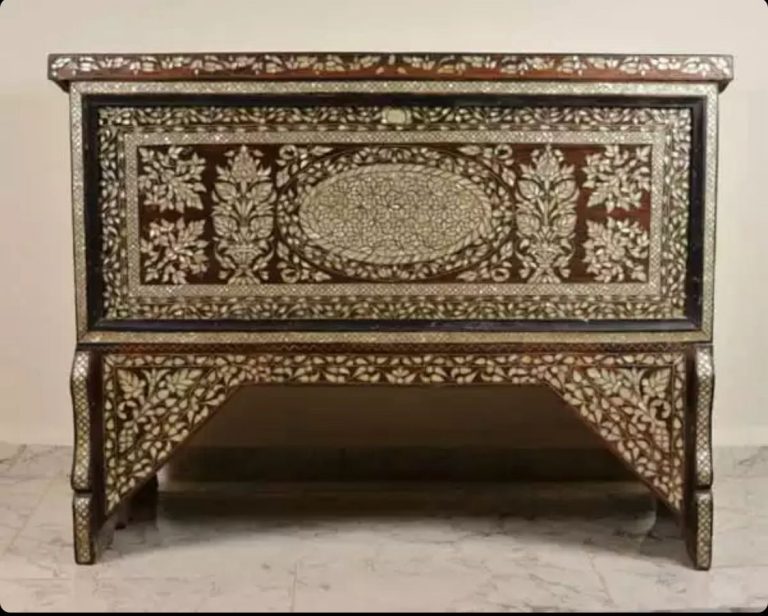
At Damasch Magic East, bespoke pieces can be planned with sketches, finish samples, clear production timelines, and workshop updates. That process is reassuring when ordering an heirloom-quality statement piece from abroad, particularly for buyers who need a specific scale or want a tray to coordinate with existing inlaid furniture, mosaic boxes, or mother-of-pearl décor.
Caring for Handmade Inlay
Handmade wood and inlay deserve ordinary care, not anxiety. Use a soft, dry cloth for regular dusting, and wipe small spills promptly with a lightly damp cloth before drying the surface. Avoid abrasive cleaners, soaking, and harsh chemical sprays, which can dull the finish or affect delicate inlay over time.
It is wise to use coasters beneath very hot cups, particularly when the tray is used for coffee or tea service. Do not leave standing water on the surface, and keep the tray away from sustained direct sunlight or extreme shifts in humidity. These simple habits help protect the wood’s natural beauty and preserve the clarity of the geometric pattern.
A well-made tray should be used, admired, and passed around the room. Let it carry the cardamom coffee, the celebratory sweets, the evening drinks, or the objects that make your home feel unmistakably yours. That is where Damascene marquetry becomes most beautiful – not behind glass, but at the heart of generous living.